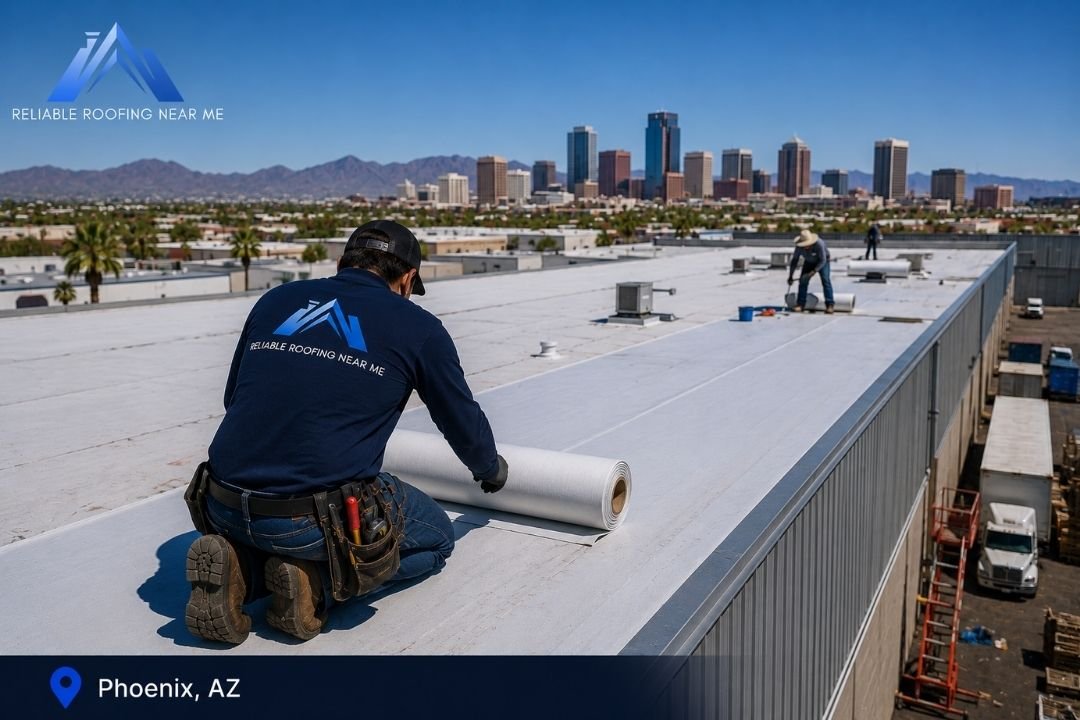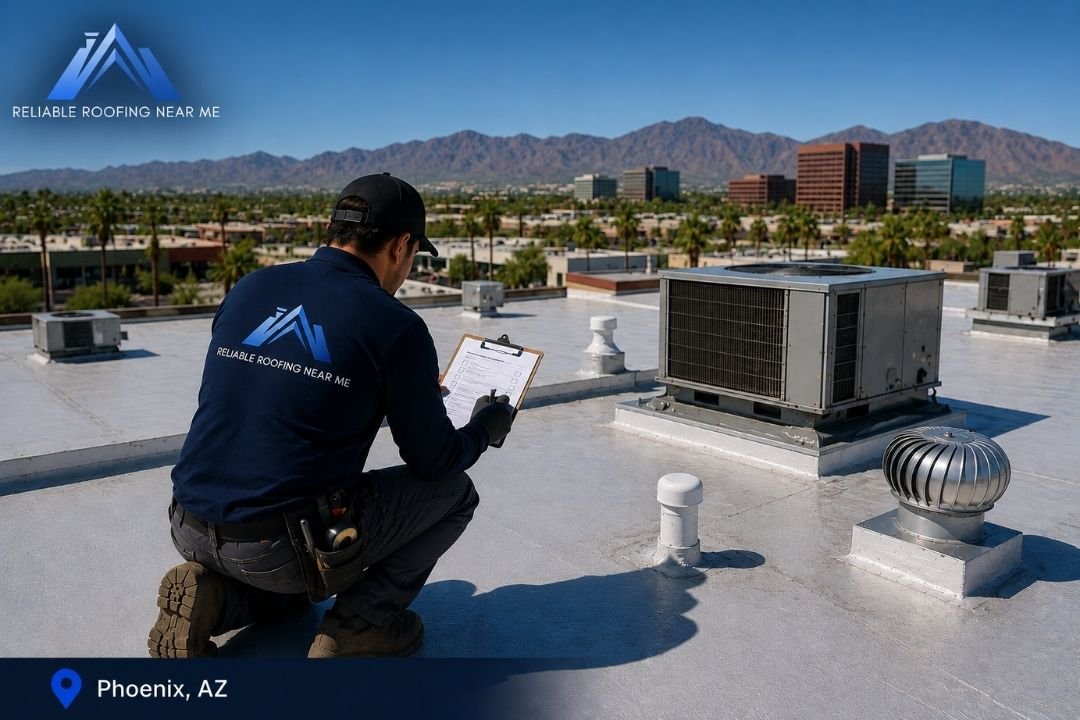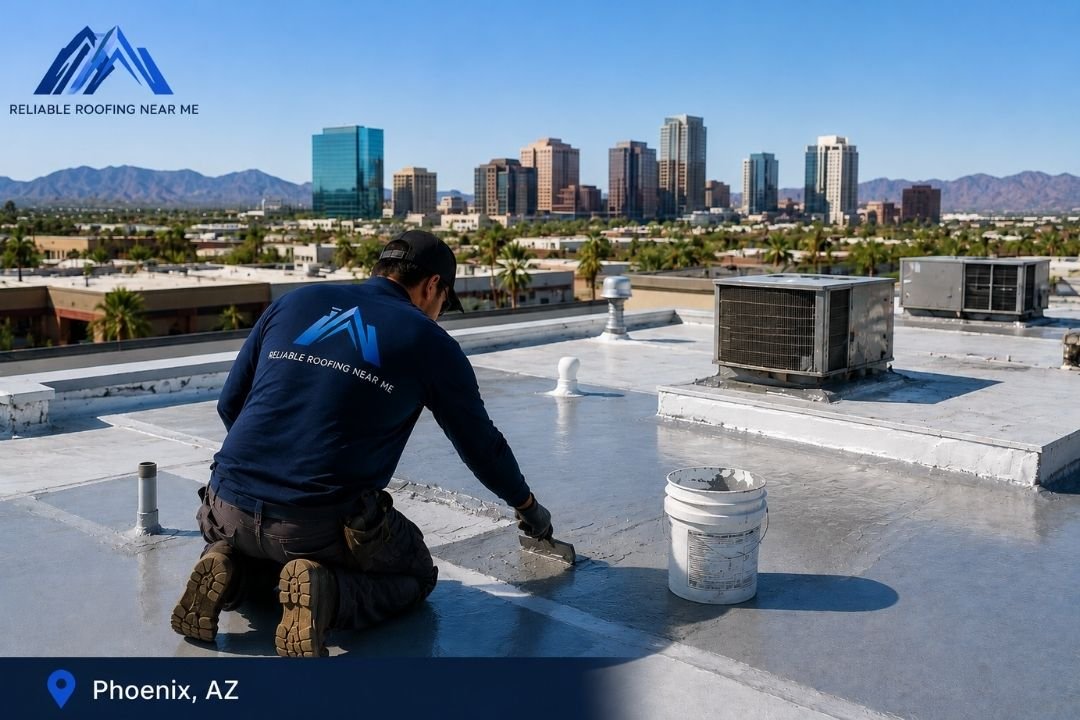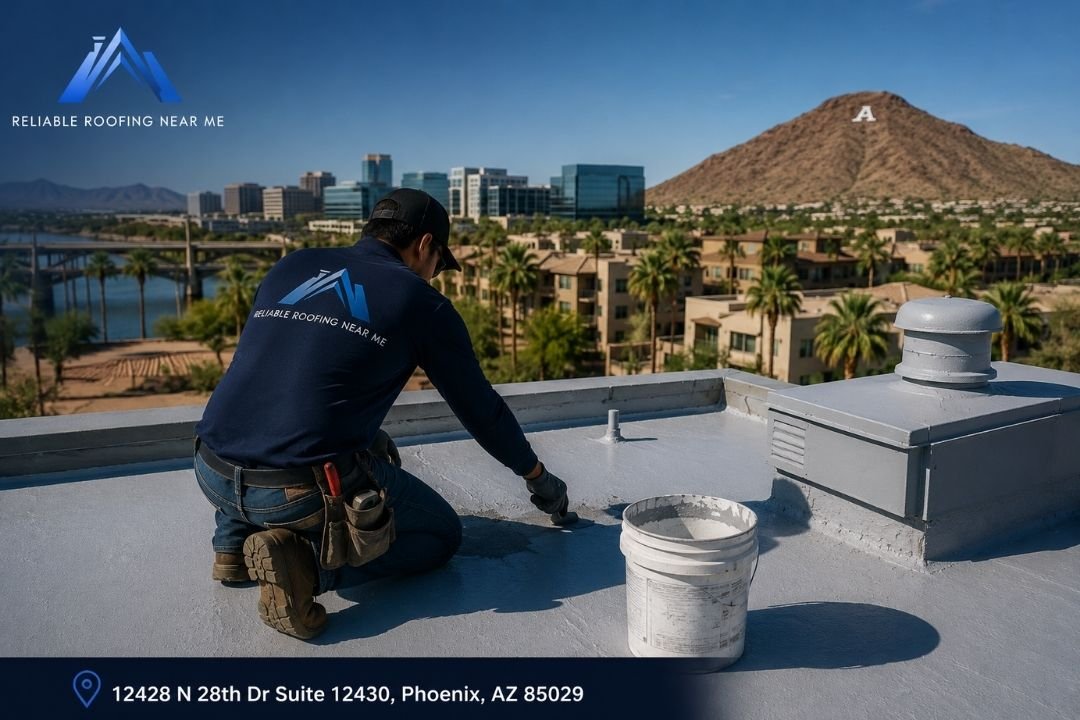

Chandler has earned its reputation as one of the most livable cities in the entire Southwest. Strong job market, excellent infrastructure, well-kept neighborhoods, and a community character that attracts homeowners who take their properties seriously. But the same desert climate that makes Chandler’s winters genuinely pleasant makes its summers one of the most unforgiving roofing environments anywhere in the country.
The challenge for Chandler homeowners is not finding a roofing contractor — there is no shortage of trucks and phone numbers in the Valley. The challenge is finding a roofing contractor in Chandler AZ who combines the licensing, experience, technical depth, and professional standards that a significant roofing investment actually deserves. The gap between the best and worst contractors in this market is not small. It is measured in years of roof life, thousands of dollars in avoidable damage, and the difference between a warranty that protects you and one that is voided before the ink is dry.
This guide gives Chandler homeowners a clear, honest framework for identifying the right roofing contractor — what the non-negotiables are, what Chandler’s specific roofing conditions demand, what common work scopes cost in the current market, and what red flags to walk away from regardless of the price being offered.
What Chandler’s Climate Demands From Every Roofing Contractor
A roofing contractor who understands Chandler’s specific climate is a fundamentally different resource than one who treats it like any other Arizona market. Chandler’s roofing environment has specific characteristics that determine which materials perform, which installation specifications matter most, and which maintenance intervals are realistic rather than optimistic.
Chandler receives approximately 300 days of sunshine per year. Summer temperatures regularly exceed 110 degrees Fahrenheit. Attic temperatures in inadequately ventilated homes reach 150 to 165 degrees — high enough to cook the polymers out of underlayment, accelerate sealant breakdown at flashing transitions, and delaminate roof decking over sustained exposure. And from mid-June through late September, Chandler’s monsoon season delivers sudden violent storms with wind gusts that can exceed 60 miles per hour and rainfall intense enough to overwhelm drainage systems in minutes.
A contractor who understands these conditions specifies underlayment products appropriate for Arizona’s attic heat, not products rated for moderate climates. They assess attic ventilation as a standard part of every roofing project because they know that inadequate ventilation cuts roof component life significantly in this market. They understand that flashing sealants in Chandler need renewal on a shorter cycle than manufacturer specs developed for temperate climates suggest. And they know that monsoon season creates a hard deadline — roofing work that leaves any system in a compromised state going into June is a problem, not a phase.
Understanding how attic ventilation and roof heat interact in Arizona and how Phoenix area heat reduces roof lifespan is foundational context for evaluating whether any roofing contractor you speak with actually understands the environment they are working in.
The Non-Negotiable: Arizona ROC Licensing
Before any other evaluation begins, the first question to ask any roofing contractor in Chandler AZ is simple: what is your Arizona ROC license number?
In Arizona, performing roofing work for compensation without an active ROC license issued by the Arizona Registrar of Contractors is illegal. The ROC licensing system requires contractors to meet minimum experience, examination, and financial responsibility standards before performing work on residential properties. It creates a formal accountability mechanism — licensed contractors can be subject to disciplinary action including license suspension and revocation for substandard work or unethical conduct. And it establishes the bond protection that gives homeowners a path to recourse if a licensed contractor’s work fails.
Homeowners who hire unlicensed roofing contractors in Chandler lose all of that. No ROC complaint mechanism. No bond protection. No formal disciplinary path. The only remedy for bad work by an unlicensed contractor is civil litigation — which is slow, expensive, and uncertain, particularly when the contractor has dissolved or is unreachable by the time problems surface.
Verifying an Arizona ROC license takes 60 seconds at the official Arizona Registrar of Contractors website. Enter the contractor’s name or license number and confirm the license is active, in good standing, and covers the correct classification for residential roofing. Our guide on finding a licensed roofing contractor in Arizona walks through this verification process in detail.
At Reliable Roofing Near Me, our Arizona ROC license number is ROC 355096 — active, in good standing, and verifiable at any time.
What to Look for Beyond the License
ROC licensing is the baseline — not the finish line. Evaluating a roofing contractor in Chandler AZ beyond the license involves several additional dimensions that determine whether you are getting genuinely professional service or simply a licensed version of a low-quality contractor.
Insurance: Liability and Workers’ Compensation
Every roofing contractor performing work on a Chandler residential property should carry current general liability insurance and workers’ compensation coverage. These are not optional credentials — they are the financial protection that keeps you from being personally liable for property damage or worker injuries that occur during your roofing project.
Request certificates of insurance directly — not verbal assurances, not a promise to send them later. Review the certificates to confirm coverage limits are adequate for the scope of work and that the policies are current. A contractor who cannot or will not provide current insurance certificates before work begins should not be allowed on your Chandler roof regardless of their pricing or their sales pitch.
Written, Itemized Estimates
A professional roofing contractor in Chandler provides written, itemized estimates that specify what the project actually includes. The estimate should identify the specific materials to be used — manufacturer, product name, underlayment type and thickness — the scope of preparation work including tear-off and deck inspection, permit handling, warranty terms for both materials and workmanship, and a clear project timeline.
A one-line price with no material specification and no scope detail is not an estimate — it is an opening number with room to expand once the project is underway and your options are limited. Collect a minimum of two written estimates before committing to any Chandler roofing project, and evaluate them against current market pricing. Our guides on roof repair costs in Phoenix metro and roof replacement costs in Phoenix metro give you the benchmarks to assess whether any estimate reflects the current Chandler market accurately.
Permit Handling as Standard Practice
In Chandler, as throughout Maricopa County, permits are required for full roof replacements and most significant roofing work. A professional roofing contractor handles permit filing as a standard part of the project — not as an optional extra. Any contractor who suggests permits are unnecessary, tells you that you can pull them yourself, or is vague about the permit process is cutting a corner that creates real consequences for you as the homeowner.
Unpermitted roofing work in Chandler creates complications at the point of property sale, may void material warranties that require permitted installation, and creates liability exposure if a future claim arises in connection with the roof. Our guide on Phoenix area roof permits covers exactly which scopes require permits and what the process involves across Maricopa County jurisdictions.
Ventilation Assessment as Part of Every Project
A roofing contractor in Chandler AZ who does not assess attic ventilation as part of every significant roofing project is missing one of the most consequential factors in roof system longevity in this climate. Inadequate attic ventilation — which is widespread in older Chandler housing stock — cuts underlayment service life significantly, accelerates shingle failure, and creates the conditions that void manufacturer warranties when premature failure is claimed.
Ask every contractor you evaluate whether they assess ventilation as part of their inspection and project scope process. A contractor who engages with that question knowledgeably — who can explain the relationship between roof ventilation in Phoenix AZ and material performance — is demonstrating technical depth that matters for the long-term performance of your Chandler roof.
References From Chandler and East Valley Homeowners
A roofing contractor with a genuine Chandler track record will provide references readily — and those references will be from Chandler and East Valley homeowners with similar project types, not from a different market or a different scope. Follow up on the references provided. A five-minute conversation with a previous Chandler customer is one of the most reliable quality indicators available and costs nothing beyond a brief phone call.
Common Roofing Work Scopes in Chandler AZ
Understanding what the most common roofing project types in Chandler actually involve — and what they should cost — gives you the context to evaluate contractor proposals accurately rather than accepting the first number you receive.
Tile Roof Underlayment Replacement
Chandler’s established neighborhoods are dominated by tile roofing — clay and concrete tile installations built across the city’s major growth periods from the late 1980s through the 2000s. Many of those roofs are now at or past the 20 to 25-year underlayment service life that Arizona’s attic heat imposes on most underlayment products.
Tile underlayment replacement — removing existing tiles, stripping failed underlayment, inspecting and repairing the deck, installing new underlayment, and relaying the tiles above — is the most significant and most commonly deferred roofing project in Chandler’s housing stock. Tiles that look intact from the street can be sitting on underlayment that stopped performing years ago. Interior water stains after monsoon storms, moisture in the attic, and recurring leaks that tile-level repairs do not resolve are the primary indicators that underlayment rather than tile is the actual problem.
Our guide on when to replace tile roof underlayment in Arizona covers the specific age thresholds, warning signs, and cost ranges in detail. Current Chandler market pricing for a complete tile underlayment replacement on a standard 2,000 square foot home runs approximately $9,000 to $18,000 depending on underlayment product, deck condition, and the percentage of existing tiles that can be salvaged and reused.
Roof Flashing Repair
Flashing failures — at pipe boots, skylight perimeters, chimney base flashings, and step flashing along wall-to-roof transitions — are among the most common repair types on Chandler residential roofs. Chandler’s UV environment breaks down flashing sealants faster than most homeowners expect, and the wind-driven rain of monsoon storms forces water through any gap in the flashing system that thermal cycling has opened.
Individual flashing repair costs in Chandler range from $150 to $400 for pipe boot replacements, $300 to $900 for skylight flashing repair, and $400 to $1,500 for chimney flashing work depending on scope. Our guide on roof flashing repair: signs, costs and what to do covers every flashing type, failure pattern, and repair cost in detail.
Full Roof Replacement
When repair is no longer the appropriate response — when the roof system has deteriorated beyond the point where targeted work provides a lasting solution — full replacement becomes the right call. For Chandler’s tile-dominant housing stock, replacement typically means a complete tile relay with new underlayment rather than replacing the tile itself, since the clay and concrete tiles are frequently still in usable condition when the underlayment beneath them has failed.
Understanding when replacement rather than repair is the appropriate scope is one of the most consequential decisions a Chandler homeowner makes. Our guide on Phoenix roof replacement vs repair walks through the decision framework in detail — giving you the knowledge to evaluate a contractor’s recommendation independently rather than accepting it on faith.
Flat Roof Repair and Replacement
Many Chandler homes have flat or low-slope sections on garages, room additions, and covered patios that require roofing systems different from the primary sloped tile roof. These sections are frequently neglected and among the most vulnerable to monsoon water intrusion when their membrane systems deteriorate.
For Chandler homeowners evaluating flat roof options, our comparisons of TPO roofing pros and cons in Phoenix AZ and foam roof coating costs in Phoenix provide the information needed to evaluate which system is most appropriate for each flat roof application.
Chandler HOA Roofing Requirements: What Every Contractor Needs to Know
Chandler’s HOA landscape is extensive. A significant portion of the city’s residential neighborhoods — from Ocotillo to Fulton Ranch, Sun Lakes to Dobson Ranch — operate under HOA governance with specific requirements for roofing materials, colors, and contractor documentation.
A roofing contractor working in Chandler’s HOA communities needs to understand the approval process, the documentation requirements that HOA management companies expect, and the consequences of proceeding without proper authorization. A contractor who is unfamiliar with HOA documentation requirements — or who suggests that HOA approval is not necessary for a standard re-roof — is creating compliance risk for you as the homeowner, not saving you time.
Before any roofing project in a Chandler HOA community, confirm the approval requirements with your HOA management company and verify that your chosen contractor is prepared to provide the required documentation. Our guide on HOA roofing rules in Phoenix Arizona covers the approval process, documentation requirements, and common compliance mistakes across Valley HOA communities including Chandler’s established neighborhoods.
Red Flags to Walk Away From in the Chandler Roofing Market
The Phoenix metro roofing market — including Chandler — has its share of contractors whose practices do not serve homeowners well. Knowing the warning signs allows you to disqualify problematic contractors before any money changes hands or any work begins.
No ROC license or reluctance to provide it. Any contractor who cannot immediately provide an active Arizona ROC license number — or provides one that does not verify as active at the ROC website — should be disqualified without exception. There is no legitimate reason a professional roofing contractor cannot provide this information on request.
High-pressure same-day decision demands. A contractor who insists the quoted price is only available if you sign before they leave the appointment is creating artificial urgency to prevent you from comparing bids or reviewing contract terms carefully. Walk away from any contractor who does not give you time to make an informed decision.
Significantly below-market bids without explanation. A bid that is materially below every other estimate warrants specific scrutiny — what exactly does this bid exclude? Low bids in the Chandler market typically mean lower-grade materials, skipped preparation work, no permit filing, unlicensed subcontractors, or a base price that will escalate once the project is underway. Ask directly what the low number excludes relative to higher-priced alternatives before drawing any conclusions.
Offering to waive your insurance deductible. This is illegal under Arizona law. Arizona Revised Statutes explicitly prohibit contractors from waiving, absorbing, or rebating a homeowner’s insurance deductible as an inducement to hire them. Any contractor making this offer is violating state law. Walk away and report the practice to the Arizona Department of Insurance.
Vague or verbal-only warranty terms. A warranty that is not documented in writing before work begins is not a warranty that will protect you after the project is complete. Written, specific warranty documentation — covering both materials and workmanship with defined terms, duration, and exclusions — is a baseline expectation from any professional Chandler roofing contractor. Our guide on what voids roof warranty in Arizona covers the warranty conditions and exclusions that every Chandler homeowner should understand before signing any roofing contract.
No mention of permits for full replacement work. Any contractor performing a full roof replacement in Chandler without filing the required permit is creating unpermitted work on your property — not saving you time or money. The consequences of unpermitted roofing work fall on the homeowner, not the contractor.
Roofing Financing in Chandler AZ
A significant roofing project in Chandler — whether a full tile underlayment replacement, a flat roof system replacement, or a complete re-roof — represents a major expense that not every homeowner is positioned to fund from cash on hand. Understanding the financing options available before you need them gives you the ability to make a sound decision without pressure when the moment arrives.
Contractor-arranged financing, personal home improvement loans, home equity financing, and FHA Title I loans are all available to Chandler homeowners depending on their specific financial profile and the scope of the project. Our complete guide on roofing financing options in Phoenix AZ covers every available option in detail — including the deferred interest terms that catch homeowners off guard and the insurance funding path that applies when storm damage is the cause of the roofing need.
Roof Maintenance: What Chandler Homeowners Should Be Doing Regularly
The roofing contractor relationship should not begin only when something has already gone wrong. The most cost-effective approach to roofing in Chandler’s climate is a proactive maintenance schedule that catches developing issues at the point where they are inexpensive to address rather than at the point where they have compounded into structural problems.
For Chandler homeowners, a professional roof inspection every three to five years — and after every significant monsoon storm event — is the maintenance cadence that most experienced Valley roofing contractors recommend. Our Phoenix metro roof maintenance checklist outlines every item a thorough inspection should cover and gives homeowners a framework for tracking their roof’s maintenance history between professional visits.
If your Chandler roof is more than 15 years old and has not been professionally inspected recently, the condition of the underlayment beneath the tile is the single most important thing to know. Tiles that look fine from the street can be sitting above underlayment that has not been performing for years. Our guide on when to replace your roof in Phoenix metro gives you the complete decision framework for evaluating where your roof stands in its service life.
Frequently Asked Questions
How much does a roofing contractor cost in Chandler AZ?
Roofing costs in Chandler reflect the current East Valley market for materials and labor. Roof repair costs range from $150 to $3,000 or more depending on scope and repair type. Full tile underlayment replacements on standard Chandler homes run $9,000 to $18,000. Complete re-roof projects with new tile range from $18,000 to $36,000 or more depending on material and roof size. Our guide on roof replacement costs in Phoenix metro provides detailed pricing by material category across the Valley.
How do I verify a roofing contractor’s license in Chandler AZ?
Visit the official Arizona Registrar of Contractors website and search by the contractor’s name or license number. Confirm the license is active, in good standing, and covers the appropriate classification for residential roofing work. This verification takes approximately 60 seconds and should be completed before any conversation about contract terms or project scheduling proceeds.
Does my Chandler HOA need to approve my roof replacement?
In most cases, yes — particularly if the project involves a change in materials, color, or tile profile from the existing installation. Like-for-like replacements in some Chandler HOA communities may have a streamlined or pre-approved process, but confirming requirements with your HOA management company before proceeding is essential. Our guide on HOA roofing rules in Phoenix Arizona covers the approval process and documentation requirements in full detail.
How long does roof replacement take in Chandler AZ?
Asphalt shingle replacements on standard Chandler homes typically take one to two days. Tile underlayment replacement projects — involving full tile removal, underlayment tear-off, deck inspection, new underlayment, and tile relay — typically take three to five days depending on roof size, pitch, and complexity. Projects that discover significant deck damage requiring repair extend the timeline accordingly.
What is the best roofing material for Chandler AZ?
For most Chandler homes — particularly those in HOA communities where tile is required — clay tile delivers the best long-term performance in Arizona’s desert climate. Concrete tile is the most widely used material and performs well at a lower upfront cost. Metal roofing is gaining market share in Chandler for its longevity and energy efficiency. Our comparison of concrete tile vs clay tile in Arizona and our overview of flat roof options for Phoenix homes and businesses cover the full material landscape for Chandler homeowners.
How do I know if my Chandler roof needs inspection?
If your roof is more than 15 years old and has not been professionally inspected in the past two to three years, an inspection is warranted. Additionally, any of the following should prompt an immediate inspection: interior water stains after rain, moisture visible in the attic, displaced or cracked tiles across multiple sections, recurring leaks that previous repairs have not resolved, or a significant monsoon storm event. Our Phoenix metro roof inspection checklist outlines what a thorough inspection covers.
Your Roofing Contractor in Chandler AZ
At Reliable Roofing Near Me, we bring licensed, professional, and fully documented roofing service to Chandler homeowners across every neighborhood in the city. We inspect honestly, estimate transparently, install correctly, and stand behind our work with written warranty terms that mean what they say.
Whether you need a full roof installation, targeted roof repair, a thorough roof inspection, or honest guidance on whether your situation calls for repair or replacement, we will give you a straight answer and a written estimate with no pressure and no obligation.
Call us at (480) 867-9986 or visit reliableroofingnearme.com to schedule your free Chandler roof inspection today. We serve Chandler, Gilbert, Mesa, Scottsdale, Phoenix, Tempe, Glendale, Peoria, Surprise, and every community across the Valley.
Reliable Roofing Near Me | (480) 867-9986 | reliableroofingnearme@gmail.com | reliableroofingnearme.com | 12428 N 28th Dr Suite 12430, Phoenix, AZ 85029 | ROC License #355096