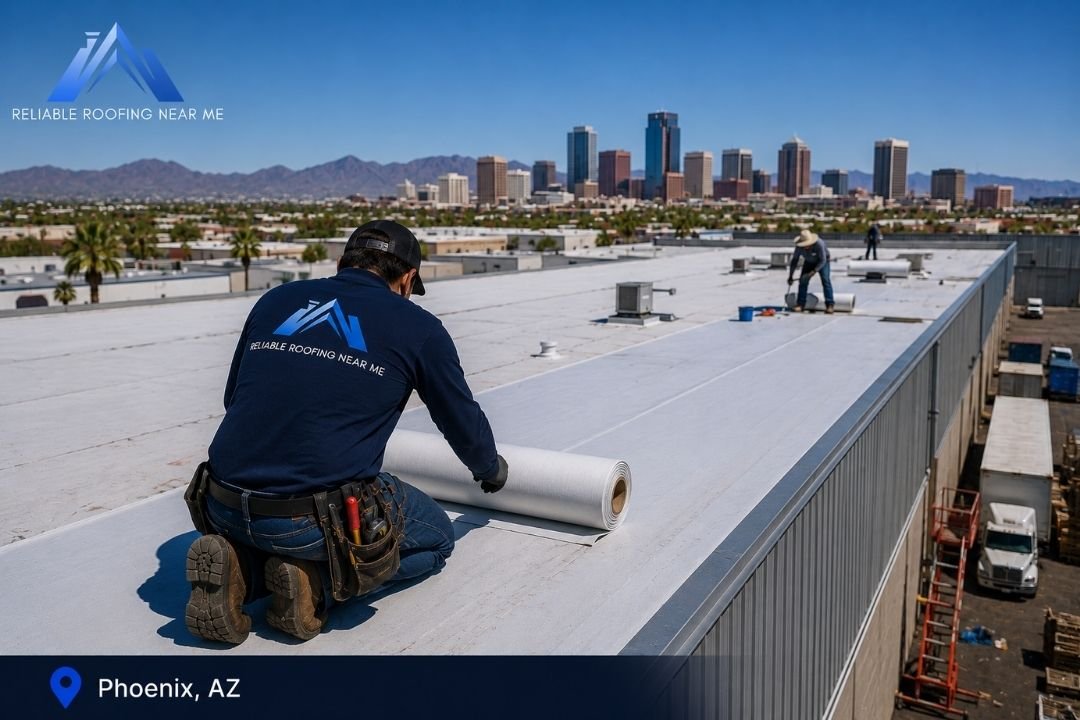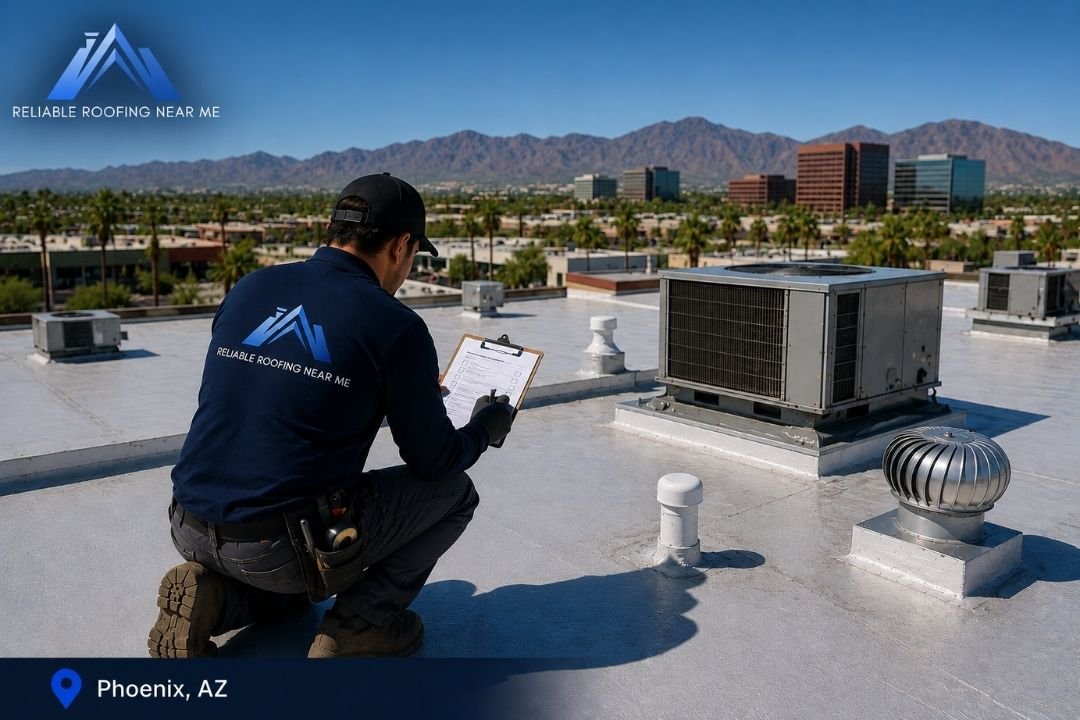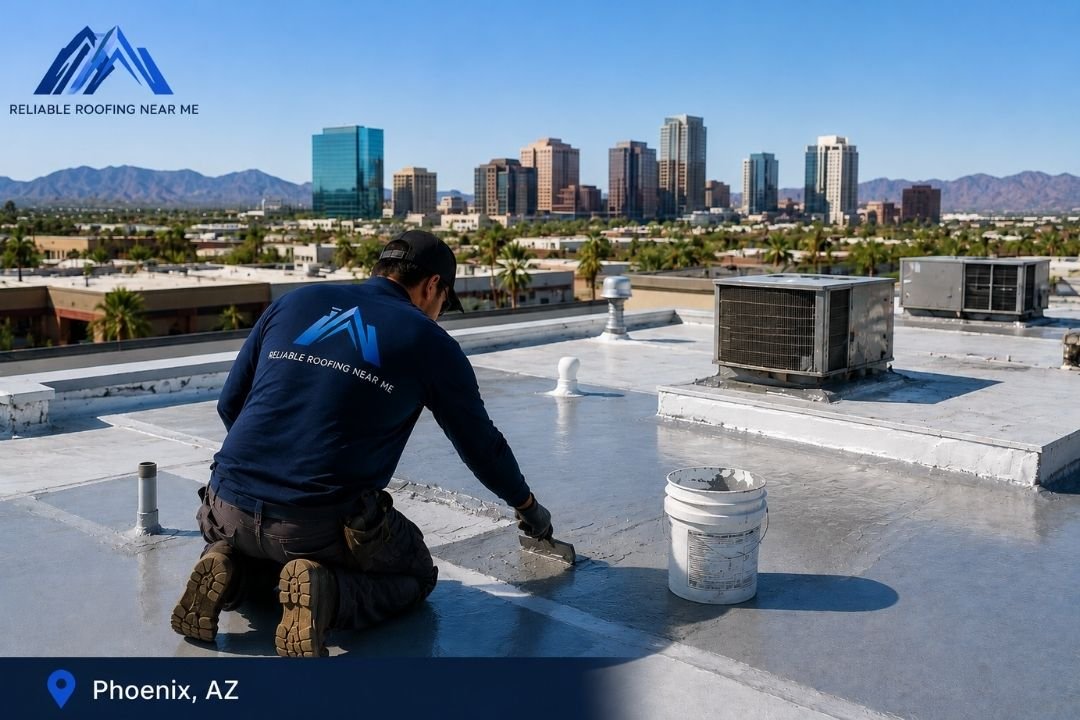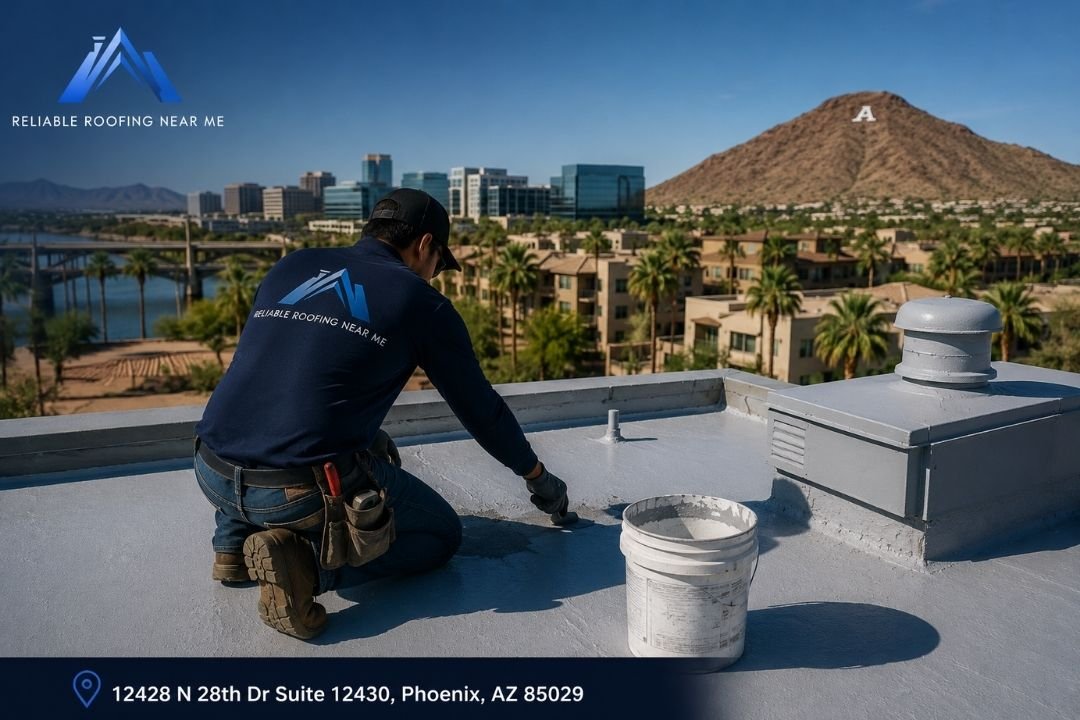

A warehouse roof rarely gets a second thought until the day it fails. Then it’s a pallet of damaged inventory, a soaked shipment, or a puddle spreading across a concrete floor near racking that’s supposed to stay dry year-round. For a warehouse, the roof isn’t just a structural component — it’s the only thing standing between everything a business has invested in and the weather sitting directly above it. When that roof reaches the end of its life in Phoenix’s climate, waiting to address it rarely ends well.
Why Warehouse Roofs Fail Faster in Phoenix Than Almost Anywhere Else
Warehouse roofs are typically large, flat, low-slope systems — TPO, foam, or modified bitumen — covering tens of thousands of square feet with minimal shade or interruption. That size works against the roof in a climate like Phoenix’s, where surface temperatures on an exposed flat roof can exceed 180°F during summer months. There’s no tile, no shingle, no shade line breaking up sun exposure — just membrane, sitting directly under the sun for months at a time, cycling through extreme heat during the day and rapid cooling after sunset.
That daily thermal cycling, repeated for years, fatigues membrane material at the seams first, since seams are the engineered flex points designed to absorb expansion and contraction. Add monsoon season, running roughly June 15 through September 30, with sudden heavy rain and high wind arriving on a roof surface already stressed by months of heat, and the combination accelerates wear far beyond what the same materials would experience in a milder climate. Haboobs add another layer of stress, depositing dust and debris that clogs drains and creates ponding conditions that eat away at membrane integrity from below.
What Makes Warehouse Roofing Different From Other Commercial Roofs
A retail storefront or office building certainly has commercial roofing needs, but a warehouse roof carries additional weight, both literally and financially. Warehouse roofs typically support rooftop HVAC units, exhaust systems, and sometimes solar arrays, each representing a penetration point that needs careful flashing. Beneath the roof, warehouses often store inventory that’s directly vulnerable to water damage — merchandise, raw materials, packaging, or equipment that can’t simply be moved once a leak starts. Commercial roofing built specifically for Arizona businesses accounts for this reality, prioritizing systems and installation methods that hold up under the specific combination of scale, heat, and stored-value risk that warehouses represent.
Signs a Warehouse Roof Is Approaching the End of Its Life
Warehouse roofs rarely fail all at once. They show warning signs well in advance, and catching those signs early is the difference between a planned, controlled replacement and an emergency shutdown:
- Recurring leaks in the same general area despite repeated patch repairs
- Visible ponding water that remains more than 48 hours after rainfall
- Widespread membrane cracking, blistering, or brittleness across large sections of the roof
- Rising interior humidity or a persistent musty smell, which can indicate trapped moisture in insulation beneath the membrane
- Increasing frequency of repair calls to the same roof over a short period
- Visible sagging in the roof deck, which may indicate structural moisture damage
- Age alone — most flat commercial systems in this climate show significant wear well before the lifespan quoted for milder regions
Any one of these on its own might warrant a repair. Several together, especially recurring leaks combined with age, usually signal that repair has become a temporary patch on a system that’s genuinely reached the end of its service life.
The Real Cost of Waiting Too Long
A warehouse roof failure doesn’t stay contained to the roof. Water that gets past a failing membrane travels across the deck and insulation before finding its way down, which means by the time a drip becomes visible on the warehouse floor, the actual affected area is often far larger than it appears. Inventory stored below can be damaged or destroyed, sometimes representing losses far exceeding the cost of the roof work that would have prevented it. Operations can be disrupted if sections of the warehouse become unusable during emergency repairs. And structural components — decking, insulation, even racking anchored to a compromised floor — can suffer damage that turns a roofing project into a much larger and more expensive repair. Addressing roof problems before they escalate consistently costs less than managing the aftermath of a full failure, and for a warehouse, the stakes of that math are simply higher than almost any other commercial property type.
Choosing the Right Roofing System for a Warehouse Replacement
TPO
TPO membrane is a common choice for warehouse roofs due to its reflective surface, which helps reduce heat absorption and can meaningfully lower interior cooling costs across a large square footage. It’s installed in large sheets with heat-welded seams, offering good resistance to UV degradation when properly installed and maintained.
Spray Foam
Foam roofing offers excellent insulation value, which matters significantly for warehouses trying to manage cooling costs across a large open interior space. It requires a scheduled protective recoat to maintain UV resistance, but with proper maintenance, it can perform well over a long service life.
Modified Bitumen
Modified bitumen remains a durable, proven option for warehouse applications, particularly for buildings with existing modified bitumen systems where matching installation methods simplifies the replacement process.
Comparing TPO, foam, and modified bitumen roofing systems in detail helps warehouse owners choose based on their specific priorities — whether that’s minimizing cooling costs, matching an existing system, or optimizing for the lowest long-term maintenance burden.
How a Warehouse Roof Replacement Actually Happens
Assessment and Planning
Replacement begins with a full assessment of the existing roof, deck condition, and any structural concerns that need to be addressed before new roofing goes down. This stage also involves planning around the warehouse’s operational schedule, since a full tear-off and replacement needs coordination to protect inventory and minimize disruption to receiving, shipping, or storage activity below.
Tear-Off and Deck Inspection
Once old roofing material is removed, the deck itself gets inspected for any water damage, soft spots, or structural issues that developed during the old roof’s failure period. Addressing deck problems at this stage prevents them from compromising the new roofing system installed on top.
Insulation and Slope Correction
Replacement is often the best opportunity to correct drainage issues that caused problems with the previous roof, including adding tapered insulation to eliminate low spots where ponding previously occurred.
New Membrane Installation
The new system is installed according to manufacturer specifications, with particular attention to seam welding, flashing at every penetration, and edge details — the same points that caused problems on the old roof, now installed correctly from the start.
Final Inspection and Documentation
A completed replacement should include a final walkthrough, documentation of the finished work, and clear warranty terms explained in plain language, giving warehouse owners a reliable record for future maintenance planning.
Protecting Operations During Replacement
For an active warehouse, the idea of a full roof replacement can understandably raise concerns about disrupting operations. An experienced commercial contractor should be able to phase work in sections where the warehouse layout allows, coordinate scheduling around shipping and receiving windows, and take precautions to protect inventory and equipment beneath active work areas throughout the project. Clear communication about timeline and daily progress matters enormously here, since warehouse operations often can’t simply pause for the duration of a project.
Insurance, Documentation, and Warehouse Roofing
Because warehouse roof failures can result in significant inventory or equipment losses, thorough documentation matters both before and after any storm-related damage. A documented inspection history helps distinguish gradual wear from a specific storm event when filing a claim, and understanding the insurance claims process after a monsoon — while written with homeowners in mind — outlines a documentation approach that applies just as directly to commercial and warehouse claims.
Choosing a Contractor for Warehouse Roof Replacement
Warehouse roofing is not the same trade as residential shingle or tile work, and not every roofing company has genuine experience managing a project of this scale. Warehouse owners should look for a contractor with an active ROC license specific to commercial work, verifiable experience with large-scale flat roof replacement, proper insurance coverage sized appropriately for industrial projects, and a demonstrated ability to phase work around active operations without unnecessary downtime. A detailed written scope of work — covering materials, drainage corrections, timeline, and warranty terms — is essential given the scale of investment a warehouse roof replacement represents.
Frequently Asked Questions
How long does a typical warehouse roof last in Phoenix?
Service life depends on the material and maintenance history, but Phoenix’s heat and monsoon exposure generally shorten the effective lifespan of flat roofing systems compared to milder climates, making regular inspection and timely repair especially important.
Can a warehouse stay operational during roof replacement?
In many cases, yes. An experienced contractor can often phase work to keep sections of the warehouse operational, though the specific approach depends on the building’s layout and the scope of the replacement.
How do I know if my warehouse roof needs replacement versus another repair?
Recurring leaks in the same areas despite repeated repairs, widespread membrane wear, and roof age relative to expected service life are the main indicators that repair has become a temporary measure rather than a lasting solution.
What’s the biggest risk of delaying a needed warehouse roof replacement?
Beyond the roof itself, delayed replacement risks water damage to stored inventory, equipment, and the structural deck beneath the membrane, often resulting in losses that significantly exceed the cost of proactive replacement.
Does a new warehouse roof help reduce cooling costs?
Reflective systems like TPO and well-maintained foam roofing can meaningfully reduce heat absorption across a large warehouse roof, which often translates into a noticeable reduction in interior cooling costs.
How much advance planning does a warehouse roof replacement require?
Given the scale of most warehouse roofs and the need to coordinate around active operations, planning typically begins well before the project starts, including scheduling around shipping cycles and preparing any necessary inventory protection measures.
Protect What’s Stored Beneath Your Warehouse Roof
At Reliable Roofing Near Me, we handle large-scale warehouse and industrial roof replacement across Phoenix and more than 40 Arizona cities, with experience phasing projects around active operations so your business keeps running. Every assessment is thorough, every recommendation is based on the actual condition of your roof, and every project is planned to protect what matters most — what’s underneath. No pressure, no obligation.
Call us at (480) 867-9986 or visit reliableroofingnearme.com to schedule your free warehouse roof assessment today. We serve Phoenix, Mesa, Scottsdale, Chandler, Gilbert, Tempe, and every community across the Valley.
Reliable Roofing Near Me | (480) 867-9986 | reliableroofingnearme@gmail.com | reliableroofingnearme.com | 12428 N 28th Dr Suite 12430, Phoenix, AZ 85029 | ROC License #355096