
Most commercial roof failures don’t happen suddenly. They build slowly, through months or years of small, mostly invisible wear, until a seam finally separates or a drain finally clogs badly enough to cause real damage. A thorough inspection is the only reliable way to catch that wear before it becomes a leak, and yet a surprising number of commercial property owners across Arizona either skip inspections entirely or rely on a quick visual glance that misses the details that actually matter. Knowing what a proper inspection should cover helps business owners evaluate whether the service they’re getting — or the contractor they’re considering — is actually thorough enough to protect the building.
Why Commercial Roofs in Arizona Need a Different Inspection Standard
Arizona’s climate puts commercial flat and low-slope roofs under a specific combination of stress that doesn’t exist in most other parts of the country. Surface temperatures on an exposed flat roof can exceed 180°F during peak summer months, accelerating UV degradation of membranes, sealants, and flashing far faster than in milder climates. Monsoon season, running roughly from June 15 through September 30, adds sudden heavy rainfall and high winds on top of a surface already stressed by months of thermal cycling. Haboobs deposit fine dust and debris that can clog drainage systems within a single storm event. A generic inspection checklist built for a temperate climate simply won’t catch the failure points that show up first here, which is why Arizona commercial properties need an inspection process calibrated specifically to desert conditions.
The Core Components of a Thorough Commercial Roof Inspection
1. Overall Membrane Condition
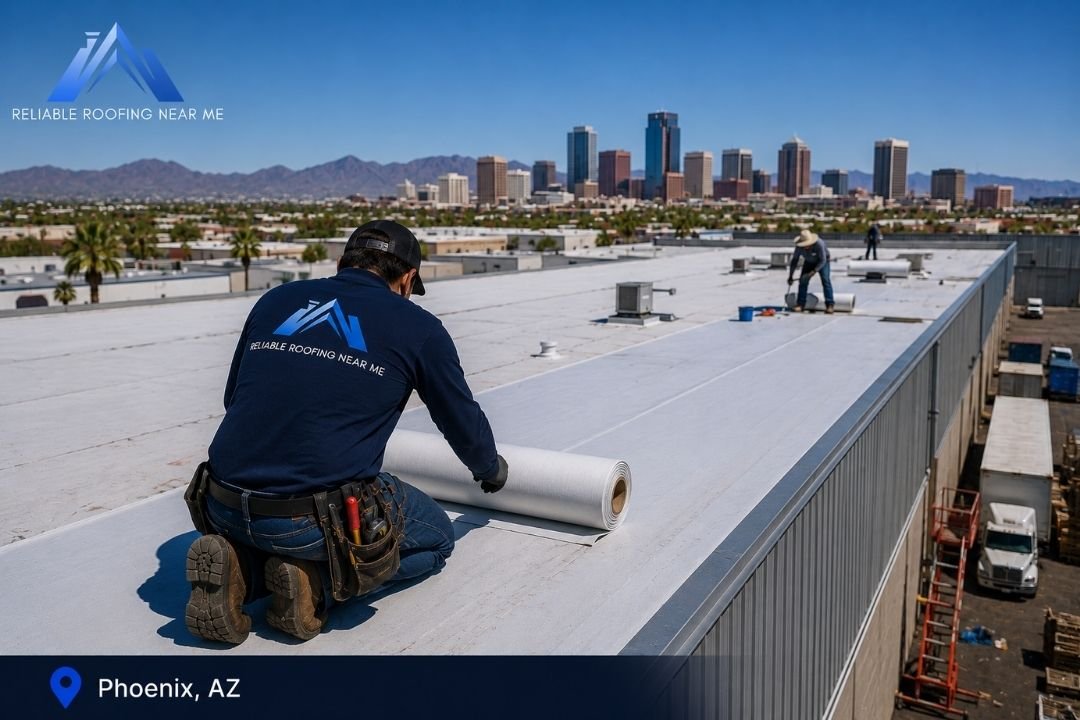
The inspection should begin with a full visual assessment of the entire roof surface, checking for granule loss, blistering, cracking, or discoloration that indicates UV breakdown. On TPO systems, inspectors look for shrinkage at seams and any signs of the membrane pulling away from fasteners. On modified bitumen, cracking and surface granule loss are the primary indicators of age-related wear. On foam roofs, inspectors check for erosion of the protective top coat, exposed foam, and any areas where the surface has become chalky or friable to the touch.
2. Seam Integrity
Every seam on a TPO or modified bitumen roof represents a potential failure point, since these are the areas engineered to move with thermal expansion but are also the first place adhesion tends to fail over time. A proper inspection checks seam adhesion by hand at multiple points across the roof, not just a visual scan from a distance, since early seam separation can be subtle and easy to miss without direct inspection.
3. Flashing at All Penetrations
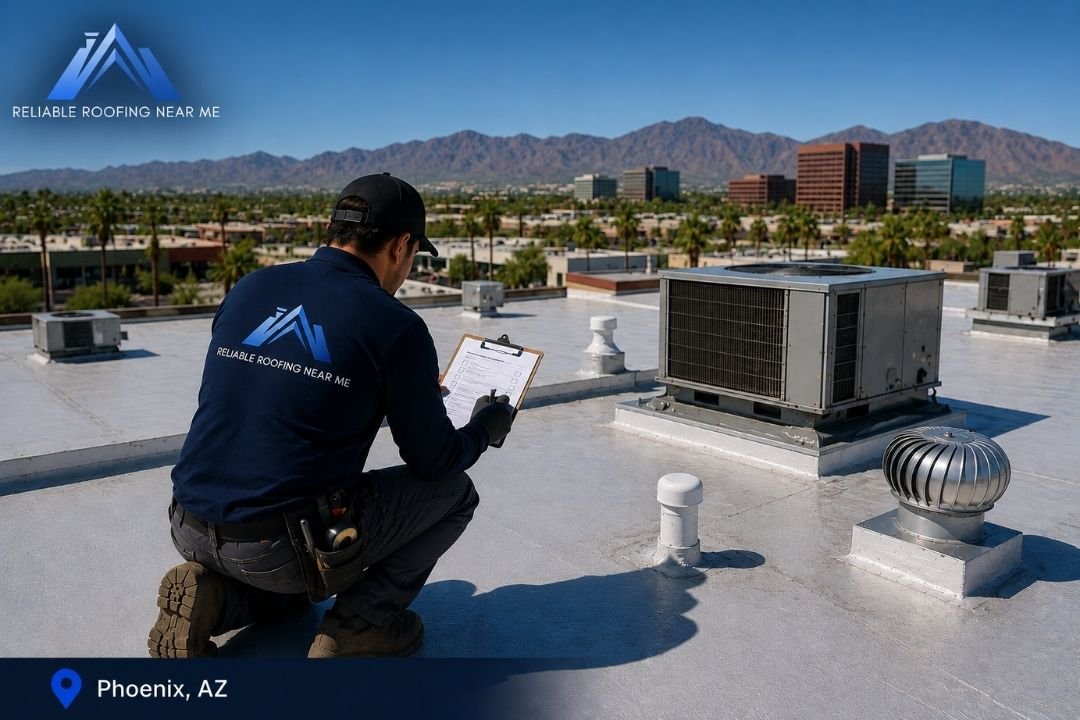
Every HVAC unit, vent pipe, drain, skylight, and roof-to-wall intersection represents a penetration through the roofing membrane, and each one requires a properly sealed flashing detail. These points consistently fail before the rest of the roof, both because flashing material tends to degrade faster than field membrane and because mechanical equipment vibration puts ongoing stress on the seal. A thorough inspection examines every penetration individually rather than sampling a few and assuming the rest are similar.
4. Drainage and Ponding Water
Since flat roofs rely on a slight engineered slope to move water toward drains, inspectors should check for any areas where water pools and remains more than 48 hours after a rain event. Ponding water accelerates membrane breakdown directly beneath it and is one of the most common root causes of eventual leaks. Inspectors also check that drains and scupters are clear of debris, since even a partially blocked drain can cause significant ponding during a heavy monsoon downpour.
5. Attic and Underside Moisture (Where Applicable)
For buildings with accessible attic or ceiling void space beneath the roof deck, inspectors check for signs of moisture intrusion, staining, or mold growth that may indicate a slow leak that hasn’t yet become visible from inside the occupied space. This step often catches problems well before they show up as a ceiling stain in a customer-facing area.
6. Rooftop Equipment Curbs and Supports
HVAC units, exhaust fans, and other rooftop equipment sit on curbs that penetrate the roofing membrane, and the seal around these curbs is a frequent source of leaks, particularly as equipment ages and vibration loosens fasteners or stresses the surrounding seal. Inspectors check curb flashing separately from general penetration flashing, since equipment weight and vibration create a different wear pattern.
7. Structural and Deck Condition
Where accessible, inspectors assess the condition of the roof deck itself, checking for soft spots, sagging, or signs of structural deterioration that may indicate long-term water intrusion beneath the membrane. This step is particularly important on older commercial buildings where the roofing system has already been repaired multiple times.
8. Edge Detail and Parapet Walls
Roof edges and parapet wall caps are common failure points, especially where metal coping has loosened or where sealant at the wall-to-roof transition has cracked. Wind uplift during monsoon storms puts particular stress on these edge details, making them worth checking closely rather than assuming they’re fine because the field membrane looks intact.
9. Previous Repair Areas
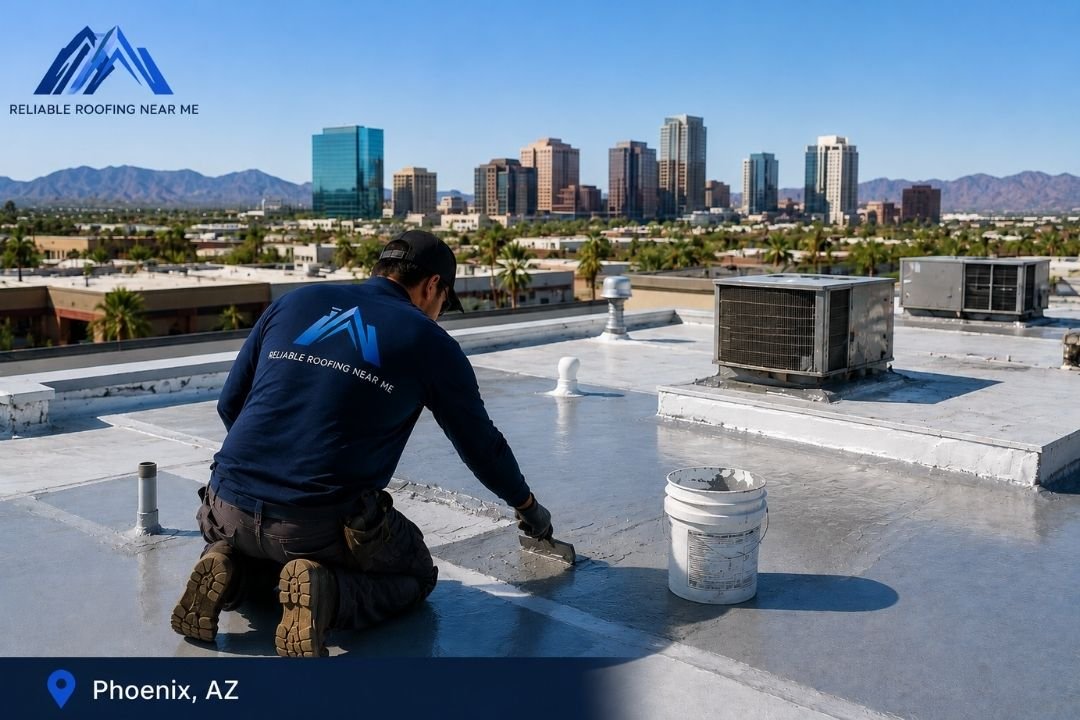
Any area that has been patched or repaired previously should be checked specifically, since repeated repairs in the same location often indicate an underlying issue that hasn’t been fully resolved — commonly a structural low spot causing recurring ponding, or a penetration detail that was never properly re-flashed.
10. Overall Age and Remaining Service Life Assessment
A complete inspection should conclude with an honest assessment of where the roof stands relative to its expected service life given Arizona’s accelerated wear patterns, and a recommendation on whether ongoing repair, a scheduled recoat, or planning for eventual replacement makes the most financial sense. Weighing repair against full replacement is a decision that should be grounded in this kind of documented assessment rather than reacting to a single visible leak.
Why Documentation Matters as Much as the Inspection Itself
A thorough inspection is only half the value — the other half is proper documentation. Business owners should expect a written report with photos of any problem areas, clear descriptions of findings, and specific recommendations rather than a vague verbal summary. This documentation serves multiple purposes: it creates a baseline to compare against future inspections, it supports insurance claims if storm damage occurs later, and it gives ownership or property management a clear record to reference when budgeting for maintenance or eventual replacement.
How Often Commercial Roofs Should Be Inspected in Arizona
Most roofing professionals recommend inspecting commercial roofs at least twice per year — once before monsoon season begins to catch and address vulnerabilities ahead of storm season, and once after monsoon season ends to document any damage that may have occurred and address it before it worsens over the following months. Buildings with older roofing systems, a history of leaks, or roofs nearing the end of their expected service life often benefit from more frequent checks, particularly after any significant storm event.
What Triggers an Off-Schedule Inspection
Beyond the standard semi-annual schedule, certain events should prompt an immediate inspection regardless of when the last one occurred:
- Any significant monsoon storm with high winds or hail in the area
- A new interior ceiling stain or water spot, even a small one
- Unusually high cooling costs, which can point to compromised insulation from moisture intrusion
- New equipment installation on the roof, which creates new penetrations that need proper flashing verification
- Preparing to sell or refinance a commercial property, where a documented roof condition report is often part of due diligence
Common Mistakes Business Owners Make with Roof Inspections
A few patterns show up repeatedly among commercial property owners who end up facing avoidable roof damage. Relying on a quick visual check from ground level or a photo taken with a drone, without a hands-on inspection of seams and flashing, misses the details that actually predict failure. Skipping inspections during years when the roof “seems fine” allows small issues to compound unnoticed. And choosing the lowest-cost inspection option often means a less thorough process, since a truly comprehensive inspection takes time and expertise that a rushed, bargain service typically can’t provide.
Choosing a Contractor to Perform Commercial Inspections
Not every roofing company that services residential properties has the equipment knowledge or experience to properly inspect commercial flat roofing systems. Commercial roofing expertise built for Arizona businesses means understanding TPO, foam, and modified bitumen systems specifically, along with the mechanical equipment and structural considerations unique to commercial buildings. Business owners should look for a contractor with an active ROC license, verifiable commercial experience, and a track record of providing written, photo-documented inspection reports rather than a brief verbal rundown.
What Happens After the Inspection
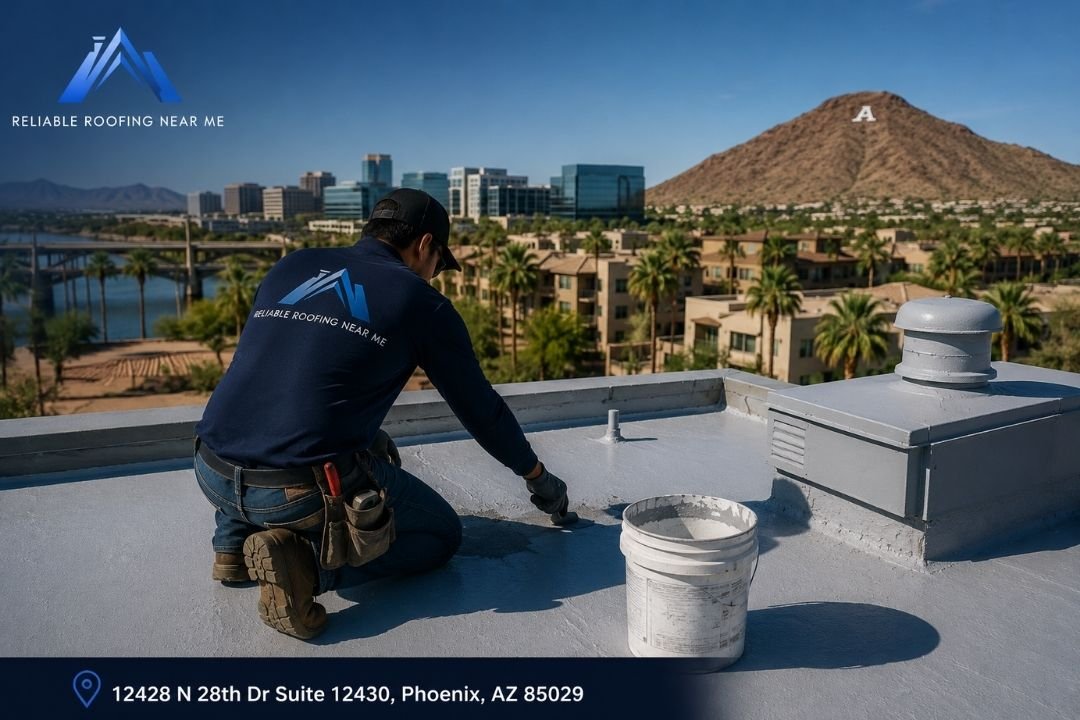
Once an inspection is complete, the findings should translate into a clear action plan. Minor issues like small seam separations or early flashing wear can often be addressed immediately as routine maintenance, preventing them from becoming larger problems. More significant findings, such as ponding water caused by structural settling or widespread membrane degradation, may require a larger capital project that needs to be budgeted and scheduled. Understanding maintenance costs like foam recoating ahead of time helps business owners plan financially rather than being caught off guard by an unexpected expense.
Frequently Asked Questions
How long does a typical commercial roof inspection take?
This varies significantly based on roof size and complexity, but a thorough inspection of a mid-sized commercial building typically takes a few hours to properly cover all penetrations, seams, and drainage points.
Can a commercial roof inspection be done without walking on the roof?
Some preliminary assessment can be done with drone photography, but a hands-on inspection is generally necessary to properly check seam adhesion, flashing condition, and soft spots in the deck, which aren’t reliably visible from aerial photos alone.
Does a roof inspection report help with insurance claims?
Yes. A documented inspection history, especially one conducted shortly before a storm, helps distinguish storm-caused damage from pre-existing wear, which insurers scrutinize closely during the claims process.
What’s the difference between a maintenance inspection and a full roof assessment?
A routine maintenance inspection typically checks for obvious wear and addresses minor issues on the spot. A full assessment goes deeper, evaluating overall remaining service life and providing a longer-term recommendation on repair versus replacement planning.
Should I inspect my commercial roof before or after monsoon season?
Both. A pre-monsoon inspection catches vulnerabilities before storm season arrives, while a post-monsoon inspection documents any damage that occurred and allows for prompt repair before problems compound over the following months.
How much does a professional commercial roof inspection typically cost?
Cost varies based on roof size and accessibility, but many contractors offer inspections at no cost as part of an ongoing maintenance relationship, particularly for properties considering repair or replacement work.
Get a Thorough, Documented Roof Inspection for Your Arizona Business
At Reliable Roofing Near Me, we provide detailed commercial roof inspections across Phoenix and more than 40 Arizona cities, covering every seam, penetration, and drainage point with full photo documentation and a clear, written report. Every recommendation is based on the actual condition of your roof, not a generic sales pitch. No pressure, no obligation.
Call us at (480) 867-9986 or visit reliableroofingnearme.com to schedule your free commercial roof inspection today. We serve Phoenix, Mesa, Scottsdale, Chandler, Gilbert, Tempe, and every community across the Valley.
Reliable Roofing Near Me | (480) 867-9986 | reliableroofingnearme@gmail.com | reliableroofingnearme.com | 12428 N 28th Dr Suite 12430, Phoenix, AZ 85029 | ROC License #355096