
A leaking commercial roof rarely announces itself clearly. It shows up as a damp ceiling tile in a back office, a musty smell near the HVAC unit, or a puddle that appears after every storm and nobody’s quite sure why. By the time a commercial flat roof problem becomes visible from inside the building, the actual damage has usually been developing on the roof surface for months, sometimes longer. Understanding how flat roofing systems fail — and how they’re properly repaired — helps business owners make faster, better decisions before a small issue becomes a shutdown.
Why Flat Roofs Dominate Commercial Buildings in Phoenix
Nearly every commercial building across the Valley, from small retail strips to large warehouses and office parks, uses some form of low-slope or flat roofing system. These systems are more economical to install across large square footage, provide easier access for HVAC and mechanical equipment, and suit the boxy, efficient architecture common in commercial construction. The most common systems found across Phoenix commercial properties are TPO (thermoplastic polyolefin), spray foam roofing, and modified bitumen, each with different strengths, weaknesses, and repair approaches.
Comparing TPO, foam, and modified bitumen roofing matters not just for new installations but for understanding what kind of repair a building actually needs, since each material fails differently and requires a different repair method entirely.
How Phoenix Heat and Monsoon Storms Break Down Flat Roofs
Flat roofs face a uniquely difficult combination of stressors in the Phoenix climate. Direct UV exposure across a large, unshaded surface accelerates material breakdown far faster than on pitched residential roofs, since there’s no shade line or angle to reduce sun exposure during peak afternoon hours. Rooftop surface temperatures on a commercial flat roof can exceed 180°F during summer months, well above the 150 to 165°F attic temperatures typically discussed for residential structures, because commercial membranes sit directly exposed rather than under a layer of tile or shingle.
That extreme heat causes membrane materials to become brittle over time, particularly at seams, penetrations, and flashing details — the exact points where leaks most commonly begin. Then monsoon season arrives between June 15 and September 30, bringing sudden, heavy rainfall onto a roof surface that’s already been stressed by months of thermal cycling. Water finds any seam that’s lost adhesion, any flashing that’s pulled away, or any low spot where ponding has slowly degraded the membrane from beneath. Haboobs compound the issue by depositing fine dust and debris across the roof surface, which can clog drains and scuppers, leading to standing water that accelerates membrane failure even further.
Common Causes of Commercial Flat Roof Leaks
Ponding Water
Flat roofs aren’t perfectly flat — they’re designed with a slight slope to direct water toward drains. Over time, structural settling, improper original installation, or debris buildup can create low spots where water pools instead of draining. Ponding water that sits for more than 48 hours accelerates UV and chemical breakdown of the membrane directly beneath it, often creating a leak point long before the rest of the roof shows wear.
Seam Failure
TPO and modified bitumen roofs are installed in large sheets or rolls that are joined together with heat-welded or adhesive seams. These seams are engineered to handle constant movement from thermal expansion, but repeated cycling over years can cause seams to separate, especially in areas that receive the most direct afternoon sun.
Flashing and Penetration Failures
Every rooftop HVAC unit, vent pipe, drain, and skylight represents a penetration through the roofing membrane, and each one requires properly sealed flashing. These points are consistently the most common source of commercial roof leaks, since flashing materials degrade faster than the field membrane and are more exposed to movement from equipment vibration and thermal stress.
Foam Roof Degradation
Spray foam roofing offers excellent insulation value but requires a protective recoat on a regular maintenance cycle. Skipping recoats allows UV exposure to break down the foam’s protective top layer, leading to surface erosion, cracking, and eventually water intrusion into the foam itself, where it can spread laterally and cause much more extensive damage than the surface symptoms suggest.
Structural and Age-Related Wear
Older commercial roofs, particularly modified bitumen systems installed decades ago, naturally lose flexibility and adhesive strength over time. Commercial roofing solutions built for Arizona businesses account for this aging process with materials and installation methods designed to extend service life under extreme heat specifically.
How Commercial Flat Roof Repair Actually Works
Inspection and Leak Detection
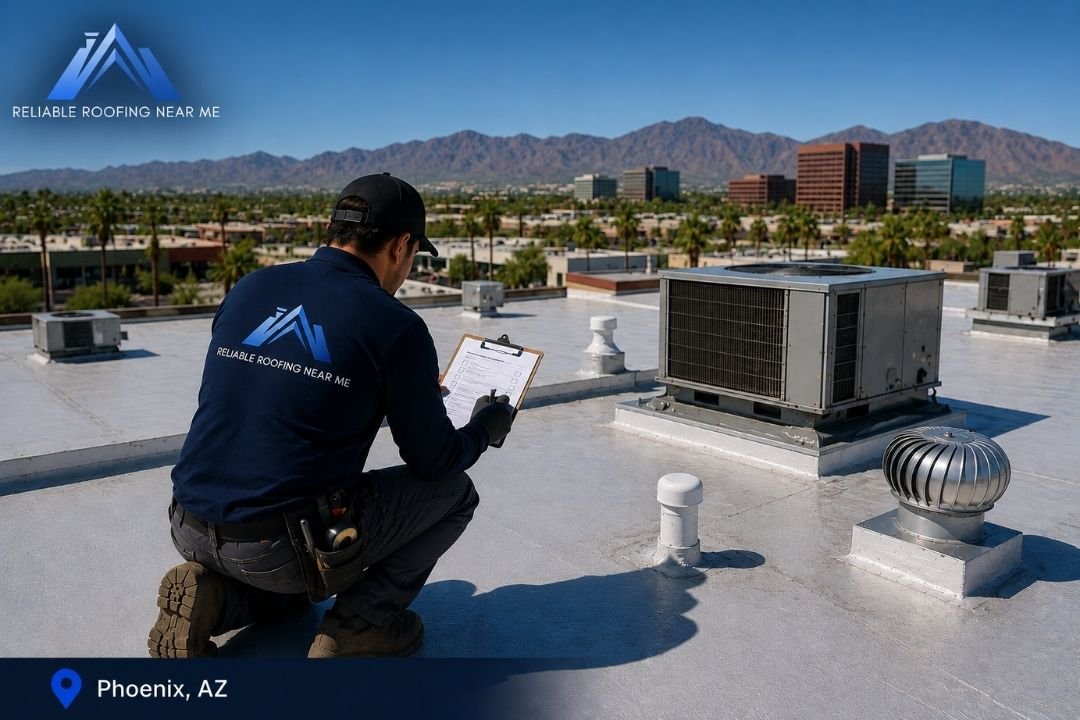
Because water can travel significant distances across a flat roof deck before finding its way through to the interior, the point where a leak appears inside a building is often not directly beneath the actual failure point on the roof. A proper repair starts with a thorough inspection that identifies the actual source, which may involve moisture-detection tools, careful visual inspection of seams and flashing, and sometimes controlled water testing to isolate the exact failure location.
Seam and Membrane Repair
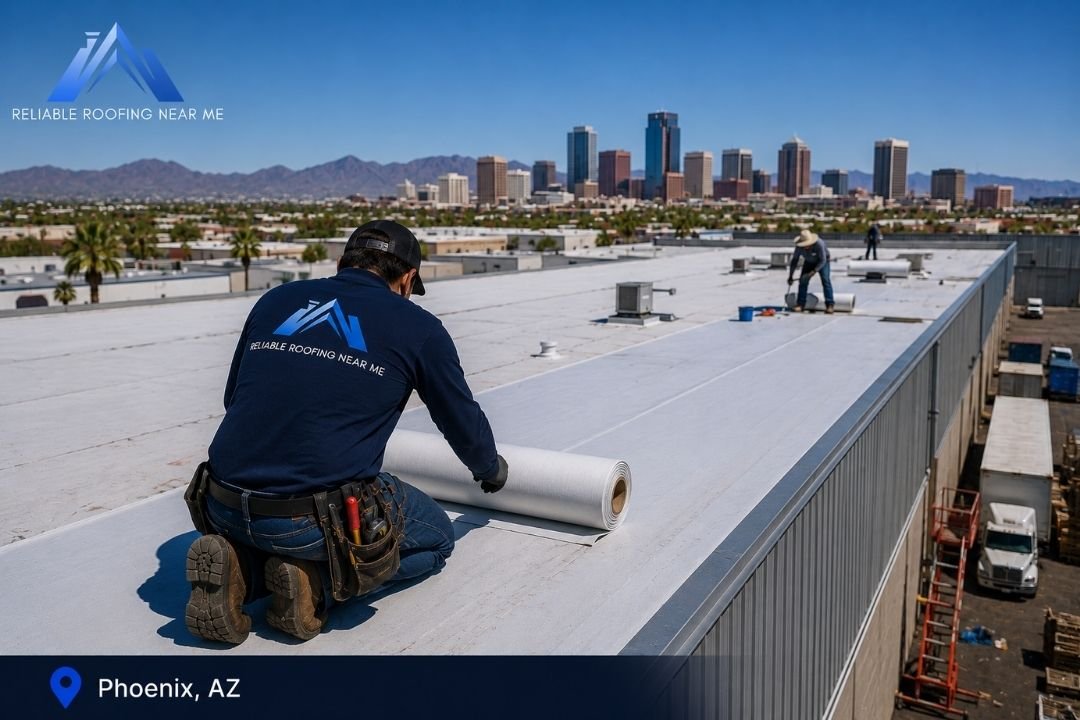
For TPO systems, seam repairs typically involve heat-welding a new patch over the failed area, ensuring full adhesion rather than simply applying sealant over the top, which tends to fail again within a season. Modified bitumen repairs often involve applying a new layer with proper heat-torch or cold-adhesive application depending on the original installation method.
Flashing Reseal or Replacement
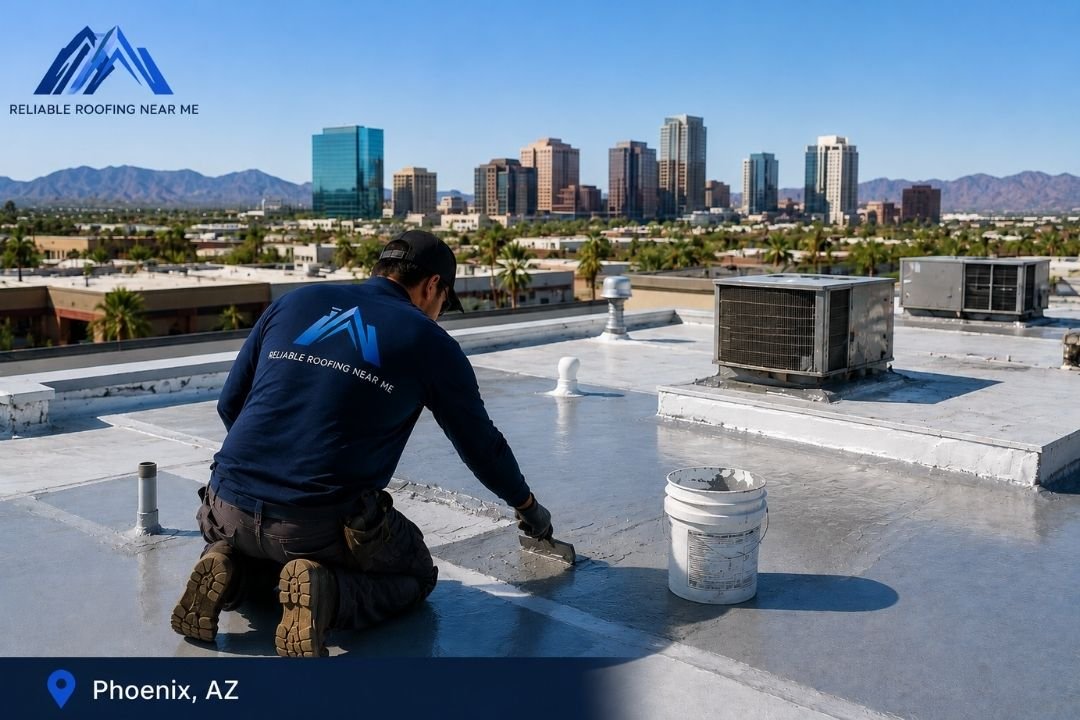
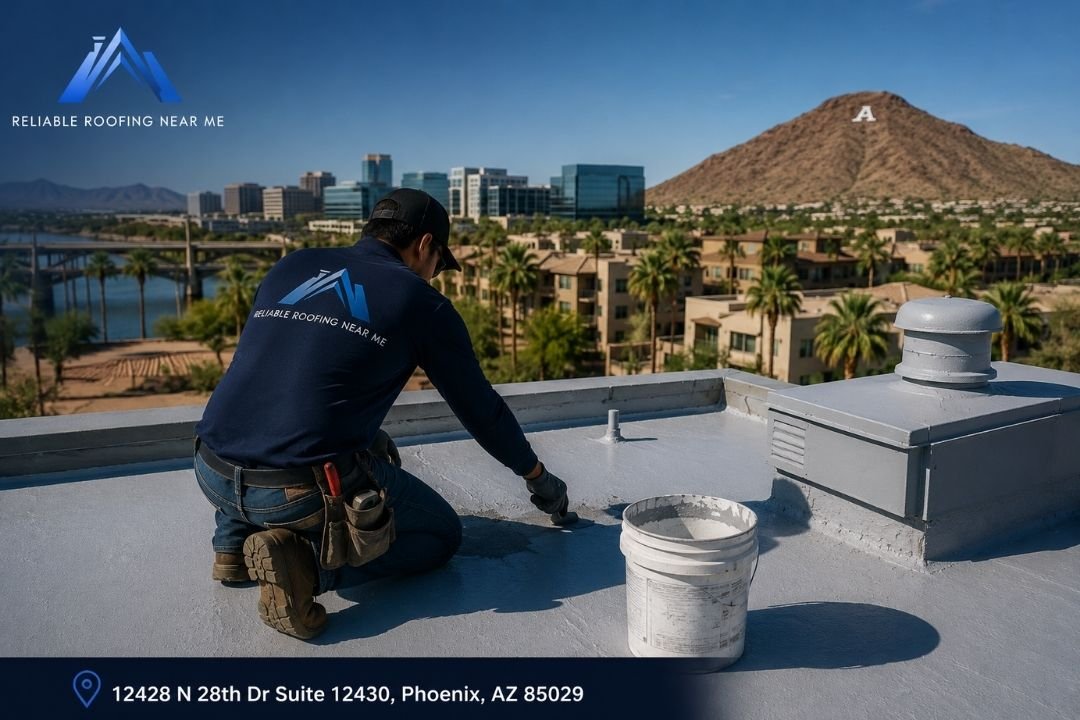
Failed flashing around penetrations is usually removed and replaced entirely rather than simply resealed, since degraded flashing material rarely holds a patch reliably. This is particularly important around HVAC curbs, where equipment vibration puts ongoing stress on the seal.
Foam Recoating
For foam roofs showing surface erosion but no deep water intrusion, a recoat can restore the protective top layer and extend the roof’s service life significantly, often at a fraction of the cost of full replacement. Understanding foam roof coating costs in Phoenix helps building owners budget for this maintenance cycle proactively rather than waiting for a leak to force the issue.
Drainage Correction
Where ponding water is a root cause, repair sometimes involves adding tapered insulation to redirect slope, installing additional drains, or clearing and modifying existing drainage paths to eliminate the low spot causing the problem in the first place.
Repair Versus Full Replacement: How That Decision Gets Made
Not every commercial roof problem calls for full replacement, and not every leak can be permanently solved with a patch. The deciding factors typically include the roof’s overall age relative to its expected service life, the extent of water intrusion into insulation or decking beneath the membrane, how many previous repairs have already been performed in the same areas, and whether the underlying structure shows signs of broader deterioration. Weighing roof replacement against repair is a decision best made after a full inspection rather than based on the visible symptom alone, since a small leak can sometimes indicate a much larger problem spreading beneath the surface.
Why Downtime and Business Disruption Matter in Commercial Repair
Unlike residential roofing, commercial flat roof repair often has to work around active business operations — retail hours, warehouse logistics, restaurant service, or office occupancy. A contractor experienced in commercial work should be able to schedule repairs during off-hours where possible, section off work areas to minimize disruption, and communicate clearly about timeline and any temporary measures needed to protect inventory or equipment from water exposure during the repair process itself.
The Cost of Waiting on Commercial Roof Repair
A small leak left unaddressed rarely stays small. Water that enters through a failed seam or flashing point can spread across the roof deck, saturate insulation, and eventually damage ceiling tiles, electrical systems, or inventory stored beneath the affected area. In commercial settings, this kind of delayed damage often costs significantly more than the original repair would have, and in some cases can force a temporary closure of affected areas while repairs and interior remediation take place. Addressing roof damage early is consistently the more economical path, even when the visible symptom seems minor.
Preventive Maintenance for Commercial Flat Roofs
Regular maintenance is the single most effective way to avoid emergency repairs on a commercial flat roof. This typically includes:
- Semi-annual inspections, ideally before and after monsoon season
- Routine drain and scupper cleaning to prevent debris buildup
- Prompt resealing of flashing at the first sign of wear, before a leak develops
- Foam roof recoating on a manufacturer-recommended schedule
- Documentation of roof condition over time to track wear patterns and plan budget for eventual replacement
A consistent inspection schedule catches the small, inexpensive problems before they become large, expensive ones, which matters even more for commercial properties where the cost of downtime compounds the cost of the repair itself.
Choosing a Commercial Roofing Contractor in Phoenix
Commercial flat roof work requires different expertise than residential shingle or tile roofing, and not every roofing company that services homes is equipped to handle commercial systems properly. Business owners should look for a contractor with an active ROC license specific to commercial work, verifiable experience with the specific membrane type installed on their building, proper insurance coverage for commercial-scale projects, and a track record of working around active business operations without unnecessary disruption. A written scope of work, clear timeline, and transparent pricing structure are just as important in commercial repair as they are in residential work — arguably more so, given the higher stakes of business downtime.
Frequently Asked Questions
How long does a commercial flat roof typically last in Phoenix?
Service life varies by material, but Phoenix’s extreme heat and UV exposure generally shorten the lifespan of flat roofing systems compared to milder climates. Regular maintenance and prompt repair of minor issues can meaningfully extend that lifespan.
Can a small leak really cause major damage if it’s just a drip?
Yes. Water often travels laterally across a roof deck or through insulation before showing up as a visible drip, meaning the actual affected area is frequently larger than the visible symptom suggests.
Is foam roofing a good option for Phoenix commercial buildings?
Foam roofing offers strong insulation value and can perform well in this climate, provided it receives regular protective recoating on schedule. Skipping that maintenance step significantly shortens its effective lifespan.
How disruptive is commercial roof repair to daily business operations?
It depends on the scope of the repair, but an experienced commercial contractor can typically schedule work to minimize disruption, section off active work areas, and communicate a clear timeline in advance.
Does insurance typically cover commercial roof repair after a storm?
Coverage depends on the policy and cause of damage, similar to residential claims. Storm-related damage is commonly covered, while damage from deferred maintenance usually is not, which is part of why documented inspection history matters for commercial properties.
How often should a commercial flat roof be inspected?
Most commercial roofing professionals recommend at least twice-yearly inspections, timed before and after monsoon season, in addition to inspections following any major storm event.
Protect Your Commercial Property Before Small Leaks Become Big Problems
At Reliable Roofing Near Me, we repair and maintain commercial flat roofing systems across Phoenix and more than 40 Arizona cities, working with TPO, foam, and modified bitumen systems on buildings of every size. Every inspection is documented, every recommendation is based on the actual condition of your roof, and every repair is scheduled to minimize disruption to your business. No pressure, no obligation.
Call us at (480) 867-9986 or visit reliableroofingnearme.com to schedule your free commercial roof inspection today. We serve Phoenix, Mesa, Scottsdale, Chandler, Gilbert, Tempe, and every community across the Valley.
Reliable Roofing Near Me | (480) 867-9986 | reliableroofingnearme@gmail.com | reliableroofingnearme.com | 12428 N 28th Dr Suite 12430, Phoenix, AZ 85029 | ROC License #355096