
Gilbert has become one of the fastest-growing and most sought-after communities in the entire Phoenix metro — excellent schools, well-maintained neighborhoods, strong property values, and a quality of life that draws families from across the country. But the same Sonoran Desert climate that makes Gilbert’s winters extraordinary also makes its summers one of the most demanding roofing environments on the planet.
The roofs above Gilbert’s homes are under a level of thermal, UV, and storm stress that most homeowners significantly underestimate — until the evidence arrives on their ceiling. Understanding what causes roof damage in Gilbert, how to recognize it before it becomes a structural problem, and how to navigate the repair process intelligently is knowledge that directly protects one of the most significant investments a Gilbert homeowner makes.
This guide covers everything Gilbert homeowners need to know about roof repair — from the specific damage patterns the desert creates, to what repairs cost in the current market, to how to identify a contractor worth trusting with your home.
Why Gilbert’s Climate Is Uniquely Hard on Roofs
Gilbert sits at the eastern edge of the Valley in the heart of the Sonoran Desert, and its roofing conditions reflect that position. The forces working against every roof in Gilbert operate simultaneously, continuously, and with an intensity that most of the country never experiences.
UV radiation: Gilbert receives approximately 300 days of sunshine per year. That relentless UV radiation attacks roofing materials — particularly asphalt underlayment — far faster than product specifications developed for moderate climates suggest. Sealants at flashing transitions that might last 15 years in a northern climate can become brittle and cracked within 5 to 7 years under Gilbert’s UV intensity. Underlayment that carries a 30-year rating in a temperate region may have a realistic service life of 20 to 25 years in Gilbert’s attic heat conditions.
Extreme thermal cycling: Gilbert’s daily temperature swing — 30 to 40 degrees between afternoon peak and nighttime low — causes every component of your roofing system to expand and contract continuously. Every fastener, every flashing joint, every mortar cap, and every sealant edge is being worked by this thermal movement day after day, year after year. The cumulative effect is loosened fasteners, opened flashing gaps, cracked mortar, and failed sealant — all of which create water entry points that monsoon rain exploits efficiently.
Monsoon season: Gilbert’s monsoon season — officially June 15 through September 30 — brings sudden, violent storms with wind gusts that can exceed 60 miles per hour and rainfall intensity that overwhelms drainage systems in minutes. These storms test every weak point a roof has, and any component that thermal cycling has stressed to the point of marginal performance will typically fail during the first significant monsoon event of the season.
Attic heat: In an inadequately ventilated Gilbert attic, summer temperatures regularly reach 150 to 165 degrees Fahrenheit. At those temperatures, underlayment degrades significantly faster than it would in a properly ventilated assembly. Understanding how attic ventilation and roof heat interact in Arizona is foundational context for any Gilbert homeowner dealing with roofing issues — because poor ventilation amplifies every other source of roof damage the desert produces.
These forces do not operate independently. They compound each other. UV exposure makes underlayment more brittle, which makes it less able to handle thermal cycling stress, which makes it more vulnerable to monsoon water intrusion. A Gilbert roof is not failing from one cause — it is aging under the combined pressure of an environment that is genuinely extreme by any national standard. Our guide on how Phoenix area heat reduces roof lifespan explains the full picture of what Valley roofs face across their service life.
The Most Common Roof Repairs in Gilbert AZ
Not all roof damage in Gilbert is dramatic or immediately visible. The most consequential roofing problems in the East Valley develop gradually and quietly — below the tiles, inside the flashing joints, and beneath the ridge mortar — until a monsoon storm creates the conditions that make the damage undeniable.
Tile Roof Underlayment Failure
This is the most significant and most frequently missed roofing problem across Gilbert’s established neighborhoods. The clay and concrete tile roofs that dominate the East Valley look solid and intact from the street. But beneath those tiles, the underlayment — the waterproof membrane that actually keeps water out of the home — has a realistic service life of 20 to 25 years in Arizona’s attic heat. Many of the tile roofs installed during Gilbert’s major growth periods in the 1990s and early 2000s are now at or past that threshold.
When underlayment fails, tiles that look fine externally become cosmetic protection over a compromised waterproofing system. Water that penetrates the tile surface during monsoon storms — which it always does, particularly with wind-driven rain at high angles — finds cracked, brittle underlayment that no longer redirects it safely off the roof. Instead it reaches the deck, the attic framing, and eventually the interior ceilings.
The indicators that underlayment failure is the actual problem rather than a surface tile issue include interior water stains appearing after rain when no tiles are visibly cracked or missing, moisture or staining visible in the attic after storm events, and recurring leaks that return after tile-level repairs. Our guide on when to replace tile roof underlayment in Arizona covers the specific warning signs and age thresholds that determine when the underlayment rather than the tile is the source of the problem.
Roof Flashing Failures
Every penetration point on a Gilbert roof — pipe boots, skylight perimeters, chimney base flashings, wall-to-roof step flashings — relies on properly sealed metal flashing to remain watertight. In Gilbert’s UV environment, the sealants at those flashing joints degrade faster than most homeowners realize, creating gaps that wind-driven monsoon rain exploits directly.
Flashing failures in Gilbert typically manifest as leaks that appear specifically during high-intensity monsoon storms — the conditions that force water into marginal gaps — rather than during lighter rain events. If your roof leaks during major storms but not light rain, and the leak traces to a location near a roof penetration or transition, flashing failure is the primary suspect. Our guide on roof flashing repair: signs, costs and what to do covers every flashing type and failure pattern in detail.
Ridge and Hip Mortar Cracking
On Gilbert’s tile roofs, the ridge caps and hip tiles are set in mortar — a cement-based material that seals the uppermost courses of tile against wind and water. The ridge line is the hottest and most thermally stressed location on the entire roof. Repeated daily expansion and contraction cycles crack this mortar progressively, and the resulting gaps allow wind to get beneath the cap tiles during monsoon storms — displacing them and creating direct water entry at the ridge.
Repointing ridge mortar — removing the cracked material and applying new mortar — is a standard maintenance repair for Gilbert tile roofs. It is most cost-effective when addressed before mortar failure has progressed to the point of displaced tiles. A displaced cap tile during a monsoon storm creates both a water entry point and a potential safety hazard that is more expensive to address than a proactive repointing visit would have been.
Cracked and Broken Tiles
Individual tile cracking in Gilbert results from several sources — foot traffic from rooftop trades, impact from monsoon-borne debris, thermal stress on tiles that have aged and lost flexibility, and in some cases hail from the more significant monsoon storm events that affect the East Valley.
Each cracked tile is a point where the underlayment beneath is directly exposed to UV radiation — and in Gilbert’s UV environment, exposed underlayment degrades rapidly. Identifying and replacing cracked tiles promptly after the event that caused them — whether that is a storm, an HVAC service visit, or any other source of rooftop traffic — keeps the underlayment beneath protected and extends the overall system life.
Our guide on whether you can walk on a tile roof in Phoenix addresses the foot traffic issue directly — including how to brief rooftop trades before they access your Gilbert roof and what to do if you suspect foot traffic has caused cracking.
Flat Roof Membrane Deterioration
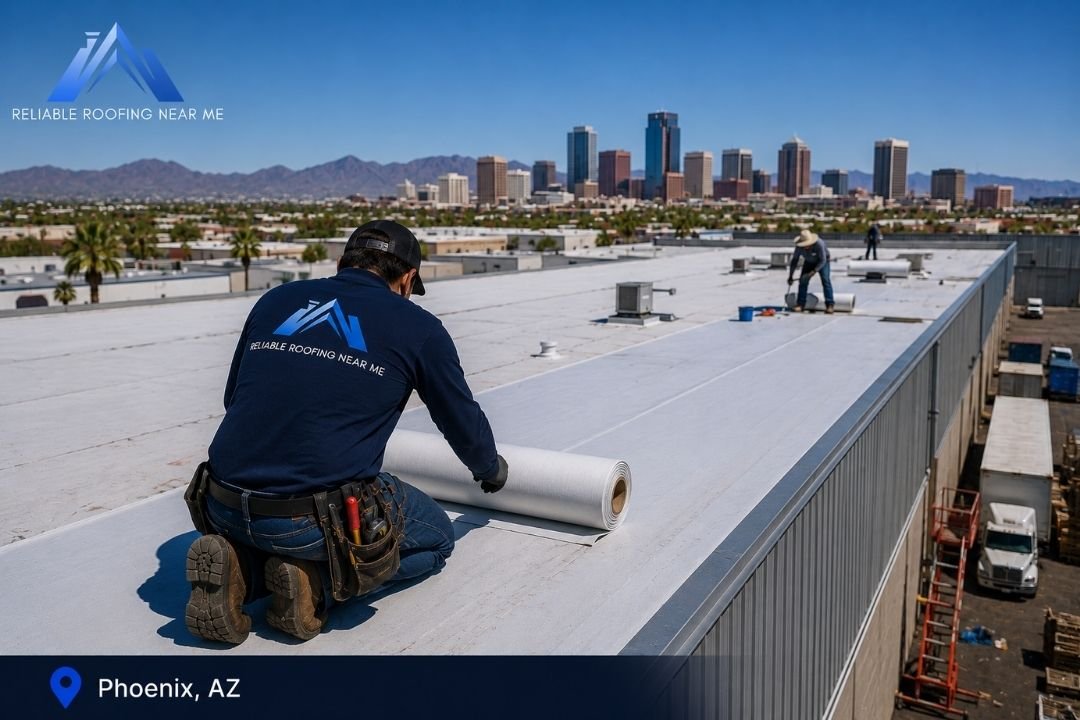
Many Gilbert homes have flat or low-slope sections — on garage roofs, room additions, covered patios, and casitas. These sections require different roofing systems than the primary tile roof above, and they are among the most frequently neglected areas on East Valley residential properties.
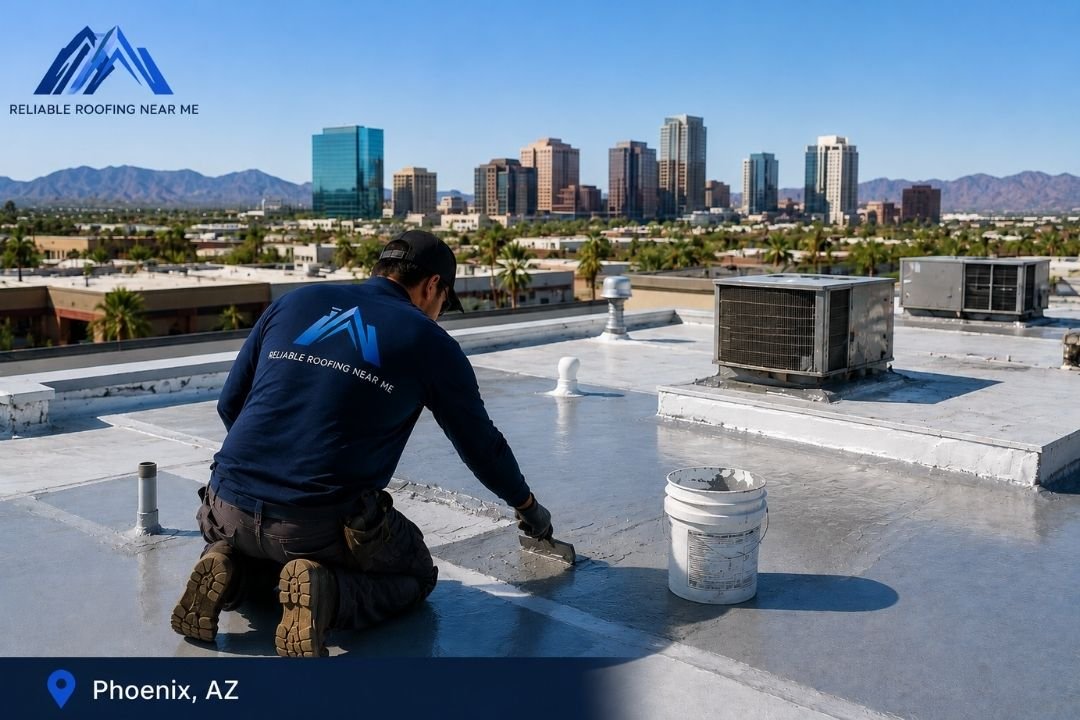
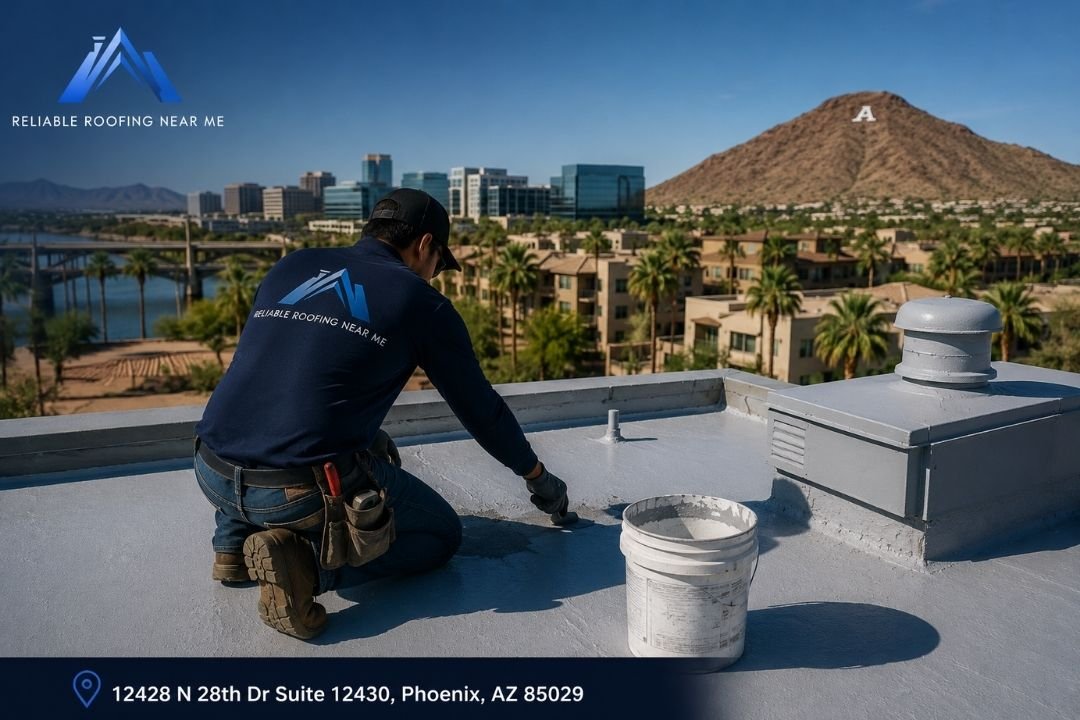
Modified bitumen, TPO, and foam roofing systems on Gilbert flat roof sections are subject to the same UV, heat, and monsoon stress as the tile roofs above them — without the protective mass and profile that tile provides. Blistering, seam separation, cracking, and pooling water are the most common failure modes. For Gilbert homeowners evaluating flat roof repair options, our comparisons of TPO roofing pros and cons and foam roof coating costs in Phoenix provide the information needed to evaluate repair versus replacement on flat sections.
Signs Your Gilbert Roof Needs Repair Now
Several indicators tell a Gilbert homeowner that roof repair cannot be deferred to a more convenient time. Recognizing these signs early — before they compound into structural damage — is the difference between a manageable repair bill and a major remediation project.
Interior water stains on ceilings or walls are the most urgent indicator. Any water stain that appears after a rain event — regardless of how minor it seems — indicates active water intrusion that is damaging your roof deck, attic framing, and insulation with every subsequent storm. The stain you see is the surface manifestation of damage that has likely been accumulating for longer than the stain has been visible.
Moisture or staining in the attic after rain events indicates water is bypassing the tile surface and reaching structural components. Attic access after every significant monsoon storm is one of the most valuable maintenance habits a Gilbert homeowner can develop.
Displaced or visibly cracked tiles across multiple sections indicate that the thermal cycling and storm stress the roof has accumulated have reached the point where tile integrity is actively compromised. Individual tile replacement at this stage is appropriate — but a professional inspection to assess the underlayment condition beneath the damaged areas is equally important.
Recurring leaks in the same location despite previous repairs indicate that the actual source — typically underlayment or flashing — has not been addressed. If a leak has come back after being “repaired” twice, the repair approach has not reached the root cause. Our guide on why roof leaks happen and how to fix them covers the diagnostic process for identifying the actual source of persistent leaks.
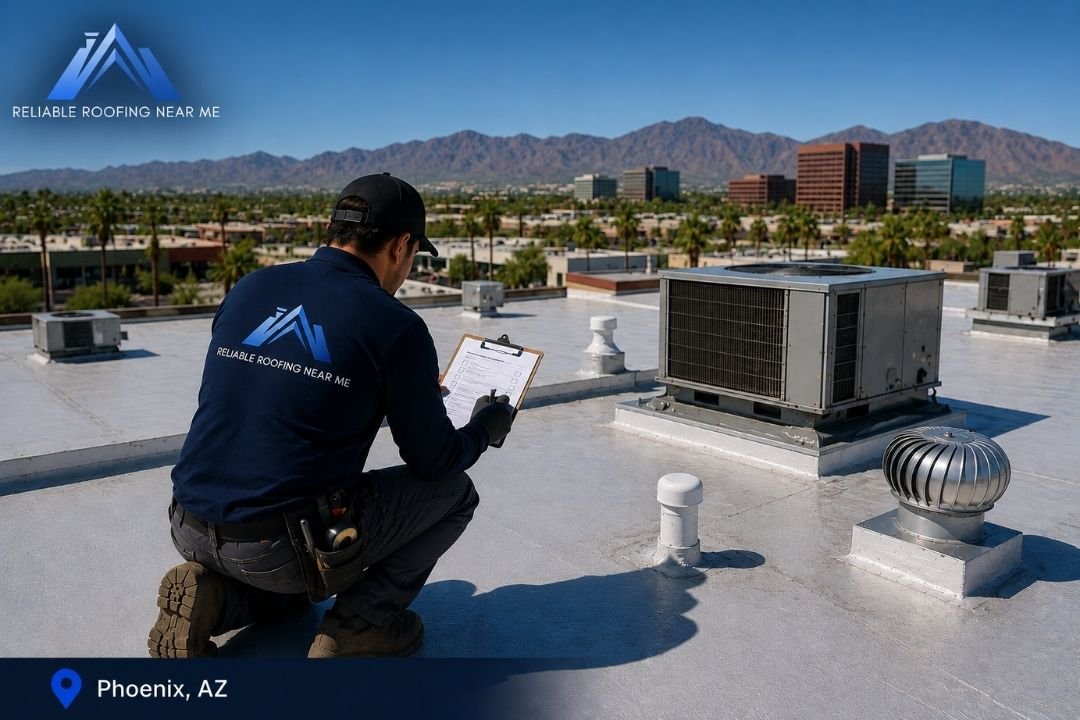
A roof more than 15 years old that has not been professionally inspected recently should be treated as a roofing situation that warrants assessment rather than assumption. In Gilbert’s climate, the 15-year mark is the point at which underlayment condition becomes a genuine question rather than a theoretical one. Our Phoenix metro roof inspection checklist outlines exactly what a thorough professional inspection covers at this stage.
Signs of failing from the street — sagging sections, visibly uneven tile courses, discolored areas suggesting moisture accumulation — are advanced indicators that warrant immediate professional assessment. If your roof is showing these signs, the question is no longer whether repair is needed but whether repair is still sufficient or whether full replacement is the appropriate response. Our guide on Phoenix roof replacement vs repair walks through the decision framework in detail.
Roof Repair Cost in Gilbert AZ
Roofing repair costs in Gilbert reflect the current East Valley market for materials and labor. Understanding the ranges for common repair types helps you evaluate contractor estimates accurately before committing to any work.
Individual tile replacement (per tile): $35 to $150 depending on tile profile, color matching difficulty, and the number of tiles being replaced in a single visit. Sourcing matching tile for older or discontinued profiles adds to both cost and timeline.
Ridge and hip mortar repointing: $400 to $1,200 for a full ridge and hip repoint on a standard Gilbert residential roof, depending on linear footage and extent of mortar deterioration.
Pipe boot and flashing repair (per penetration): $150 to $400 per location for standard pipe boot replacement. Skylight flashing repair runs $300 to $900. Chimney flashing repair ranges from $400 to $1,500 depending on whether the base flashing, step flashing, and counter flashing all require replacement.
Flat roof membrane repair (per section): $300 to $1,500 for isolated membrane repairs depending on the system type, area of damage, and accessibility.
Tile roof underlayment replacement (full re-roof with tile relay): $9,000 to $18,000 for a standard 2,000 square foot Gilbert home, depending on underlayment product specified, extent of deck repairs needed, and percentage of existing tiles that can be salvaged and reused.
Full roof inspection plus minor repairs: $150 to $500 covering the inspection, written report, sealant renewal at identified flashing locations, and replacement of a small number of cracked or displaced tiles.
For current market benchmarks on both repair and replacement costs across the East Valley, our guides on roof repair costs in Phoenix metro and roof replacement costs in Phoenix metro provide detailed pricing by scope and material type.
Gilbert HOA Roofing Requirements: What Repair Projects Need to Consider
Gilbert has one of the most active HOA landscapes in the East Valley. A significant portion of Gilbert’s residential neighborhoods — from Power Ranch and Trilogy to Val Vista Lakes and Morrison Ranch — are governed by HOA communities with specific requirements for roofing materials, colors, and contractor documentation.
For most routine repair work — replacing individual tiles, repointing ridge mortar, repairing flashing sealant — HOA approval is typically not required provided the repair materials match the existing approved installation. However, for any repair that involves changing materials, altering the roof profile, or working on a visible surface in a way the HOA might interpret as a modification, confirming requirements with your HOA management company before work begins avoids the costly outcome of being required to redo non-compliant work.
Our full guide on HOA roofing rules in Phoenix Arizona covers the approval process, documentation requirements, and common compliance mistakes across Valley HOA communities — including the East Valley communities that define Gilbert’s residential landscape.
Does Homeowner’s Insurance Cover Roof Repair in Gilbert AZ?
Whether homeowner’s insurance covers a Gilbert roof repair depends entirely on the cause of the damage. Standard Arizona homeowner’s insurance policies cover physical damage from specific covered events — monsoon storm wind, hail, falling debris — but explicitly exclude damage from normal wear, aging, and deferred maintenance.
If your Gilbert roof was damaged in a monsoon storm, documenting the damage immediately after the event is the most important step you can take before anything else. Photograph every area of visible damage — displaced tiles, interior water stains, damaged gutters — as close to the storm event as possible. Then request a professional inspection and written damage assessment from a licensed roofing contractor before contacting your insurer. A professional written assessment carries more weight with adjusters than homeowner documentation alone and ensures that all covered damage is accurately identified rather than discovered piecemeal during the claims process.
Our step-by-step guide on the insurance claim process after a Phoenix monsoon walks through every step from documentation to adjuster interaction. And our guide on whether home insurance covers roof replacement in Phoenix clarifies exactly what standard Arizona policies cover and where the common exclusions are — so you know before filing whether your situation is likely to be covered.
How to Choose the Right Roofing Contractor for Repair in Gilbert AZ
Selecting a roofing contractor for repair work in Gilbert deserves the same diligence as selecting one for a full replacement. The consequences of poor repair work — failed repairs that return with the next monsoon, voided warranties from non-approved materials, unpermitted work that creates complications at sale — are significant regardless of the initial repair cost.
The essential verification steps before hiring any Gilbert roofing contractor include confirming an active Arizona ROC license, requesting current certificates of general liability and workers’ compensation insurance, getting a written estimate that specifies the scope, materials, and warranty terms, and checking references from Gilbert or East Valley homeowners with similar repair projects.
Our complete guide on how to choose the best roofing contractor in Phoenix AZ covers the full evaluation framework — including the questions that distinguish genuinely qualified contractors from those who simply present well in an initial conversation.
At Reliable Roofing Near Me, our Arizona ROC license number is ROC 355096 — active, in good standing, and verifiable at the official Arizona ROC website at any time.
Repair Now or Replace: Making the Right Call for Your Gilbert Roof
One of the most valuable things a professional roof inspection provides is honest guidance on whether the situation calls for targeted repair or full replacement. This is a consequential decision with significant cost implications in either direction — and it is one where an experienced Gilbert roofing contractor’s assessment should be understood clearly before it is accepted.
Targeted repair is the appropriate response when damage is genuinely isolated — a specific flashing location, a section of cracked tiles, a localized membrane failure — and when the overall roof system including underlayment is in acceptable condition for the age of the installation. In these cases, addressing the specific damage efficiently and returning to normal maintenance is the right path.
Full replacement — or in the case of tile roofs, a tile relay with new underlayment — becomes the appropriate response when the underlayment has reached the end of its reliable service life, when repeated repairs have failed to resolve recurring leaks, when deck damage has been discovered that requires structural remediation, or when the overall condition of the system indicates that targeted repairs are buying time rather than solving the problem.
The factors that determine which situation you are in include the age and documented maintenance history of your roof, the extent and distribution of current damage, whether the issues are isolated or symptomatic of system-wide deterioration, and what a professional inspection of the underlayment beneath the tiles reveals. If your Gilbert roof is showing signs that replacement may be warranted, our guide on when to replace your roof in Phoenix metro gives you the complete decision framework.
Frequently Asked Questions
How do I know if my Gilbert roof needs repair or replacement?
Key indicators that repair rather than replacement is appropriate include isolated, localized damage with an otherwise sound roof system, a roof under 15 years old with documented maintenance history, and underlayment that a professional inspection confirms is in acceptable condition. Indicators that replacement is warranted include a roof more than 20 years old with no documented underlayment replacement, recurring leaks that repair has not resolved, moisture in the attic, widespread tile or system deterioration, and deck damage discovered during inspection. Our guide on Phoenix roof replacement vs repair covers the full decision framework.
Does roof repair require a permit in Gilbert AZ?
Minor repairs — replacing individual tiles, repointing ridge mortar, repairing flashing sealant — typically do not require a permit in Gilbert. Full roof replacements and tile relay projects involving underlayment replacement do require a permit through the Town of Gilbert Development Services Department. A licensed roofing contractor handles permit filing as a standard part of full replacement projects. Confirm permit requirements for your specific scope with your contractor before work begins.
How long does roof repair take in Gilbert AZ?
Most individual repair visits in Gilbert — tile replacement, flashing repair, mortar repointing — are completed within one day, often within a few hours depending on the scope. Tile underlayment replacement projects — which involve full tile removal, underlayment tear-off, deck inspection, new underlayment installation, and tile relay — typically take three to five days for a standard residential roof.
Can monsoon damage be repaired the same season it occurs?
Yes — and it should be. Leaving monsoon damage unrepaired through the remainder of the storm season means every subsequent storm tests the same compromised areas under the same high-intensity conditions that created the initial damage. Scheduling repair promptly after damage is identified — rather than waiting for the end of monsoon season — limits the cumulative damage that unaddressed water intrusion causes across multiple storm events.
What is the most common roof repair in Gilbert AZ?
Flashing sealant renewal and individual tile replacement are the most frequent repair types on Gilbert residential roofs. Tile underlayment replacement — the most significant and most commonly deferred repair — is the most consequential. Many Gilbert homeowners are carrying roofs past the 20-year underlayment service life threshold without realizing the waterproofing risk that represents, because the tiles above continue to look intact from the street.
Schedule Your Free Roof Inspection in Gilbert AZ
At Reliable Roofing Near Me, we serve Gilbert homeowners with honest, professional, fully documented roof repair and replacement services across every neighborhood in the East Valley. We inspect accurately, estimate transparently, repair correctly, and stand behind everything we do with written warranty terms that are worth the paper they are printed on.
Whether you have an active leak, storm damage from last season’s monsoons, a roof approaching the 20-year threshold, or simply want to know where your roof stands before summer arrives, we will give you a straight answer and a written assessment — no pressure, no obligation.
Call us at (480) 867-9986 or visit reliableroofingnearme.com to schedule your free Gilbert roof inspection today. We serve Gilbert, Chandler, Mesa, Scottsdale, Phoenix, Tempe, Glendale, Peoria, Surprise, and every community across the Valley.
Reliable Roofing Near Me | (480) 867-9986 | reliableroofingnearme@gmail.com | reliableroofingnearme.com | 12428 N 28th Dr Suite 12430, Phoenix, AZ 85029 | ROC License #355096