Flat and low-slope roofs are everywhere in Phoenix — on residential homes, commercial buildings, garages, additions, and mixed-use properties across the entire Valley. And when it comes to flat roofing options in Arizona, TPO is one of the most commonly specified and installed systems on the market today.
But TPO is also one of the most frequently misunderstood roofing products among Phoenix homeowners and property managers. Some contractors recommend it enthusiastically for every flat roof application. Others argue that Arizona’s extreme climate exposes TPO’s limitations faster than most other regions in the country. The reality, as with most things in roofing, sits somewhere between those positions and depends heavily on the specific application, installation quality, and product grade selected.
This guide gives you a complete, honest breakdown of TPO roofing Phoenix AZ pros cons — what the material is, where it performs well in Arizona, where its limitations show up, what it costs, and how it compares to the main alternatives so you can make a genuinely informed decision.
What Is TPO Roofing?
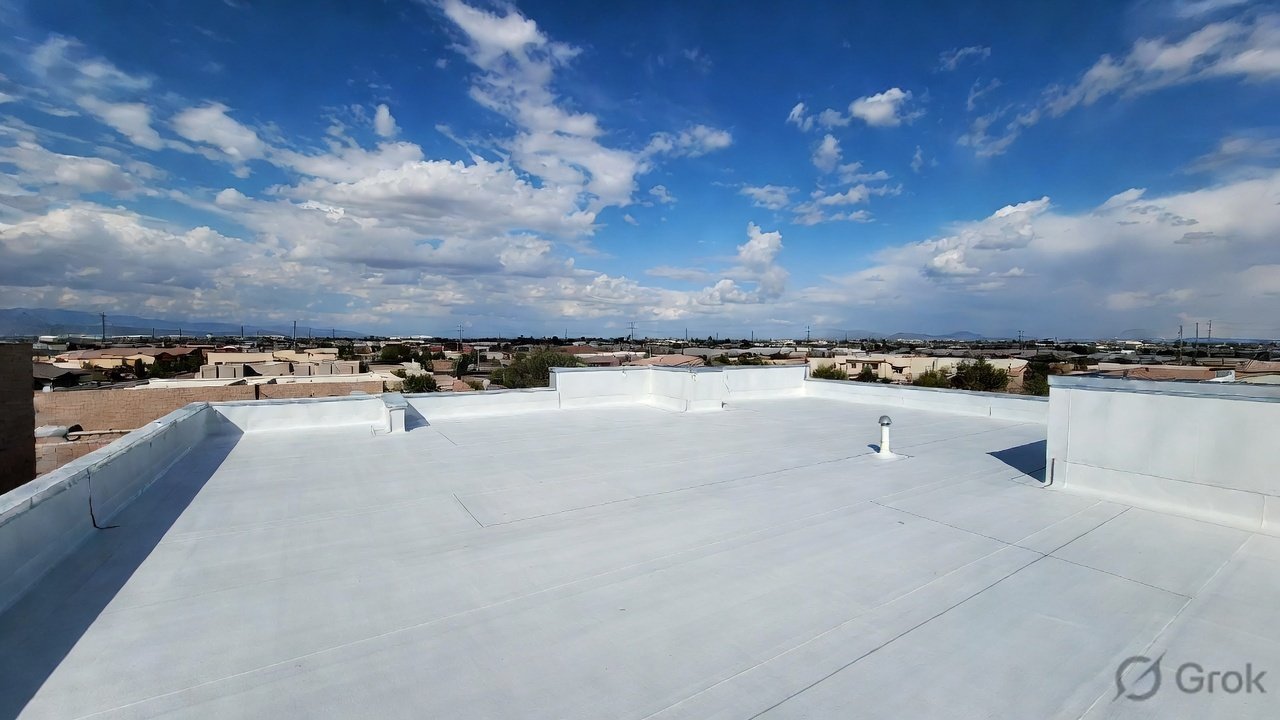
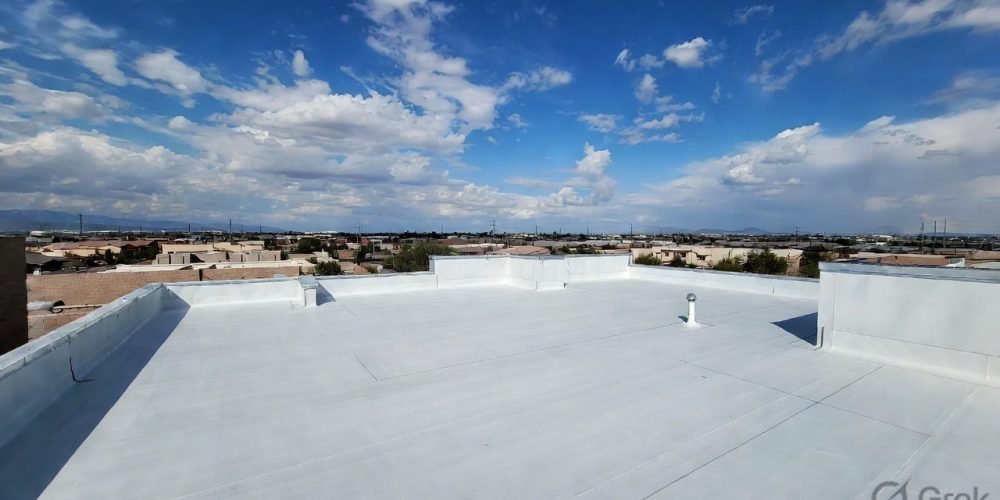
TPO stands for Thermoplastic Polyolefin. It is a single-ply roofing membrane — a single layer of synthetic material installed across the entire flat or low-slope roof surface and heat-welded at all seams and joints to create a continuous, watertight barrier.
TPO membranes are manufactured in rolls and installed either mechanically fastened to the roof deck, fully adhered with roofing adhesive, or held in place with ballast. The seams between adjacent sheets are fused together using a hot-air welding gun, creating welds that — when properly executed — are actually stronger than the membrane itself.
TPO is available in several thicknesses — most commonly 45-mil, 60-mil, and 80-mil — with thicker membranes offering greater durability, puncture resistance, and longevity. It is almost universally white or light gray in color, which gives it inherent solar reflectivity that is particularly relevant in Phoenix’s climate.
TPO has grown significantly in market share across the United States over the past two decades and is now one of the most widely installed commercial and residential flat roofing systems in the country.
TPO Roofing in Phoenix AZ: The Pros
Energy Efficiency in Arizona’s Heat
This is TPO’s single most compelling advantage for Phoenix applications. TPO membranes are white by default and carry high solar reflectance values — typically reflecting 70 to 80 percent of solar radiation rather than absorbing it. In a city where flat roof surface temperatures on dark membranes can exceed 170 degrees Fahrenheit during summer, a TPO membrane’s ability to reflect the majority of that solar energy is a genuine and measurable performance advantage.
The result is a cooler roof surface, a cooler attic space beneath it, and reduced demand on the building’s air conditioning system. For commercial properties and homes with significant flat roof sections, the energy savings from a white TPO membrane compared to a dark EPDM or aged modified bitumen roof can be substantial across a Phoenix summer.
Seam Strength
TPO’s heat-welded seams are one of its most technically significant advantages over other single-ply options. When performed correctly by an experienced installer with properly calibrated equipment, hot-air welded TPO seams achieve a bond that exceeds the tensile strength of the membrane itself. This is fundamentally different from adhesive-bonded or tape-sealed seams, which degrade over time and are vulnerable to the thermal cycling that Phoenix roofs experience constantly.
Strong, durable seams matter enormously on flat roofs because seam failure is one of the leading causes of flat roof leaks. A well-welded TPO installation addresses this vulnerability more effectively than most alternative systems.
Chemical and Puncture Resistance
TPO membranes resist a range of chemicals — oils, fats, and bacterial growth — that can degrade other roofing membranes. This makes TPO particularly well suited for commercial kitchens, restaurants, and food service facilities where rooftop grease discharge is a concern. TPO also offers reasonable puncture resistance relative to its weight, particularly in the thicker 60-mil and 80-mil gauges.
Cost Competitiveness
TPO sits at a favorable price point relative to other flat roofing systems in the Phoenix market. It is generally less expensive than spray polyurethane foam installations and comparable to or less expensive than PVC roofing. For budget-conscious property owners who need a reliable flat roofing solution, TPO’s combination of performance and affordability is a genuine advantage.
Wide Contractor Availability
TPO is one of the most widely installed flat roofing systems in the Phoenix metro, which means a broad base of contractors has experience with it. This availability creates competitive pricing and means qualified installers are accessible across the Valley. It also means replacement materials and patches are readily available if repairs are needed.
TPO Roofing in Phoenix AZ: The Cons
Longevity Concerns in Arizona’s Climate
This is the most significant and most debated concern about TPO in Phoenix applications. TPO’s track record as a roofing product spans roughly 30 years — a relatively short history compared to materials like clay tile, built-up roofing, or EPDM. In that time, the product has undergone significant formulation changes, and the long-term performance data for TPO specifically in extreme desert UV environments is less established than for some competing systems.
Arizona’s UV intensity is genuinely extreme. The same UV radiation that degrades roofing sealants and underlayment faster than product specifications predict also affects TPO membranes. Some Phoenix contractors report that lower-grade TPO membranes show surface chalking, brittleness, and seam stress in 10 to 15 years — short of the 20 to 30-year lifespans that are sometimes cited in manufacturer literature.
The practical implication for Phoenix property owners is this: TPO installed in Arizona should be a minimum 60-mil membrane, and 80-mil is a sound upgrade for applications where maximum longevity is the priority. Thin 45-mil TPO is a cost-cutting measure that shows its limitations faster in Phoenix’s UV environment than it would in a more moderate climate.
Installation Quality Sensitivity
TPO’s performance is heavily dependent on installation quality — more so than some competing systems. The heat welding process that creates TPO’s strong seams requires properly calibrated equipment, experienced operators, and appropriate ambient conditions. Seams welded at incorrect temperatures — too hot or too cool — are weak, and weak seams are the leading cause of TPO roof failures.
In Phoenix’s market, as in any major metro, contractor quality varies considerably. A TPO installation by an experienced, properly equipped crew produces a roof that performs as specified. A TPO installation by a crew with inadequate training or improperly maintained welding equipment produces a roof with seam failures that may not manifest visibly until the next monsoon season — after the contractor is long gone.
This installation sensitivity makes contractor vetting more critical for TPO than for more forgiving systems like spray foam.
Thermal Expansion and Contraction
Despite its white surface and reflective properties, TPO is a thermoplastic material — meaning it softens under heat and stiffens in cold. Phoenix’s daily temperature swings of 30 to 40 degrees cause TPO membranes to expand and contract constantly. Over time, this thermal movement places stress on seams, termination bars, and flashings — particularly where the membrane is mechanically fastened or where it transitions to vertical surfaces.
Properly installed TPO with adequate fastening and appropriate membrane relaxation during installation handles this thermal movement well. TPO that was installed under tension, with inadequate fastening density, or with substandard termination details will show the effects of thermal cycling more quickly.
Puncture Vulnerability in Thinner Gauges
While TPO offers reasonable puncture resistance in heavier gauges, 45-mil membranes are vulnerable to puncture from foot traffic, falling debris, and rooftop equipment maintenance. In Phoenix, where HVAC systems sit on flat rooftops and require regular service access, puncture risk from technician foot traffic is a real maintenance consideration. Specifying 60-mil or 80-mil membrane for any application with regular rooftop access is strongly advisable.
Limited Repairability Compared to Foam
Spray polyurethane foam roofing — TPO’s main competitor in the Phoenix residential flat roof market — can be repaired seamlessly by simply applying additional foam and coating to any damaged area. TPO repairs require heat-welding patch material over the damaged section, which requires specialized equipment and leaves a visible repair zone. For property owners who prioritize long-term repairability and maintenance simplicity, foam roofing has a practical advantage over TPO in this respect.
TPO Roofing Cost in Phoenix AZ
TPO installation costs in Phoenix depend on roof size, membrane thickness, installation method, deck condition, and access complexity.
| Membrane Thickness | Installed Cost Per Square Foot | Typical Cost for 1,500 sq ft Roof |
|---|---|---|
| 45-mil TPO | $4.50 – $6.50 | $6,750 – $9,750 |
| 60-mil TPO | $5.50 – $8.00 | $8,250 – $12,000 |
| 80-mil TPO | $7.00 – $10.00 | $10,500 – $15,000 |
Additional costs to factor in include deck repairs if existing substrate is damaged, removal and disposal of the existing roofing system, penetration flashings for HVAC units and pipe penetrations, and any required tapered insulation for drainage improvement.
These figures reflect current Phoenix market pricing. Always request a written, itemized estimate specifying membrane thickness, installation method, and warranty terms before committing to any flat roofing contractor.
TPO vs Foam Roofing in Phoenix: The Key Differences
Since spray polyurethane foam is the dominant competing system for Phoenix flat roofs, a direct comparison is worth addressing clearly.
Seams: TPO has welded seams at every sheet overlap — typically every 10 feet across the roof width. Foam roofing is completely seamless, with no joints anywhere on the roof surface. In terms of waterproofing integrity, seamless wins.
Energy efficiency: Both systems offer strong solar reflectance in their standard configurations. They are comparable in this respect for most Phoenix applications.
Longevity: Quality foam roofing with a maintained coating schedule can realistically deliver 30 or more years of service. Quality 60-mil or 80-mil TPO in Phoenix typically delivers 15 to 25 years depending on installation quality and UV exposure.
Upfront cost: TPO is generally less expensive than a new foam roof installation at comparable quality levels.
Repairability: Foam roofing is more easily repaired seamlessly. TPO repairs require welded patches.
Installation sensitivity: Both systems require experienced installers. TPO’s seam welding and foam’s mixing and application are both technique-dependent processes where quality variation has significant performance consequences.
For Phoenix residential flat roofs, foam roofing typically offers better long-term performance at a higher upfront cost. TPO is a sound choice for budget-conscious applications and commercial projects where the economics favor lower initial investment with a planned replacement cycle.
What to Look for in a TPO Roofing Contractor in Phoenix
Given TPO’s installation sensitivity, contractor selection is more consequential for TPO than for many other roofing systems. When evaluating Phoenix TPO roofing contractors:
Verify the Arizona ROC license. All roofing contractors in Arizona are required to hold an active license from the Arizona Registrar of Contractors. Verify the license number before signing any agreement. At Reliable Roofing Near Me, our license number is ROC 355096.
Ask about membrane thickness. Any contractor who quotes only 45-mil TPO for a Phoenix application without discussing thicker alternatives is not optimizing for your roof’s long-term performance. Insist on understanding the thickness specification in your estimate.
Ask about the welding equipment. Experienced TPO contractors use automatic hot-air welding machines — not just hand welders — for field seams. Automatic welders produce more consistent seam temperatures and more reliable bond strength across long seam runs.
Request manufacturer warranty documentation. Quality TPO installations carry both a manufacturer material warranty and a contractor workmanship warranty. Both should be provided in writing before work begins.
Check for deck inspection and preparation scope. Any legitimate estimate for a TPO installation includes assessment and preparation of the existing deck. Quotes that skip this step entirely are cutting corners that show up as problems later.
Frequently Asked Questions
How long does TPO roofing last in Phoenix?
Quality 60-mil or 80-mil TPO installed by an experienced contractor in Phoenix realistically lasts 15 to 25 years depending on UV exposure, installation quality, and maintenance. Thinner 45-mil membranes in high-UV Phoenix conditions typically perform at the lower end of that range or below it.
Is TPO roofing good for Arizona heat?
TPO’s white reflective surface makes it one of the better-performing flat roof materials in Phoenix’s heat from an energy efficiency standpoint. The limitation is UV degradation of the membrane itself over time rather than heat absorption — which is why membrane thickness and product grade matter more in Arizona than in moderate climates.
Does TPO roofing require maintenance in Phoenix?
TPO requires periodic inspection — at minimum annually and after major monsoon storms — to identify any seam stress, punctures, or termination bar issues before they develop into active leaks. It does not require the periodic recoating that foam roofing needs, but it is not a maintenance-free system either.
Can TPO be installed over my existing flat roof?
In some cases TPO can be installed over an existing roofing system — a practice called a recover or overlay. This is only appropriate when the existing substrate is structurally sound, dry, and adequately fastened. Most experienced Phoenix contractors prefer full tear-off to allow deck inspection before installation, and many manufacturers require full tear-off to honor their material warranty.
What is the difference between TPO and PVC roofing?
Both are thermoplastic single-ply membranes with heat-welded seams. PVC has a longer performance track record, generally better chemical resistance, and slightly better low-temperature flexibility. It is also typically more expensive than TPO. For most Phoenix residential and light commercial applications, 60-mil or 80-mil TPO is a sound choice. PVC is worth considering for applications with significant chemical exposure or where maximum membrane longevity is the overriding priority.
Get a Free TPO Roofing Estimate in Phoenix
At Reliable Roofing Near Me, we install and maintain TPO roofing systems for residential and commercial properties across Phoenix and more than 40 Arizona cities. We will assess your flat roof, give you honest guidance on whether TPO is the right system for your specific application, and provide a written, itemized estimate with no pressure.
Call us at (480) 867-9986 or visit reliableroofingnearme.com to schedule your free flat roof inspection today. We serve Phoenix, Scottsdale, Mesa, Chandler, Gilbert, Glendale, Peoria, Tempe, Surprise, and every community across the Valley.
Reliable Roofing Near Me | (480) 867-9986 | reliableroofingnearme@gmail.com | reliableroofingnearme.com | 12428 N 28th Dr Suite 12430, Phoenix, AZ 85029 | ROC License #355096