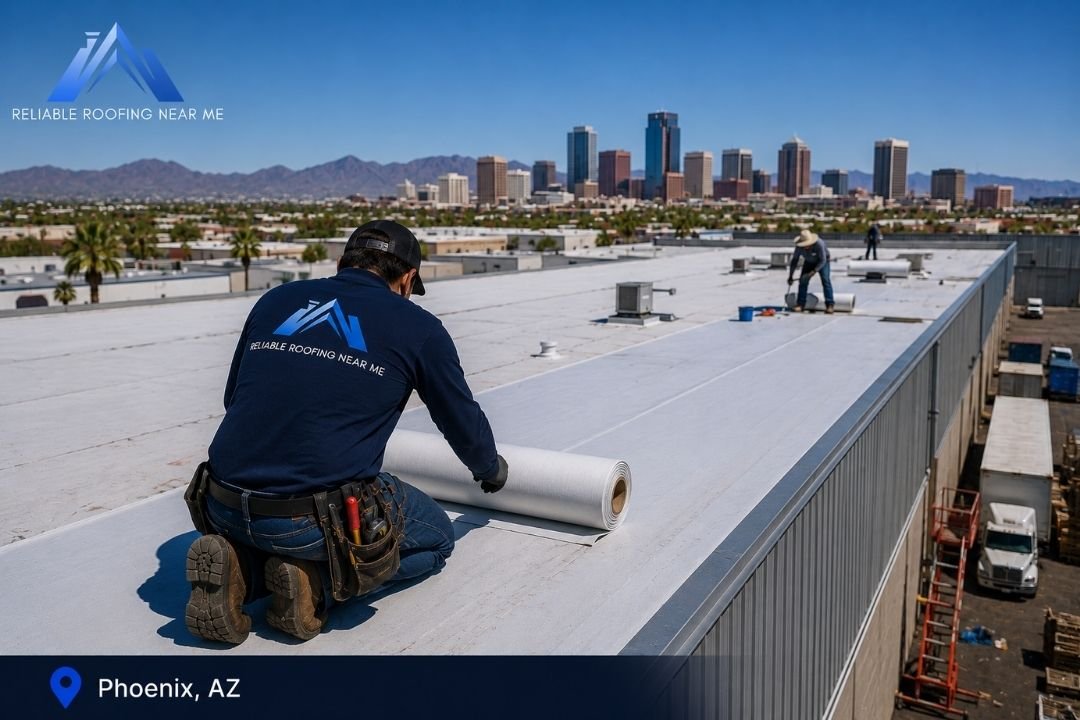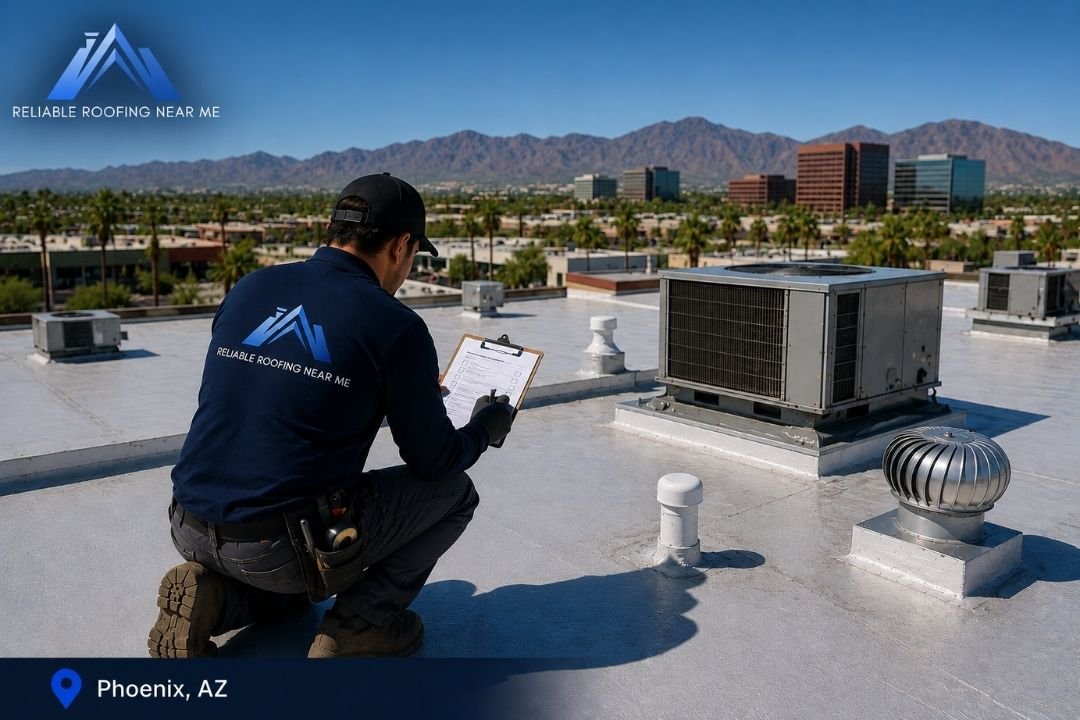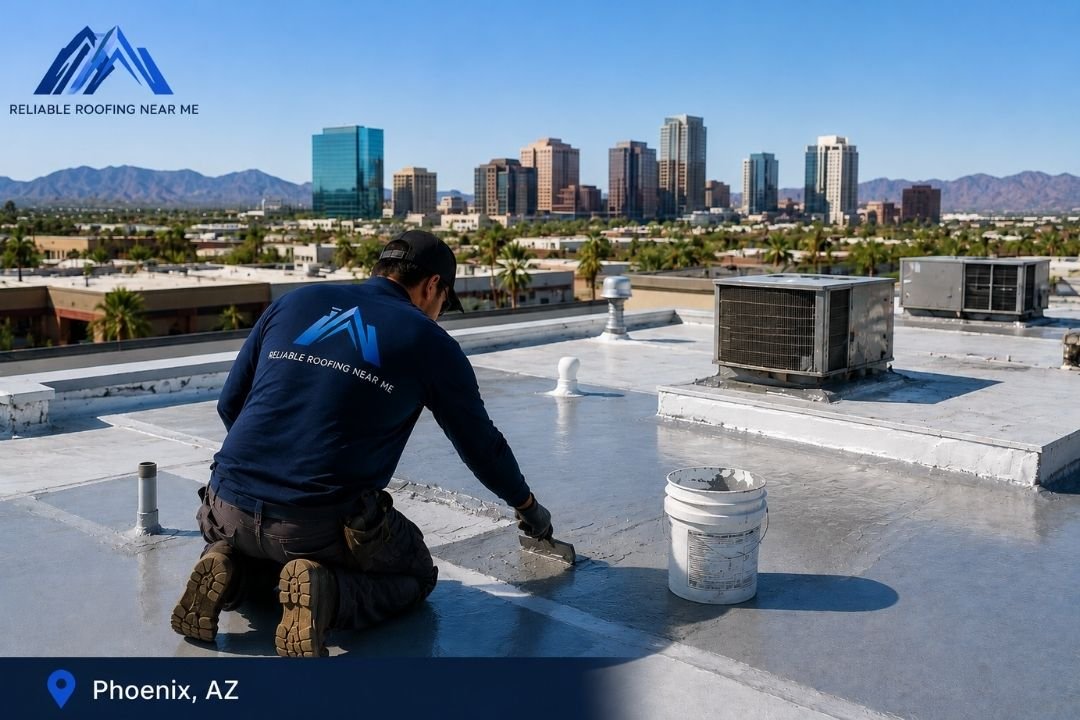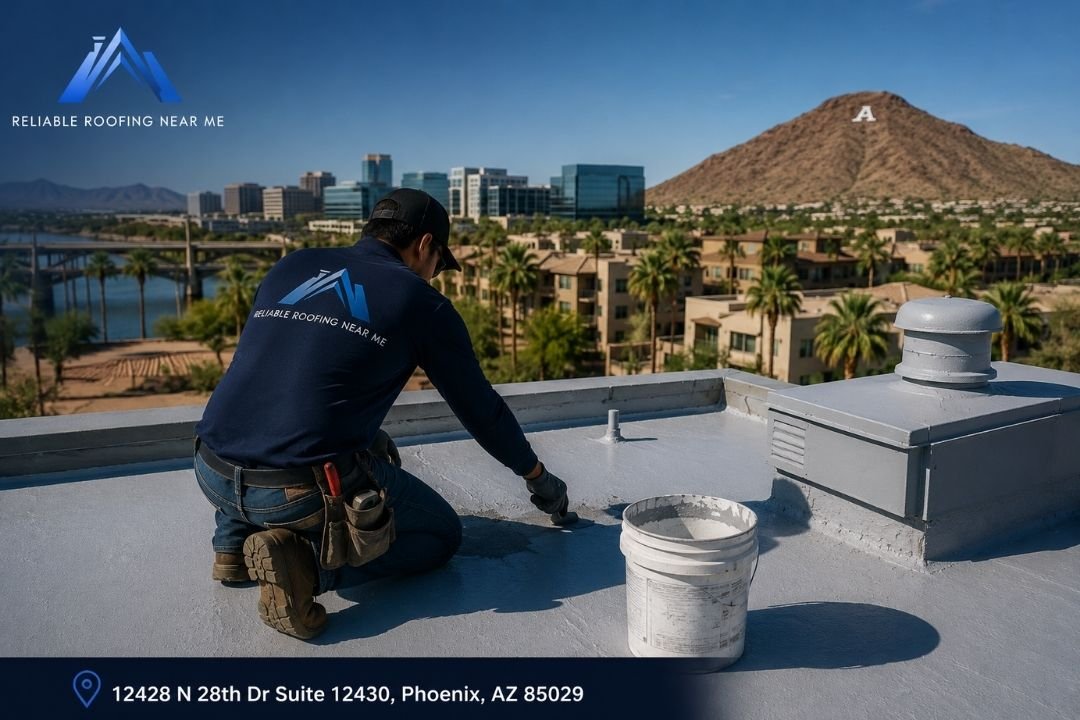

Glendale is one of the most established and diverse cities in the northwest Valley — a community with deep roots, strong neighborhoods, and homeowners who have watched their properties grow in value alongside one of the hottest real estate markets in the country. But beneath the pride of ownership that defines Glendale’s residential character, thousands of homes are carrying roofs that the Sonoran Desert has been working on quietly and relentlessly for years.
Roof repair in Glendale AZ is not a single conversation. It is a spectrum — from a cracked tile replaced in an hour to a monsoon-driven leak that has been silently damaging deck and framing for two seasons while the homeowner assumed the water stain on the ceiling was old. Understanding where your roof sits on that spectrum, what has caused the damage, and what the right repair approach actually looks like is the knowledge that separates a sound investment from a recurring expense that never fully resolves.
This guide gives Glendale homeowners the complete picture — what the desert does to roofs here, how to recognize the signs that repair is needed, what the most common repairs involve and cost, and how to find a contractor worth trusting with your home.
What Glendale’s Climate Does to Roofing Systems
Glendale sits in the northwest Valley in the heart of the Sonoran Desert, and its roofing environment reflects conditions that operate at extremes most of the country never experiences. The forces working against every Glendale roof do not take breaks between seasons — they compound each other across every year of a roof’s service life.
UV radiation: Glendale receives approximately 300 days of sunshine per year. That sustained UV intensity attacks polymer-based roofing components — underlayment, sealants, shingle surfaces — at rates that far exceed what product specifications developed for moderate climates anticipate. Pipe boot sealants that might last a decade in a northern state become brittle and cracked in five to seven years under Glendale’s UV exposure. Underlayment that carries a 30-year rating in temperate conditions has a realistic service life of 20 to 25 years in Arizona’s attic heat.
Extreme attic temperatures: On a peak summer afternoon with outdoor temperatures at 110 degrees Fahrenheit, an inadequately ventilated Glendale attic routinely reaches 150 to 165 degrees. At those temperatures, underlayment polymers cook out of the material, deck adhesives delaminate, and every heat-sensitive component in the roof assembly ages at an accelerated rate. Understanding the relationship between attic ventilation and roof heat in Arizona is foundational context for any Glendale homeowner dealing with roofing issues — because poor ventilation amplifies every other damage source the desert produces and will repeat the same compressed lifespan on any new system installed above it without correction.
Thermal cycling: Glendale’s daily temperature swing of 30 to 40 degrees between afternoon peak and nighttime low causes every component of the roof assembly to expand and contract continuously. Over years and decades this movement works fasteners loose, opens gaps at flashing joints, cracks ridge mortar, and separates underlayment at laps and penetrations — creating the water entry points that monsoon rain finds with reliable efficiency.
Monsoon season: From mid-June through late September, Glendale’s monsoon season brings sudden violent storms with wind gusts exceeding 60 miles per hour and rainfall intense enough to overwhelm drainage systems in minutes. The northwest Valley’s exposure to haboob dust storms adds an additional abrasive stress — silica particles that erode granule surfaces, infiltrate loose flashing joints, and clog drainage systems across every storm front that rolls through the area. Our guide on how Phoenix area heat reduces roof lifespan gives Glendale homeowners the full picture of what these combined forces do to roofing systems across their service life.
The Most Common Roof Repairs in Glendale AZ
Glendale’s residential roofing market — dominated by tile roofs across its established neighborhoods and a growing number of asphalt shingle and flat roof sections on additions and garages — produces a consistent set of repair types. Understanding what each involves helps you recognize the issue, evaluate a contractor’s proposed scope, and confirm that the repair being recommended actually addresses the source rather than just the symptom.
Tile Roof Underlayment Failure
This is the most consequential and most commonly missed roofing problem across Glendale’s established neighborhoods. The tile roofs that dominate the city’s residential landscape — clay and concrete tile installations built across Glendale’s major growth periods from the late 1980s through the 2000s — look solid and intact from the street. But the underlayment beneath those tiles has a realistic service life of 20 to 25 years in Arizona’s attic heat conditions, and many of those roofs are now at or past that threshold.
When underlayment fails, tiles that look fine externally become cosmetic protection over a compromised waterproofing system. Water that penetrates the tile surface during monsoon storms — which it always does, particularly with wind-driven rain at high angles — finds cracked, brittle underlayment that no longer redirects it safely off the roof. Instead it reaches the deck, the attic framing, and eventually the interior ceilings.
The indicators that underlayment failure is the actual problem rather than a surface tile issue include interior water stains appearing after rain when no tiles are visibly cracked or missing, moisture or staining visible in the attic after storm events, and recurring leaks that return after tile-level repairs. Our guide on when to replace tile roof underlayment in Arizona covers the specific warning signs, age thresholds, and repair versus replacement decision in full detail.
Roof Flashing Failures
Flashing failures — at pipe boots, skylight perimeters, chimney base flashings, and step flashing along wall-to-roof transitions — are among the most frequent individual repair types on Glendale residential roofs. Glendale’s UV environment breaks down the sealants at every flashing joint faster than most homeowners expect, and the wind-driven rain of monsoon storms forces water through any gap that thermal cycling has opened in the flashing system.
Flashing failures in Glendale typically manifest as leaks that appear specifically during high-intensity monsoon storms rather than during lighter rain events. If your roof leaks during major storms but not light rain, and the leak traces to a location near a roof penetration or transition, flashing failure is the primary suspect. Our guide on roof flashing repair: signs, costs and what to do covers every flashing type, failure pattern, and repair approach in detail.
Ridge and Hip Mortar Cracking
On Glendale’s tile roofs, the ridge caps and hip tiles are set in mortar — a cement-based material that seals the uppermost courses of tile against wind and water infiltration. The ridge line is the hottest and most thermally stressed location on the entire roof assembly. Repeated daily expansion and contraction cycles crack this mortar progressively, and the resulting gaps allow monsoon wind to get beneath cap tiles and displace them — creating both a water entry point and a potential falling hazard.
Repointing ridge and hip mortar — removing the cracked material and applying new mortar — is a standard maintenance repair for Glendale tile roofs. It is most cost-effective when addressed before mortar failure has progressed to the point of displaced tiles. A displaced cap tile during a monsoon storm creates both immediate water entry and a repair scope that is more extensive and more expensive than a proactive repointing visit would have been.
Cracked and Displaced Tiles
Individual tile cracking in Glendale results from several sources — foot traffic from rooftop trades such as HVAC technicians and pest control, impact from monsoon-borne debris, thermal stress on tiles that have aged and lost flexibility, and in some cases hail from significant monsoon storm events. Each cracked tile is a point where the underlayment beneath is directly exposed to Glendale’s UV radiation — and exposed underlayment in this climate degrades rapidly.
Our guide on whether you can walk on a tile roof in Phoenix addresses the foot traffic issue directly — including how to brief rooftop trades before they access your Glendale roof and what to watch for after any significant rooftop activity. Identifying and replacing cracked tiles promptly after the event that caused them keeps the underlayment beneath protected and extends the overall system life significantly.
Flat Roof Membrane Deterioration
Many Glendale homes have flat or low-slope sections — on garage roofs, room additions, covered patios, and in some cases the main house on older Glendale mid-century properties. These sections require dedicated flat roofing systems and are among the most frequently neglected areas on Glendale residential properties.
Blistering, seam separation, ponding water, cracking, and surface erosion are the most common failure modes on Glendale flat roof sections. For Glendale homeowners evaluating flat roof repair options, our comparisons of TPO roofing pros and cons in Phoenix AZ and foam roof coating costs in Phoenix provide the information needed to evaluate repair versus replacement and which system best suits each flat roof application.
Gutter and Drainage Failures
Glendale homes with gutters face an additional maintenance requirement that directly affects roof performance. Gutters clogged with monsoon debris — leaves, haboob dust accumulation, bird nesting material — back up during heavy rain and force water to pond at the eave line. That ponding backs up under the drip edge, saturates the fascia, and creates moisture entry into the roof assembly at a location that bypasses the entire waterproofing system above it.
Keeping gutters clear and downspouts flowing freely is a maintenance task that directly protects the roof system above. A roof inspection that does not include drainage system assessment is missing one of the most common water entry mechanisms on Glendale residential properties.
Signs Your Glendale Roof Needs Repair Now
Several indicators tell a Glendale homeowner that roof repair cannot be deferred without increasing the eventual cost. Recognizing these signs early — before they compound into structural problems — is the difference between a manageable repair bill and a major remediation project that was entirely avoidable.
Interior water stains on ceilings or walls are the most urgent indicator. Any water stain that appears after a rain event — regardless of how minor it seems — indicates active water intrusion damaging your roof deck, attic framing, and insulation with every subsequent storm. The stain visible on the ceiling surface is the end point of a water path that has likely been accumulating damage for longer than the stain has been visible. Our guide on why roof leaks happen and how to fix them covers the diagnostic process for identifying the actual source.
Moisture or staining visible in the attic after rain confirms that the waterproofing barrier has been breached and water is reaching structural components. Attic access after every significant monsoon storm is one of the most valuable maintenance habits a Glendale homeowner can develop — it provides early warning of water intrusion before interior ceiling damage makes the problem undeniable.
Recurring leaks in the same location despite previous repair attempts indicate that the actual source — typically failed underlayment or compromised flashing — has not been reached by the repair work. A leak that has returned after two or more repair attempts is telling you that the repair approach has addressed the symptom without finding the cause.
Displaced or cracked tiles across multiple sections indicate that the thermal cycling and storm stress the roof has accumulated have reached a level where individual tile replacement is warranted — and where an underlayment condition assessment beneath the damaged areas is equally important.
A roof more than 15 years old that has not been professionally inspected recently should be treated as a situation that warrants assessment rather than assumption. Our Phoenix metro roof inspection checklist outlines every element a thorough professional inspection covers and gives you the framework to evaluate whether any inspector’s process is genuinely comprehensive.
Visible sagging, uneven tile courses, or discolored sections from the street are advanced indicators that warrant immediate professional assessment. If your Glendale roof is showing these signs, the question shifts from whether repair is needed to whether repair is still the appropriate scope or whether full replacement is the right call. Our guide on signs your roof is failing in Phoenix metro covers the full spectrum of failure indicators.
Roof Repair Cost in Glendale AZ
Understanding current repair costs in Glendale’s market gives you the reference point to evaluate contractor estimates accurately before committing to any work. The figures below reflect current northwest Valley market rates for labor and materials.
Professional roof inspection with written report: $150 to $400 covering all roof system components including underlayment assessment, flashing condition, attic ventilation, and drainage
Individual tile replacement (per tile): $35 to $150 depending on tile profile, color matching difficulty, and number of tiles replaced in a single visit
Ridge and hip mortar repointing: $400 to $1,200 for a full repoint on a standard Glendale residential roof depending on linear footage and extent of deterioration
Pipe boot flashing replacement (per penetration): $150 to $400 depending on pipe diameter, roof material, and accessibility
Skylight flashing repair: $300 to $900 depending on whether sealant and metal renewal alone are sufficient or whether surrounding tile must also be disturbed
Chimney flashing repair or replacement: $400 to $1,500 depending on whether base flashing, step flashing, and counter flashing all require replacement
Flat roof membrane repair (per section): $300 to $1,500 for isolated membrane repairs depending on system type, area of damage, and accessibility
Full inspection plus minor repairs (up to 10 tiles, sealant renewal): $200 to $600
Tile underlayment replacement (complete tile relay): $9,000 to $18,000 for a standard 2,000 square foot Glendale home depending on underlayment product, deck condition, and tile salvage rate
Additional costs to factor in for larger scopes include Maricopa County building permits at approximately $150 to $200 for full re-roof projects, deck repair if structural damage is discovered at $500 to $3,000 or more, and attic ventilation improvements if deficiencies are identified at $500 to $1,500. Our guides on roof repair costs in Phoenix metro and roof replacement costs in Phoenix metro provide additional pricing context across the Valley.
Repair vs Replacement: Making the Right Call for Your Glendale Roof
One of the most consequential decisions in Glendale roofing is recognizing when targeted repair is the right response and when the roof system has deteriorated to the point where repair is buying time rather than solving the problem.
Repair is the appropriate response when damage is genuinely isolated — a specific flashing location, a section of cracked tiles, a localized membrane failure — and when a professional inspection confirms that the overall roof system including underlayment is in acceptable condition for the age of the installation. In these cases, addressing the specific damage efficiently and returning to a normal maintenance schedule is the right path.
Replacement — or in the case of tile roofs, a tile relay with new underlayment — becomes the appropriate response when the underlayment has reached the end of its reliable service life, when repeated repairs have failed to resolve recurring leaks, when deck damage has been discovered that requires structural remediation, or when the overall system condition indicates that targeted repairs are not a lasting solution.
The factors that determine which situation you are actually in include the age and documented maintenance history of the roof, the extent and distribution of current damage, whether issues are isolated or symptomatic of system-wide deterioration, and what a professional inspection of the underlayment condition reveals. Our complete framework for Phoenix roof replacement vs repair walks through the decision in detail — giving you the tools to evaluate a contractor’s recommendation independently rather than accepting it on faith.
Does Homeowner’s Insurance Cover Roof Repair in Glendale AZ?
Whether homeowner’s insurance covers roof repair in Glendale depends entirely on what caused the damage. Standard Arizona homeowner’s insurance covers physical damage from specific covered events — monsoon wind, hail, falling debris — but explicitly excludes damage from normal wear, aging, UV exposure, and deferred maintenance.
If your Glendale roof was damaged in a monsoon storm, documenting the damage immediately after the event is the single most important step before anything else. Photograph every area of visible damage — displaced tiles, interior water stains, damaged gutters — as close to the storm as possible. Then request a professional inspection and written damage assessment from a licensed roofing contractor before contacting your insurer. A professional written assessment carries significantly more weight with adjusters than homeowner documentation alone and ensures that all covered damage is identified accurately rather than discovered piecemeal during the claims process.
Our step-by-step guide on the insurance claim process after a Phoenix monsoon covers every stage from documentation to adjuster interaction. Our guide on whether home insurance covers roof replacement in Phoenix clarifies the coverage and exclusion landscape so Glendale homeowners know what to expect before filing.
One essential point that applies to every Glendale roofing insurance situation: any contractor who offers to waive your insurance deductible as an inducement to hire them is violating Arizona Revised Statutes. This practice is illegal and exposes both the contractor and the homeowner to legal liability. Walk away from any contractor making this offer without exception.
Glendale HOA Roofing Requirements for Repair Projects
A number of Glendale’s residential neighborhoods operate under HOA governance with requirements that affect roofing projects — including repair work in some cases. For most routine repairs — replacing individual tiles with matching product, repointing ridge mortar, renewing flashing sealant — HOA approval is typically not required provided the repair materials match the existing approved installation exactly.
For any repair that involves a change in materials, an alteration to the roof profile or color, or work on a visible roof section that the HOA might interpret as a modification, confirming requirements with your HOA management company before work begins is the prudent approach. Installing a tile that does not exactly match the approved color or profile — even in a well-intentioned repair — can trigger a compliance action that requires removal and correction at the homeowner’s expense.
Our complete guide on HOA roofing rules in Phoenix Arizona covers the approval process, documentation requirements, and common compliance mistakes across Valley HOA communities including Glendale’s established neighborhoods.
Emergency Roof Repair in Glendale AZ
Monsoon season in Glendale creates situations where roofing damage requires urgent attention — an active leak mid-storm, a displaced section of tile creating immediate water entry risk, or structural damage from a fallen tree or wind-borne debris. Understanding what to do in the first hours after discovering emergency roof damage protects both your property and your insurance claim position.
The immediate priorities after discovering emergency roof damage in Glendale are containing interior water damage with buckets and towels to protect flooring and furnishings, documenting all visible damage with photographs before any temporary measures are applied, applying temporary protective covering — heavy-duty polyethylene sheeting secured with appropriate fasteners — only where absolutely necessary to prevent active water entry, and contacting a licensed roofing contractor for emergency assessment as quickly as possible.
Our guide on emergency roof repair in Phoenix: what to do in the first 10 minutes covers the immediate response steps in full detail — giving Glendale homeowners a clear action plan for the moment emergency damage is discovered, regardless of the time or conditions outside.
How to Choose a Roofing Contractor for Repair in Glendale AZ
Selecting a roofing contractor for repair work in Glendale deserves the same diligence as selecting one for a full replacement. The consequences of poor repair work — failed repairs that return with the next monsoon, voided warranties from non-approved materials, tile damage from improper roof access — are significant regardless of the initial repair cost.
Verify the Arizona ROC License First
Before any other evaluation, verify an active Arizona ROC license at the official Arizona Registrar of Contractors website. Performing roofing work without an active ROC license is illegal in Arizona. Homeowners who hire unlicensed contractors have no ROC recourse if work fails — no formal complaint mechanism, no bond protection, no disciplinary path. At Reliable Roofing Near Me, our license number is ROC 355096 — active, in good standing, and verifiable at any time. Our guide on finding a licensed roofing contractor in Arizona walks through the verification process step by step.
Request Insurance Certificates
Current general liability insurance and workers’ compensation coverage certificates should be provided before any work begins — not promised and not verbal. Both coverages protect you: liability insurance covers property damage caused during the project, workers’ compensation covers you from liability if a worker is injured on your property. A contractor who cannot provide current certificates should not access your Glendale roof.
Get Written Itemized Estimates
Every repair estimate for Glendale roof work should specify the exact scope, the specific materials to be used, the warranty terms for both labor and materials, and the project timeline in writing. A verbal quote or a single-number estimate with no supporting detail is not a document that protects you if the scope expands or the work fails. Collect a minimum of two written estimates before committing to any significant repair.
Confirm Permit Requirements
Minor repairs in Glendale typically do not require a permit. Full roof replacements and tile relay projects require a Maricopa County building permit filed before work begins. Confirm permit requirements with your contractor for your specific repair scope before work starts. Our guide on Phoenix area roof permits covers exactly which scopes require permits.
Ask About Ventilation
A contractor performing any significant repair on a Glendale roof should assess attic ventilation as part of the inspection process — because inadequate ventilation is frequently a contributing factor in the premature failures being repaired and will create the same compressed lifespan on any materials installed without correction. A contractor who does not raise ventilation as a topic during a repair inspection is not assessing the full picture of your roof’s condition. Our guide on roof ventilation in Phoenix AZ covers the ventilation standards and improvement options relevant to Glendale homes.
Our complete guide on how to choose the best roofing contractor in Phoenix AZ covers the full evaluation framework for any Glendale repair or replacement project.
Roof Maintenance: Staying Ahead of Repair in Glendale AZ
The most cost-effective approach to roofing in Glendale’s climate is a proactive maintenance schedule that catches developing issues at the point where they are inexpensive to address — not at the point where they have compounded into structural damage. A professional inspection every two to three years and a post-storm inspection after any significant monsoon event is the maintenance cadence that delivers the best return on investment for Glendale homeowners.
Our Phoenix metro roof maintenance checklist outlines every item a thorough maintenance inspection should cover. And our guide on getting your roof ready for Phoenix m