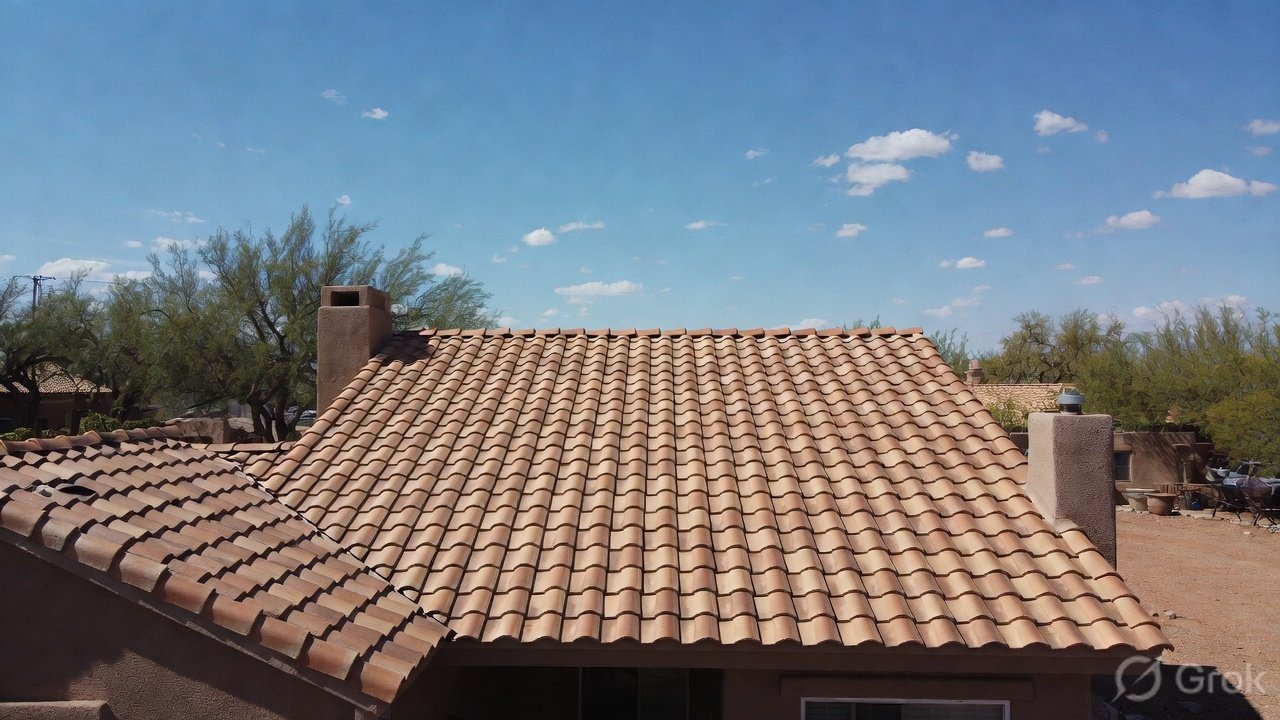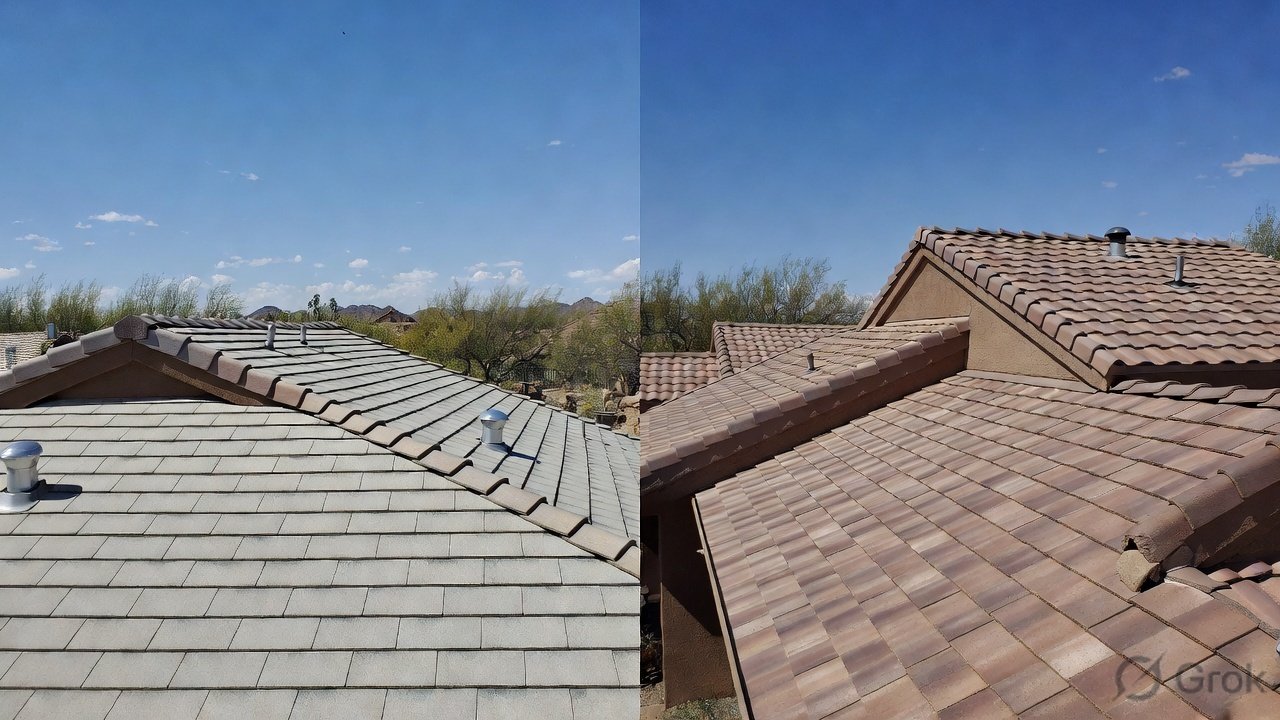
Tile roofing dominates the Arizona landscape for good reason. Whether you drive through Scottsdale, Gilbert, Peoria, or any established Phoenix neighborhood, the overwhelming majority of homes are topped with either clay or concrete tile. Both materials handle the Sonoran Desert climate better than most alternatives. Both deliver the distinctive aesthetic that defines Arizona residential architecture. And both will outlast asphalt shingles by decades under the Valley’s punishing conditions.
But concrete tile and clay tile are not the same product, and the differences between them matter when you are making a decision that will affect your home for the next 30 to 50 years. Cost, weight, durability, appearance, and long-term maintenance requirements all differ in ways that are worth understanding before you sign a roofing contract.
This guide gives you an honest, detailed comparison of concrete tile vs clay tile roof in Arizona — so you can make a decision based on your specific home, budget, and priorities rather than a contractor’s material preference.
The Basics: What Each Material Actually Is
Before comparing the two, it helps to understand what each product is made from and how it is manufactured.
Clay tile is one of the oldest roofing materials in existence. It is made from natural clay that is shaped — either extruded or hand-pressed — into the desired profile and then fired in a kiln at extremely high temperatures. The firing process vitrifies the clay, creating a dense, hard material whose color runs through the full thickness of the tile rather than sitting on the surface. Clay tile is a genuinely natural product with no synthetic components.
Concrete tile is manufactured from a mixture of Portland cement, sand, water, and aggregate, formed under high pressure into the desired profile and then cured. Color is applied as a surface slurry during manufacturing. Concrete tile is significantly heavier than clay tile of the same profile, and its color sits as a surface coating rather than running through the material itself.
Both products are available in a wide range of profiles — low profile, medium profile, high barrel, flat — and both are manufactured by major suppliers serving the Arizona market.
Durability and Lifespan in Arizona’s Climate
For Arizona homeowners, durability in extreme heat and UV exposure is the primary performance consideration. Both materials perform well — but they perform differently.
Clay Tile Durability
Clay tile fired to vitrification is essentially impervious to the conditions that degrade most roofing materials. The firing process eliminates virtually all porosity from the tile body, leaving a material that does not absorb water, does not react to UV radiation, does not fade meaningfully over time, and does not experience the thermal expansion and contraction cycles that stress concrete tile.
Clay tile in Arizona can realistically last 50 to 100 years with the underlayment beneath it replaced on schedule every 20 to 25 years. The tile itself is rarely the limiting factor in a clay tile roof’s service life — the underlayment almost always fails first.
Clay tile is also highly resistant to the freeze-thaw cycling that limits its performance in northern climates. In Arizona, where freezing temperatures are either absent or extremely brief, this is largely irrelevant — giving clay tile performance advantages that are more significant here than almost anywhere else in the country.
Concrete Tile Durability
Concrete tile is a genuinely durable material that performs well in Arizona’s desert climate. However, it has specific vulnerabilities that clay does not share.
Concrete tile is porous. Despite its density, concrete absorbs water at a measurable rate. In Arizona’s dry climate this matters less than in wetter regions, but it is relevant during monsoon season when tiles are repeatedly saturated and dried. Over time, water absorption combined with UV exposure causes the surface color slurry to fade and the tile surface to erode gradually.
Concrete tile fades. Because the color sits as a surface coating rather than running through the tile body, concrete tile color fades over time — sometimes significantly. The rate of fading accelerates under Arizona’s intense UV exposure. This is a purely aesthetic issue but an important one for homeowners who chose a specific color for their home’s appearance.
Concrete tile lifespan in Arizona is typically 30 to 50 years — genuinely durable, but shorter than clay under the same conditions. The combination of surface erosion, color fading, and the cumulative stress of thermal cycling means concrete tile reaches the end of its useful life earlier than clay in the Arizona climate.
Weight: A Practical Consideration for Arizona Homes
This is one of the most practically significant differences between the two materials — and one that often determines which product is even an option for a given home.
Clay tile typically weighs 6 to 8 pounds per square foot depending on profile. This is substantial, and homes being reroofed with clay for the first time require a structural assessment to confirm the roof framing can support the load.
Concrete tile is heavier — typically 9 to 12 pounds per square foot depending on profile and manufacturer. This additional weight has real structural implications. Homes originally built with lightweight roofing — asphalt shingles, for example — frequently require structural reinforcement before concrete tile can be installed. Even in tile-to-tile replacements, switching from clay to concrete may require a structural engineer’s review.
For homes already carrying a tile roof, the structural considerations are usually manageable. For new tile installations on homes previously roofed with lighter materials, clay tile’s lighter weight is a meaningful practical advantage — it reduces or eliminates the need for structural reinforcement and keeps total project cost lower.
Cost Comparison: Clay Tile vs Concrete Tile in Arizona
Cost is where concrete tile has its clearest advantage, and it is a significant one.
Concrete tile installed in Arizona typically runs $8.00 to $12.00 per square foot for a complete roof replacement including tear-off, underlayment, and installation labor.
Clay tile installed in Arizona typically runs $12.00 to $20.00 per square foot for a complete replacement — and premium clay profiles from specialty manufacturers can exceed that range.
For a typical 2,000 square foot Arizona home:
| Material | Installed Cost Range | Estimated Total |
|---|---|---|
| Concrete tile | $8.00 – $12.00 per sq ft | $16,000 – $24,000 |
| Clay tile | $12.00 – $20.00 per sq ft | $24,000 – $40,000 |
The cost gap is real and substantial. For homeowners on a defined budget, concrete tile delivers genuine performance at a meaningfully lower price point. For homeowners making a long-term ownership calculation, the higher upfront cost of clay tile needs to be weighed against its longer lifespan and lower lifetime maintenance requirements.
Appearance and Color Stability
Both materials are available in a wide range of profiles and colors serving the Arizona market. The meaningful difference is what happens to that appearance over time.
Clay tile color is fired through the full thickness of the material. A clay tile that fades slightly on the surface still has the same color running through its entire body. Chips and surface wear on clay tile are far less visually noticeable than on concrete because the color beneath is identical to the surface color. Clay tile maintains its original appearance far better over decades of Arizona sun exposure.
Concrete tile color is a surface slurry. Over time — and faster in Arizona’s UV environment than in moderate climates — the surface coating erodes and the underlying gray concrete body becomes increasingly visible. The roof gradually loses its original color and takes on a faded, washed-out appearance. This is one of the most common aesthetic complaints about concrete tile roofs in established Arizona neighborhoods.
For homeowners in HOA communities with strict color standards, the fading characteristics of concrete tile are worth factoring into the decision carefully. A concrete tile that meets HOA color approval at installation may drift outside approved parameters as it ages.
Maintenance Requirements in Arizona
Neither clay nor concrete tile requires frequent maintenance when properly installed and when the underlayment beneath is in good condition. The differences in maintenance needs are nuanced but real.
Clay tile requires very little maintenance over its service life. Cracked or broken tiles — typically caused by foot traffic, falling debris, or severe wind events — are replaced individually. Because clay tile does not absorb moisture and does not erode at the surface, there is no routine surface treatment or sealing required. The primary maintenance focus for a clay tile roof is the underlayment and flashings beneath the tile, not the tile itself.
Concrete tile benefits from periodic inspection for surface erosion and color degradation. In some cases, homeowners opt to have concrete tile roofs cleaned and sealed to slow surface fading and reduce moisture absorption — an additional maintenance cost and effort that clay tile does not require. Cracked or broken concrete tiles are replaced individually as with clay, but sourcing matching concrete tile for an older roof can be more challenging than sourcing matching clay due to color fading on the existing tiles.
Which One Is Right for Your Arizona Home?
There is no universal answer — the right choice depends on your specific situation. Here is a practical framework:
Choose clay tile if you are making a long-term ownership investment and want the highest-performing, longest-lasting material available for Arizona’s climate. Clay tile’s through-body color, genuine impermeability, lighter weight relative to concrete, and multi-decade lifespan make it the premium choice for Arizona homeowners who plan to stay in their home long-term and want the lowest total cost of ownership over that period.
Choose concrete tile if upfront cost is the primary constraint and you want genuine tile performance at a lower initial investment. Concrete tile is a durable, widely used material that performs well in Arizona and will serve your home for decades. If your budget does not accommodate clay tile pricing, concrete tile is a sound choice — not a compromise in any absolute sense.
Consider your HOA requirements. Many Arizona HOA communities specify approved tile materials, profiles, and colors. Before any decision is made, confirm what your community’s architectural standards require or permit. A roofing contractor familiar with your specific HOA’s documentation requirements can help you navigate this efficiently.
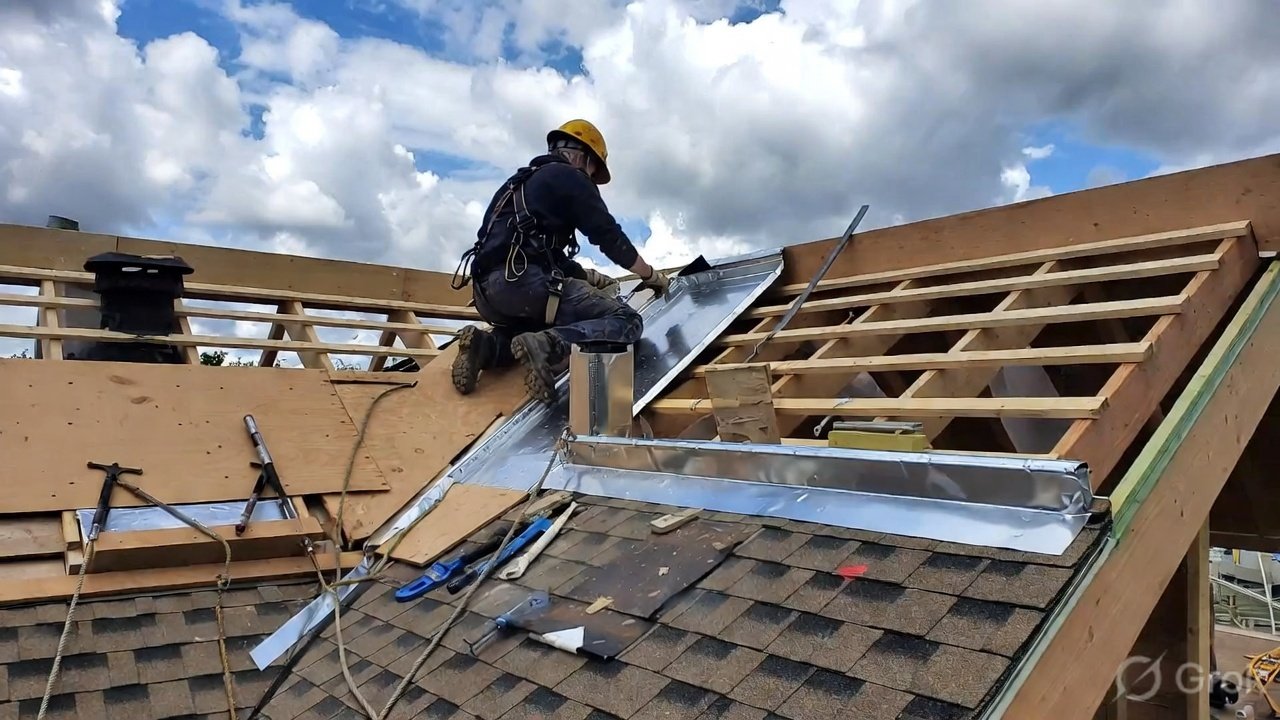
Consider your roof structure. If your home has never carried tile before, a structural assessment is essential before choosing either material — and concrete tile’s additional weight may make clay tile the structurally simpler option despite its higher material cost.
Frequently Asked Questions
Does clay tile crack more easily than concrete tile in Arizona?
Clay tile fired to vitrification is actually quite resistant to cracking under normal conditions in Arizona’s climate. Concrete tile is denser but not meaningfully more crack-resistant in practice. Both materials can crack under direct impact — foot traffic, falling branches — and both are repaired by replacing the affected tiles individually.
Can I walk on my tile roof in Arizona for maintenance?
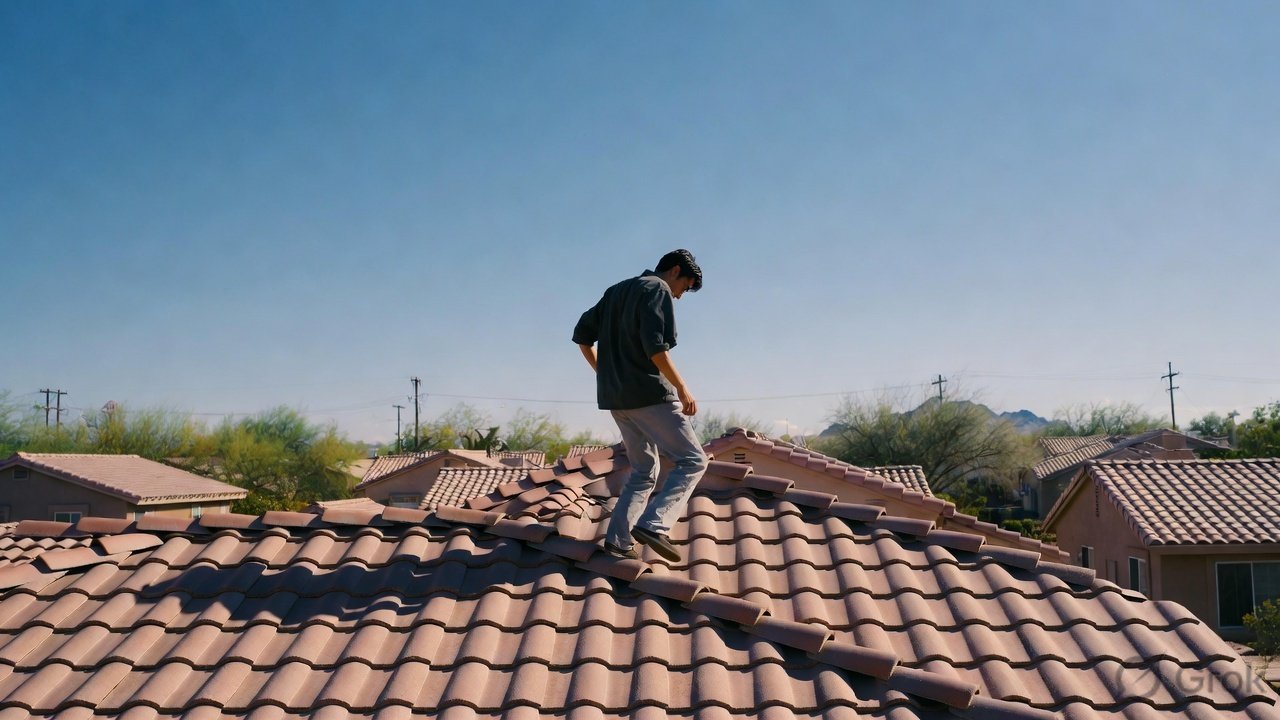
Walking directly on tile — either clay or concrete — risks cracking the tiles underfoot. Proper roof access in Arizona involves stepping on the lower third of each tile where it overlaps the course below, distributing weight to the battens or deck rather than the exposed tile face. Any roofing work requiring roof access should be performed by contractors experienced with tile systems.
How do I know which tile I currently have on my roof?
The simplest method is a visual inspection of a broken or removed tile. Clay tile has a consistent color running through the full thickness of the material. Concrete tile shows a gray cement body beneath the surface coating. Your original building permits or roofing contracts may also specify the material installed.
Is concrete tile or clay tile better for Phoenix monsoon season?
Both materials perform well during monsoon conditions when properly installed with quality underlayment and correctly sealed flashings. Clay tile’s impermeability gives it a slight advantage in repeated saturation and drying cycles, but the more critical factor in monsoon performance is the underlayment and flashing system beneath the tile — not the tile material itself.
Can I mix clay and concrete tile on the same roof?
This is not recommended. The different thermal expansion rates, weights, and installation dimensions of clay and concrete tile make mixed installations problematic. Matching profiles visually is also extremely difficult. Any tile replacement should use the same material as the existing installation wherever possible.
Get a Free Tile Roofing Estimate in Arizona
At Reliable Roofing Near Me, we install, repair, and replace both clay and concrete tile roofs across Phoenix and more than 40 Arizona cities. We will assess your home, explain the options honestly, and give you a written estimate with no pressure.
Call us at (480) 867-9986 or visit reliableroofingnearme.com to schedule your free inspection today. We serve Phoenix, Scottsdale, Mesa, Chandler, Gilbert, Glendale, Peoria, Tempe, Surprise, and every community across the Valley.
Reliable Roofing Near Me | (480) 867-9986 | reliableroofingnearme@gmail.com | reliableroofingnearme.com | 12428 N 28th Dr Suite 12430, Phoenix, AZ 85029 | ROC License #355096