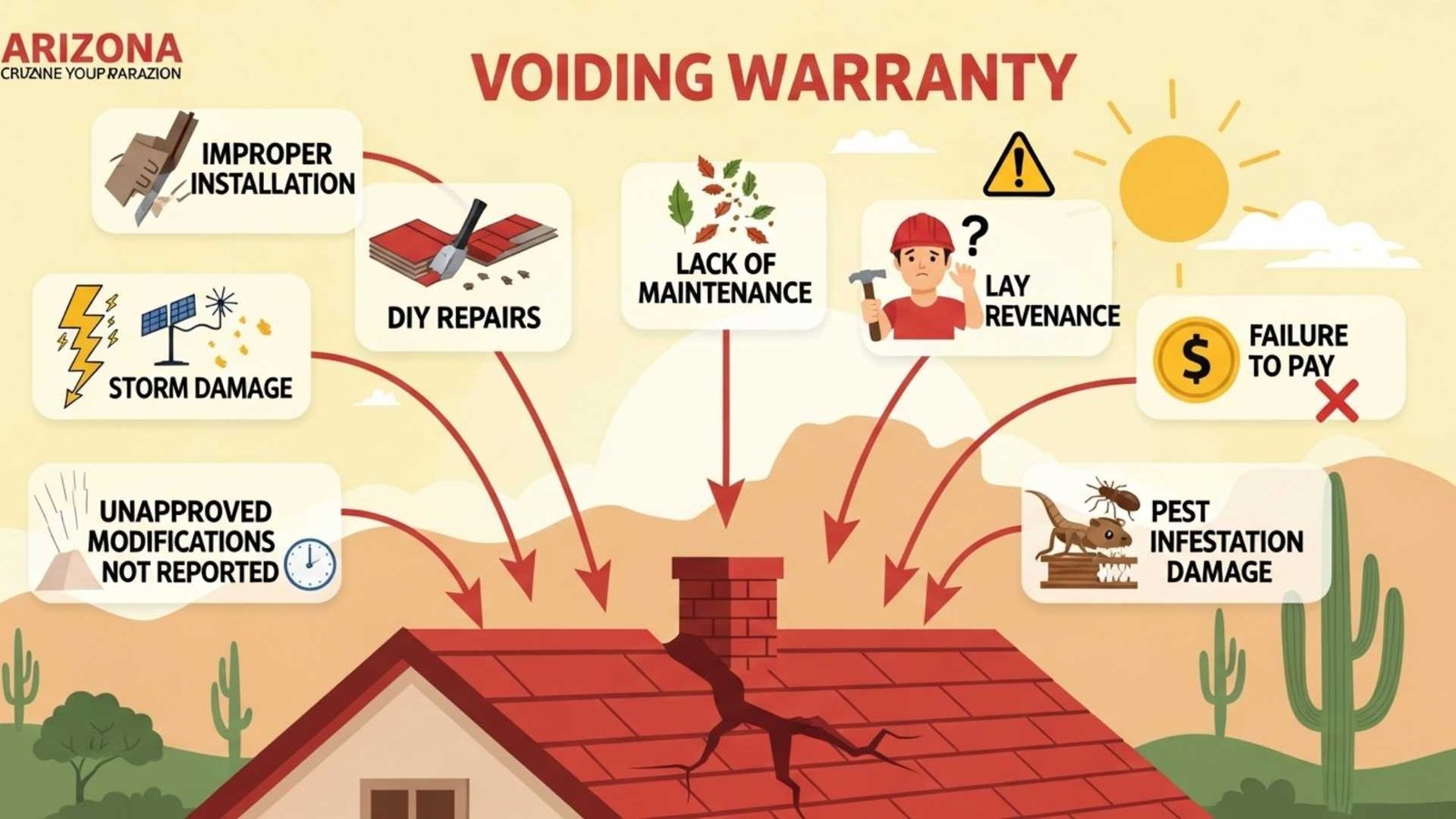

A new roof in Phoenix is not a small expense. Depending on the material, roof size, and scope of work, a full roof replacement in Arizona can run anywhere from $10,000 to $40,000 or more. Even significant repairs — tile underlayment replacement, major flashing work, flat roof restoration — regularly reach into the thousands. For most Phoenix homeowners, that is not money sitting in a checking account waiting to be spent.
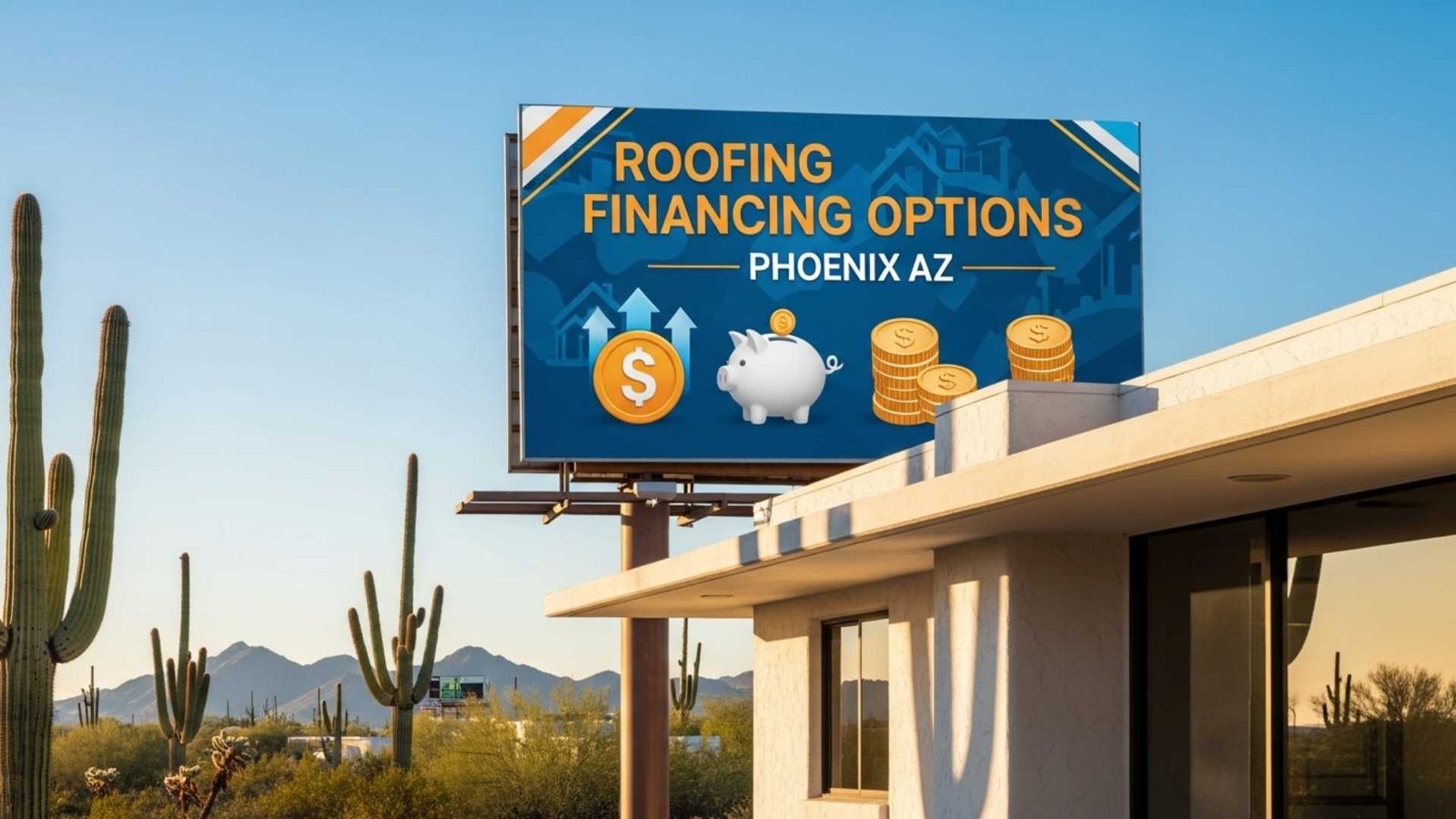
The good news is that roofing financing options in Phoenix AZ have expanded significantly in recent years. Homeowners who need a new roof but are not in a position to pay cash upfront have more accessible, more competitive options available than at any previous point. The challenge is understanding how those options actually work — what they cost over time, what the qualification requirements look like, and which type of financing makes sense for your specific situation.
This guide covers every major roofing financing option available to Phoenix homeowners, explains the real cost of each, and gives you a clear framework for choosing the right approach before you sign anything.
Why Roofing Financing Matters More in Phoenix Than Most Markets
Phoenix’s climate creates a roofing reality that is different from most of the country. Roofs here degrade faster, fail sooner, and require more frequent major investment than roofs in moderate climates. A homeowner in a northern state might replace their roof once in 30 years. A Phoenix homeowner with an asphalt shingle roof may face that decision in 15 to 20 years — and tile roof underlayment replacement, which is functionally a full re-roof in terms of cost, comes due at a similar interval.
This compressed replacement cycle means that many Phoenix homeowners face a major roofing expense while they are still carrying a mortgage, raising a family, or managing other significant financial commitments. The roof does not wait for a convenient moment. When underlayment fails or storm damage creates active water intrusion, the decision has to be made — and made quickly enough to prevent structural damage from compounding the cost.
Understanding your roofing financing options in Phoenix AZ before you need them is one of the most practical things a Valley homeowner can do. Having clarity on the landscape means you can make a sound decision under time pressure rather than accepting the first financing offer a contractor puts in front of you.
Option 1: Contractor-Arranged Financing
The most common financing path for Phoenix roofing projects is financing arranged directly through the roofing contractor — typically in partnership with a third-party lender that specializes in home improvement loans. The contractor presents the financing option at the point of estimate, and if you qualify, the loan funds the project directly.
How it works: The contractor has a relationship with one or more lending partners. You complete a credit application — often online, often within minutes — and receive an approval decision quickly. If approved, the lender pays the contractor and you repay the lender over the agreed term.
Common terms in the Phoenix market: Contractor-arranged roofing financing in Phoenix typically offers loan amounts from $5,000 to $50,000, repayment terms from 12 months to 15 years, promotional periods with 0% interest for 12 to 24 months on qualifying offers, and fixed interest rates ranging from 6.99% to 29.99% depending on credit profile after any promotional period ends.
The promotional period is the most important detail to understand. Many roofing financing offers in Phoenix lead with a 0% interest promotional period — sometimes 12 months, sometimes 18 or 24. During that window, no interest accrues and your full payment reduces the principal balance. If you pay the balance in full before the promotional period ends, the financing costs you nothing beyond the principal.
If the balance is not paid in full before the promotional period ends, the deferred interest that has been accumulating — typically at the full rate of 19.99% to 29.99% — is added to the remaining balance in a single charge. This is the detail that catches homeowners off guard. A promotional 0% offer that converts to 26.99% on an unpaid balance is an expensive outcome that could have been avoided with a clear payoff plan before the period expired.
When contractor financing makes sense: For homeowners who qualify for a promotional 0% period and have a realistic plan to pay the balance within that window, contractor-arranged financing is genuinely cost-effective — equivalent to an interest-free loan for the duration of the promotion. For homeowners who will need the full term to repay, understanding the post-promotional rate and comparing it against other options before signing is essential.
Option 2: Personal Home Improvement Loans
Personal home improvement loans — unsecured installment loans from banks, credit unions, and online lenders — are a straightforward financing option that does not require using your home as collateral.
How it works: You apply for a fixed loan amount, receive a fixed interest rate and term, and make equal monthly payments until the loan is repaid. The interest rate and term you receive depend on your credit score, income, and debt-to-income ratio.
Typical terms: Loan amounts from $5,000 to $50,000, repayment terms from 2 to 7 years, and interest rates from approximately 6.99% to 35.99% depending on creditworthiness. Borrowers with strong credit — generally 720 and above — qualify for rates in the lower portion of that range. Borrowers with fair credit qualify for higher rates that increase the total cost of the loan meaningfully.
Advantages over contractor financing: Personal loans from banks and credit unions are not tied to a specific contractor. You shop for the best rate independently before choosing a roofing contractor, which gives you negotiating flexibility. There is no deferred interest risk — the rate you receive at origination is the rate for the life of the loan. Monthly payments are fixed and predictable.
Where to look in Arizona: Arizona state-chartered credit unions — including Arizona Federal Credit Union and Desert Financial Credit Union — offer competitive home improvement loan rates to members. National online lenders including LightStream, SoFi, and Marcus by Goldman Sachs offer personal loans with competitive rates for qualified borrowers. Comparing at least three offers before accepting any personal loan is worth the time it takes.
When personal loans make sense: For homeowners who want a fixed, predictable payment with no deferred interest risk and who have sufficient credit to qualify for competitive rates, personal home improvement loans are one of the cleanest financing structures available for a Phoenix roofing project.
Option 3: Home Equity Loans and HELOCs
For Phoenix homeowners who have built meaningful equity in their property — which describes a large portion of the Valley’s homeowner base given Arizona’s property appreciation over the past decade — home equity financing is often the lowest-rate option available for a major roofing project.
Home Equity Loan
A home equity loan — sometimes called a second mortgage — allows you to borrow a fixed amount against the equity in your home at a fixed interest rate, repaid over a fixed term. Interest rates on home equity loans are typically significantly lower than personal loans or contractor financing because the loan is secured by your home.
Typical terms: Loan amounts tied to available equity, repayment terms of 5 to 30 years, and interest rates that are generally 1 to 3 percentage points above the prime rate — substantially below unsecured personal loan rates for comparable borrowers.
The key consideration: your home is the collateral. Defaulting on a home equity loan creates a risk of foreclosure that does not exist with unsecured financing. This makes home equity borrowing appropriate for homeowners with stable income and a sound repayment plan — not a decision to make under financial stress.
Home Equity Line of Credit (HELOC)
A HELOC provides a revolving credit line secured by your home equity rather than a fixed lump sum. You draw from the line as needed during the draw period, pay interest only on the amount drawn, and repay the outstanding balance over the repayment period.
For roofing projects where the total cost is known upfront, a HELOC offers less advantage over a home equity loan than it does for projects with less predictable costs. The variable interest rate on most HELOCs is also worth understanding — rates can change with market conditions during the draw and repayment periods.
When home equity financing makes sense: For Phoenix homeowners with substantial equity, stable income, and a roofing project cost that warrants the origination process of a secured loan, home equity financing typically offers the lowest all-in cost of any financing option. The combination of low interest rates and long repayment terms keeps monthly payments manageable on large projects. If you are considering the full roof replacement cost in Phoenix metro, home equity financing is worth evaluating seriously for projects above $20,000.
Option 4: FHA Title I Home Improvement Loans
FHA Title I loans are government-backed home improvement loans that do not require home equity as collateral for loans up to $25,000. They are insured by the Federal Housing Administration and issued through approved private lenders.
How they work: Loans up to $7,500 are unsecured. Loans above $7,500 up to $25,000 require a lien on the property. Interest rates are fixed and capped by FHA guidelines. Repayment terms extend up to 20 years for single-family homes.
Who they are designed for: FHA Title I loans are specifically designed to help lower and moderate income homeowners finance essential home improvements — including roofing — when they lack the equity or credit profile to access conventional home equity financing. They are not the first option for homeowners who qualify for conventional financing, but they are a meaningful option for those who do not.
Finding Title I lenders in Arizona: Not all Arizona lenders participate in the Title I program. The FHA maintains a searchable database of approved Title I lenders by state and zip code. Contacting Arizona-based approved lenders directly to compare available rates and terms is the appropriate starting point for homeowners exploring this option.
Option 5: Homeowner’s Insurance Funding
For Phoenix homeowners whose roofing need is the result of a covered storm event — monsoon wind damage, hail, falling debris — homeowner’s insurance may fund part or all of the project cost, either directly or as a reimbursement after repair.
This is not financing in the traditional sense — it is coverage utilization. But it is one of the most significant ways Phoenix homeowners fund major roofing projects, and understanding how to access it correctly matters enormously to the outcome.
The critical steps for a successful insurance-funded roofing claim in Phoenix are documenting damage immediately after the storm event, requesting a professional inspection and written damage report from a licensed roofing contractor before contacting your insurer, understanding your policy’s deductible and coverage limits, and working with a contractor experienced in the Arizona insurance claims process who can document damage accurately and communicate effectively with your adjuster.
Our detailed guide on the insurance claim process after a Phoenix monsoon walks through every step in detail. And if you are uncertain whether your policy covers roof replacement, our guide on does home insurance cover roof replacement in Phoenix explains exactly what standard Arizona policies cover and where the common exclusions are.
Important note: Roofing companies that offer to waive your insurance deductible in exchange for your business are operating outside of Arizona law. Arizona Revised Statutes prohibit contractors from waiving, absorbing, or rebating a homeowner’s insurance deductible as an inducement to hire them. This practice — sometimes called “deductible waiving” — exposes both the contractor and the homeowner to legal liability. Work only with licensed contractors who handle the insurance process ethically and transparently.
Option 6: PACE Financing (Property Assessed Clean Energy)
PACE financing is a specialized financing structure available in some Arizona jurisdictions that allows homeowners to finance energy-efficient home improvements — including qualifying roofing systems such as cool roof coatings, solar-ready roofing, and metal roofing — through an assessment added to their property tax bill.
How it works: The financing is attached to the property rather than the borrower, which means qualification is based primarily on property equity and tax payment history rather than personal credit score. Repayment occurs through an addition to your annual property tax assessment over the agreed term — typically 5 to 25 years.
Key consideration: Because PACE financing is a property tax assessment, it has senior lien status — meaning it takes priority over your mortgage in terms of repayment order. Some mortgage lenders have specific policies about PACE financing that may affect your ability to refinance or sell the property while a PACE assessment is outstanding. Understanding these implications before entering a PACE agreement is essential.
PACE financing in Arizona is administered through specific program providers. Availability varies by jurisdiction and property type. For Phoenix homeowners interested in cool roof coatings or solar-ready roofing systems that qualify under PACE program guidelines, it is worth investigating whether the program is available in your specific Phoenix-area jurisdiction.
Option 7: Credit Cards
Using a credit card to fund a roofing project is worth discussing — both for the situations where it makes sense and for the situations where it does not.
Where credit cards make sense for roofing in Phoenix: A credit card with a 0% introductory APR on purchases — typically 12 to 21 months on competitive offers — functions similarly to contractor-arranged promotional financing. If the project cost falls within the card’s credit limit and you have a realistic plan to pay the balance before the promotional period ends, a 0% purchase APR card is a legitimate and cost-effective financing tool. Additionally, cards that earn significant rewards or cash back on purchases add value on top of the 0% period for disciplined payoff-focused cardholders.
Where credit cards do not make sense: Running a $15,000 roofing project on a standard credit card at 22% to 29% APR without a clear short-term payoff plan is one of the most expensive financing decisions available. The interest cost over a 3 to 5-year payoff timeline at those rates adds thousands of dollars to the total project cost. Any of the other options described in this guide — personal loans, home equity financing, contractor financing with favorable terms — will almost always be less expensive for balances that cannot be paid off quickly.
What to Watch Out For When Financing a Roof in Phoenix
The Phoenix roofing market has a range of contractor financing practices worth being aware of before you sign any agreement.
High-pressure financing decisions at the point of estimate. A contractor who presents a financing offer and asks you to decide before they leave the appointment is creating artificial urgency. Take the time to read every term of any financing agreement before signing. A contractor worth hiring will give you that time without pressure.
Deferred interest terms presented as “0% interest.” Genuine 0% interest financing and deferred interest promotions are functionally very different. In a true 0% product, no interest accrues during the promotional period regardless of whether the balance is paid. In a deferred interest promotion, interest accrues throughout the promotional period and is added to the balance at the end if it is not paid in full. Confirming which structure applies to any financing offer you receive is essential before accepting it.
Unlicensed contractors offering financing. Any contractor offering financing should first be able to produce a valid Arizona ROC license. Financing offered by an unlicensed roofing contractor is a warning sign — not a benefit. Verify the license at the Arizona ROC before signing any agreement. Our license number at Reliable Roofing Near Me is ROC 355096.
Financing that covers an inflated project price. The availability of financing should never be a reason to accept a higher project price than the market warrants. Get at least two written estimates before committing to any roofing project, and evaluate the financing terms independently from the project price. Understanding the current roof repair costs in Phoenix metro and the roof replacement cost benchmarks for the Valley gives you a reference point for evaluating whether any estimate is reasonable before financing enters the conversation.
How to Choose the Right Financing Option for Your Phoenix Roofing Project
The right financing option depends on your specific financial situation, the size of the project, and how quickly you can realistically repay. Here is a practical framework for making the decision:
If you can pay the balance within 12 to 24 months: A promotional 0% offer — whether from a contractor financing partner or a 0% purchase APR credit card — is likely your lowest-cost option. The key is committing to the payoff plan before the promotional period ends.
If you have substantial home equity and a project above $15,000: A home equity loan or HELOC is likely your lowest-rate option for the full repayment term. The lower interest rate reduces total cost significantly on large balances over multi-year repayment periods.
If you have good credit but limited home equity: A personal home improvement loan from a bank, credit union, or reputable online lender at a competitive fixed rate gives you a predictable payment without deferred interest risk.
If your roofing need resulted from a covered storm event: File the insurance claim before committing to financing. Depending on your coverage and the extent of the damage, your out-of-pocket cost may be limited to your deductible — dramatically reducing the financing amount needed.
If your credit profile limits conventional options: Explore FHA Title I loans through an approved Arizona lender, and confirm whether PACE financing is available in your jurisdiction for qualifying roofing systems.
Frequently Asked Questions
Does financing a roof affect my credit score?
Applying for most forms of financing — personal loans, home equity loans, contractor-arranged lending — involves a hard credit inquiry that temporarily affects your credit score. The impact is typically small and short-lived for borrowers who manage the resulting account responsibly. If you are shopping multiple lenders, doing so within a compressed timeframe — typically 14 to 45 days depending on the scoring model — limits the impact by allowing multiple inquiries to be treated as a single inquiry for rate-shopping purposes.
Can I finance a roof repair rather than a full replacement?
Yes. Most financing options available for full roof replacement are equally available for significant repairs — tile underlayment replacement, major flashing work, flat roof restoration. For smaller repairs in the $1,000 to $5,000 range, a 0% purchase APR credit card or a small personal loan is typically the most practical approach. Understanding whether repair or replacement is the right decision for your specific roof situation should come before financing decisions.
How quickly can roofing financing be approved in Phoenix?
Contractor-arranged financing and online personal loans often provide approval decisions within minutes to hours. Bank and credit union loan processing typically takes 1 to 5 business days. Home equity loans and HELOCs involve an appraisal process and typically take 2 to 6 weeks from application to funding. If your roofing situation requires urgent attention — an active leak, storm damage creating ongoing water intrusion — confirm the financing timeline before selecting an option that cannot fund quickly enough to address the immediate problem.
Is roofing financing available with bad credit in Arizona?
Yes — though the options are more limited and the rates are higher. Contractor-arranged financing partners often work with a wider range of credit profiles than conventional lenders. FHA Title I loans have more flexible credit requirements than conventional home improvement loans. Some PACE financing programs qualify based on property equity rather than personal credit. For homeowners with challenged credit, being transparent with the roofing contractor about the constraint upfront allows them to present the financing options that are realistically available rather than wasting time on applications that will not succeed.
What documents do I need to apply for roofing financing?
Requirements vary by lender and loan type, but most roofing financing applications in Arizona require proof of identity, proof of income — recent pay stubs, tax returns, or bank statements — proof of homeownership, the roofing contractor’s written estimate, and in some cases proof of homeowner’s insurance. Having these documents organized before beginning any application streamlines the process considerably.
Get a Free Roofing Estimate and Financing Information in Phoenix
At Reliable Roofing Near Me, we make roofing financing in Phoenix straightforward. We will give you a written, itemized estimate for your project, walk you through the financing options available for your situation, and answer every question before you commit to anything. No pressure, no obligation.
Whether you are looking at a full roof installation in Phoenix AZ, a tile roof underlayment replacement, or significant roof repair across Phoenix AZ, we have financing solutions that work for a wide range of budgets and credit profiles.
Call us at (480) 867-9986 or visit reliableroofingnearme.com to schedule your free roof inspection and estimate today. We serve Phoenix, Scottsdale, Mesa, Chandler, Gilbert, Glendale, Peoria, Tempe, Surprise, and every community across the Valley.
Reliable Roofing Near Me | (480) 867-9986 | reliableroofingnearme@gmail.com | reliableroofingnearme.com | 12428 N 28th Dr Suite 12430, Phoenix, AZ 85029 | ROC License #355096