A new roof is one of the largest investments an Arizona homeowner makes. And when that roof comes with a manufacturer warranty — sometimes 30 years, sometimes lifetime — it feels like a significant layer of financial protection. If something goes wrong, the warranty covers it. That is the assumption most homeowners carry from the day their new roof is installed.
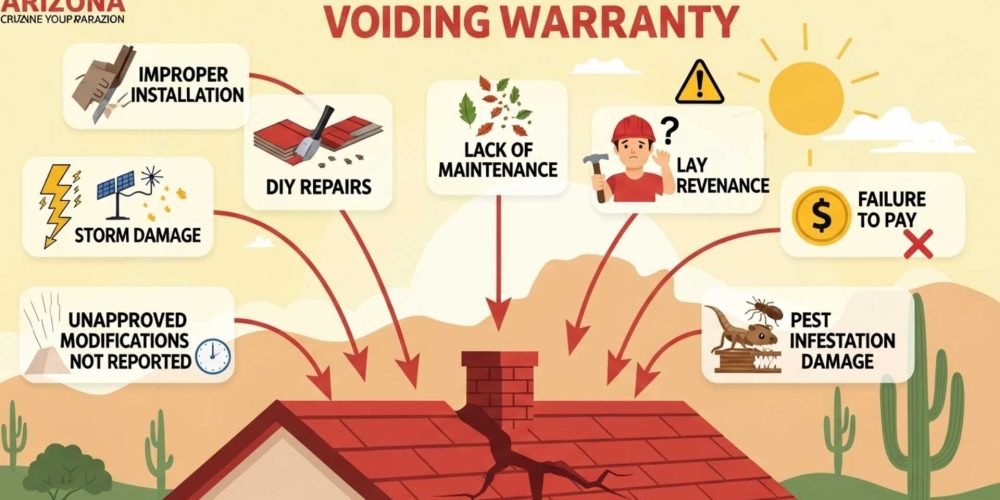
The reality is more complicated. Roofing warranties — both manufacturer material warranties and contractor workmanship warranties — come with conditions, exclusions, and requirements that are rarely explained in plain language at the time of installation. And in Arizona’s climate, where roofs face extreme heat, UV radiation, and violent monsoon storms every year, the actions and oversights that void warranty coverage are more common than most homeowners realize.
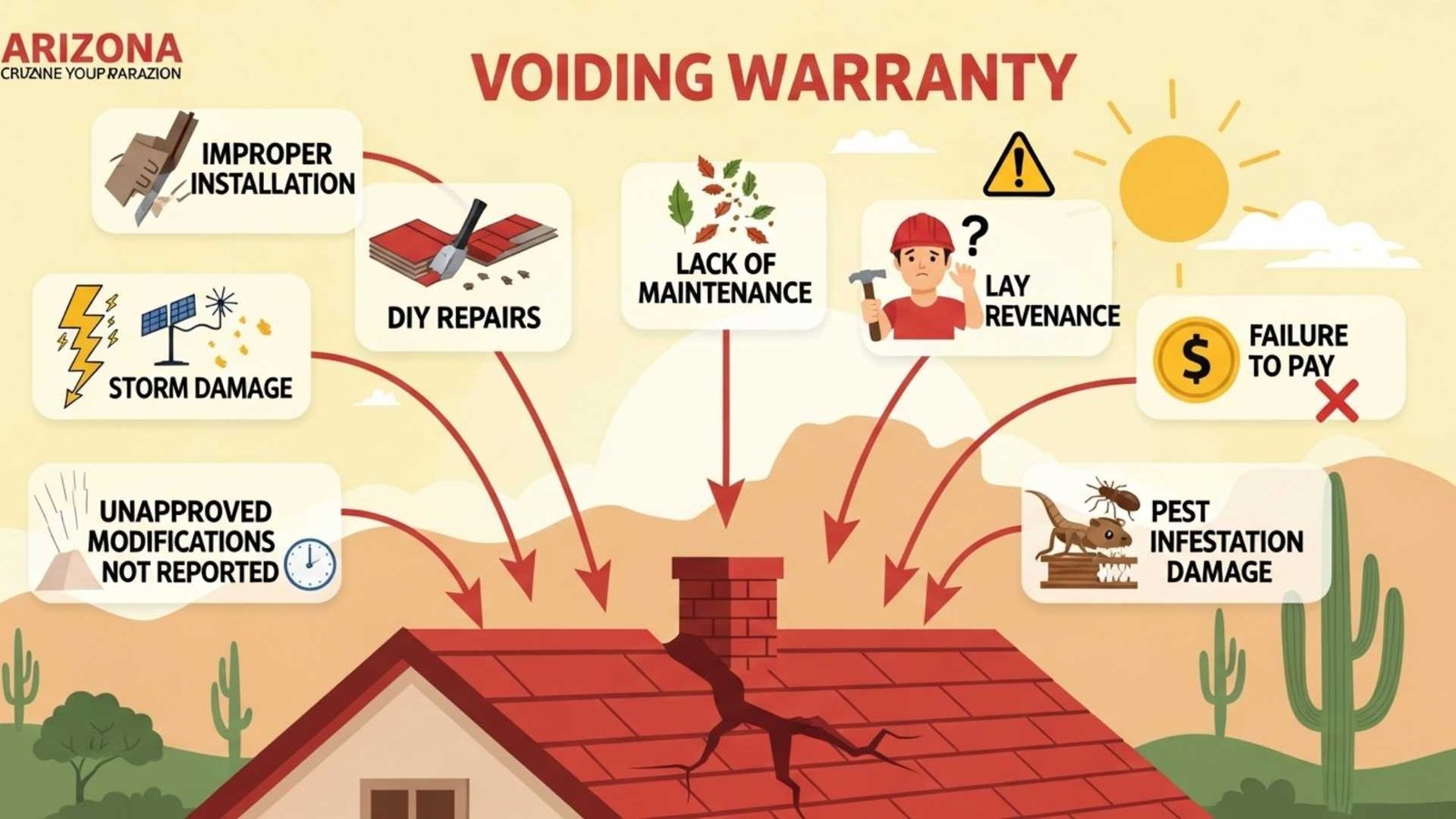
Understanding what voids roof warranty in Arizona — before you inadvertently do any of these things — is the difference between a warranty that protects you when you need it and a document that turns out to be worthless at the moment of a claim.
How Roofing Warranties Actually Work in Arizona
Before getting into what voids coverage, it is worth understanding the structure of roofing warranties — because most Arizona homeowners do not realize they typically have two separate warranties that work differently and can be voided independently.
Manufacturer material warranties cover defects in the roofing materials themselves — shingles, tile, membrane, underlayment — that cause premature failure under normal conditions. These warranties are issued by the roofing material manufacturer, not the contractor, and they come with specific requirements that must be met for coverage to remain valid. Those requirements typically include installation by a contractor approved or certified by the manufacturer, installation per the manufacturer’s published specifications, and registration of the warranty within a specific timeframe after installation.
Contractor workmanship warranties cover defects in the installation itself — failures caused by how the materials were installed rather than defects in the materials. These are issued by the roofing contractor and are only as reliable as the contractor behind them. A workmanship warranty from a contractor who goes out of business is worthless. A workmanship warranty from a licensed, established Arizona roofing contractor is meaningful coverage.
Both types of warranty have exclusions — events, actions, and conditions that release the issuing party from coverage obligations. Understanding those exclusions is what this guide is about.
1. Unauthorized Roof Penetrations
This is one of the most common warranty-voiding actions on Arizona roofs — and one of the most frequently done without any awareness that it has warranty implications.
When a rooftop trade — a solar installer, satellite dish crew, HVAC technician, or any other contractor — penetrates your roofing membrane or creates new penetrations through the tile or shingle surface without authorization from your roofing contractor or manufacturer, they are modifying the roof system in a way that most warranties explicitly exclude from coverage.
Manufacturer warranties for shingles, tile, and membrane systems typically specify that all penetrations must be sealed per the manufacturer’s published flashing and sealant specifications. A penetration created by a solar crew using their own mounting hardware and sealant — rather than the roofing manufacturer’s specified system — is an unauthorized modification. If a leak develops at or near that penetration, the manufacturer has grounds to deny the warranty claim on the basis that the system was modified without authorization.
Before any trade performs work that involves penetrating your roof surface, confirm with your roofing contractor whether that work requires coordination to preserve warranty coverage. For solar installations in particular — where roof penetrations are inherent to the project — this conversation is essential before installation begins. You can read more about solar-ready roofing in Phoenix and what proper installation looks like on a warranted system.
2. Improper or Unauthorized Repairs
If your roof develops a leak or damage and you have it repaired by a contractor other than the original installer — or by a contractor not approved by the manufacturer — you may have voided your warranty coverage depending on how the repair was performed.
Manufacturer warranties almost universally specify that repairs to the warranted system must be performed using the manufacturer’s approved materials and methods. A repair performed with non-approved sealant, incompatible patching material, or incorrect installation method — even if it resolves the immediate leak — can constitute a modification that voids coverage for the affected area or the entire system.
This does not mean you can never have a roof repaired by anyone other than the original contractor. It means that repairs need to be performed by contractors who use manufacturer-approved materials and methods. Understanding the full scope of roof repair in Phoenix AZ — including what proper repair documentation looks like — helps you protect your warranty standing every time work is performed on your roof.
In Arizona, where storm damage and emergency repairs sometimes require calling whoever is available quickly, keeping documentation of every repair — materials used, methods applied, contractor license number — is important for maintaining warranty standing.
3. Pressure Washing the Roof
Pressure washing tile roofs is a common practice in Arizona — driven by the legitimate desire to remove accumulated dust, debris, and biological growth from roof surfaces. What many homeowners do not know is that pressure washing is explicitly excluded from coverage under most tile and shingle manufacturer warranties.
The reasons are straightforward. High-pressure water directed at tile roofing systems forces water under tile overlaps and into the underlayment system in ways that normal rain never does. It can dislodge granules from asphalt shingles, damage surface coatings on concrete tile, and force water into gaps in flashing and sealant. It can also crack aged tile through the hydraulic pressure of water forced into existing hairline fractures.
If your roof develops a leak after pressure washing — or if the underlayment shows accelerated degradation attributed to moisture intrusion — a manufacturer conducting a warranty inspection will look for evidence of pressure washing as a contributing cause. Finding it gives them grounds to deny the claim.
Low-pressure washing with appropriate cleaning agents is the appropriate method for Arizona tile roof cleaning. This is particularly relevant given how long tile roofs last in Arizona — preserving the underlayment beneath through proper cleaning methods directly extends the total service life of the system.
4. Walking on the Roof Incorrectly
Most roofing warranties do not prohibit all foot traffic on the roof — some access for inspection and maintenance is acknowledged as a normal part of roof ownership. What warranties do address is damage caused by improper foot traffic.
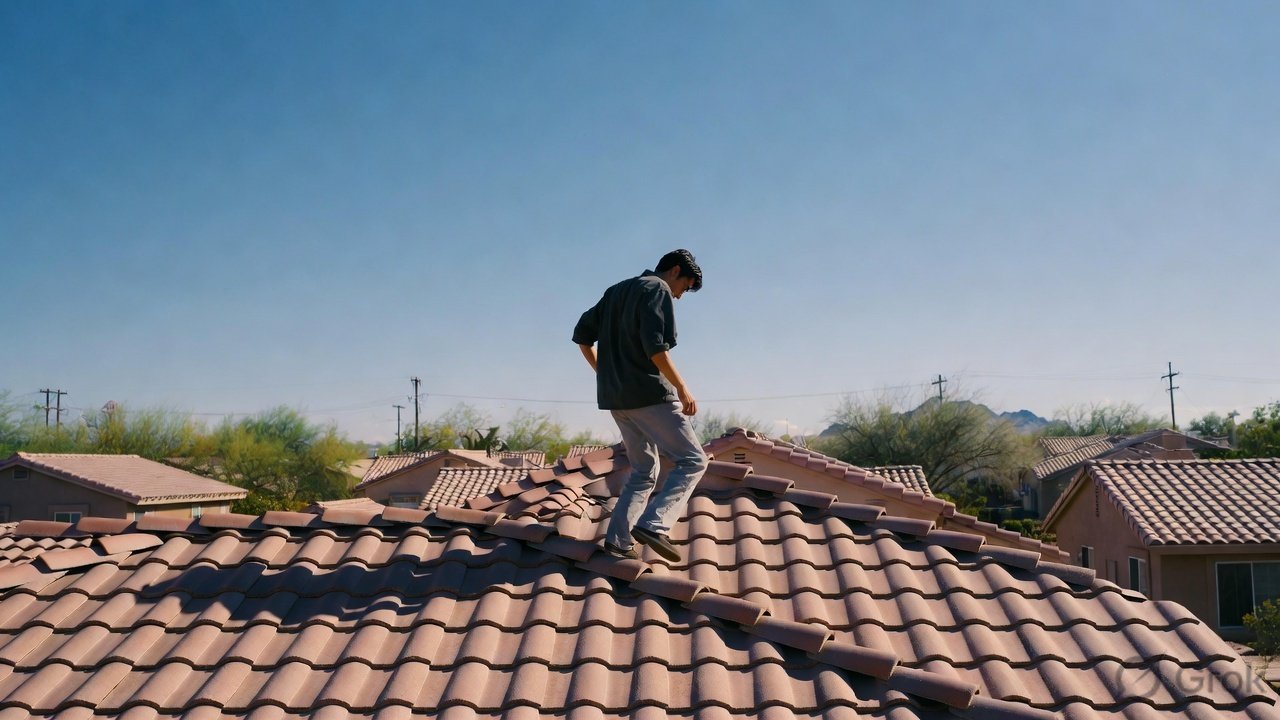
Manufacturer warranties for tile roofing systems typically specify that the roof should only be accessed by trained roofing professionals using appropriate access techniques. Tile cracked by foot traffic — whether by the homeowner, an HVAC technician, or any other rooftop visitor — is considered physical damage caused by improper use rather than a material or installation defect.
We covered this topic in detail in our guide on can you walk on a tile roof in Phoenix — including exactly where to step, which tile profiles are most vulnerable, and what trades should know before accessing your roof. The short version: step only on the lower overlap zone of each tile, never on the exposed face, and conduct a professional inspection after any significant rooftop trade visit.
In Arizona, where tile roofs see regular access from multiple trades over decades of ownership, the cumulative cracking from improper foot traffic is a genuine warranty risk. Establishing correct access protocols for all rooftop trades is both a damage prevention measure and a warranty protection measure.
5. Failure to Maintain the Roof
Roofing warranties — both manufacturer and contractor — carry an implied or explicit maintenance requirement. The covered system is warranted to perform as specified under the condition that the homeowner performs reasonable maintenance to keep it in serviceable condition.
What constitutes required maintenance varies by warranty document, but common expectations include keeping gutters clear to prevent water backup at the eaves, replacing cracked or broken tiles promptly rather than allowing them to remain in a damaged state, clearing debris accumulation from valleys and low points, maintaining flashing sealant as it ages, and ensuring drainage pathways remain unobstructed.
Our Phoenix metro roof maintenance checklist covers the specific tasks Arizona homeowners should be performing on a regular schedule to stay compliant with warranty maintenance requirements and catch developing issues before they escalate.
A homeowner who allows known damage to persist without repair for an extended period, and who then experiences a warranty-related failure that is arguably connected to that deferred maintenance, faces a plausible warranty denial on the basis of failure to maintain. In Arizona’s climate, staying current on minor repairs is both good practice and a warranty protection measure.
6. Inadequate Ventilation
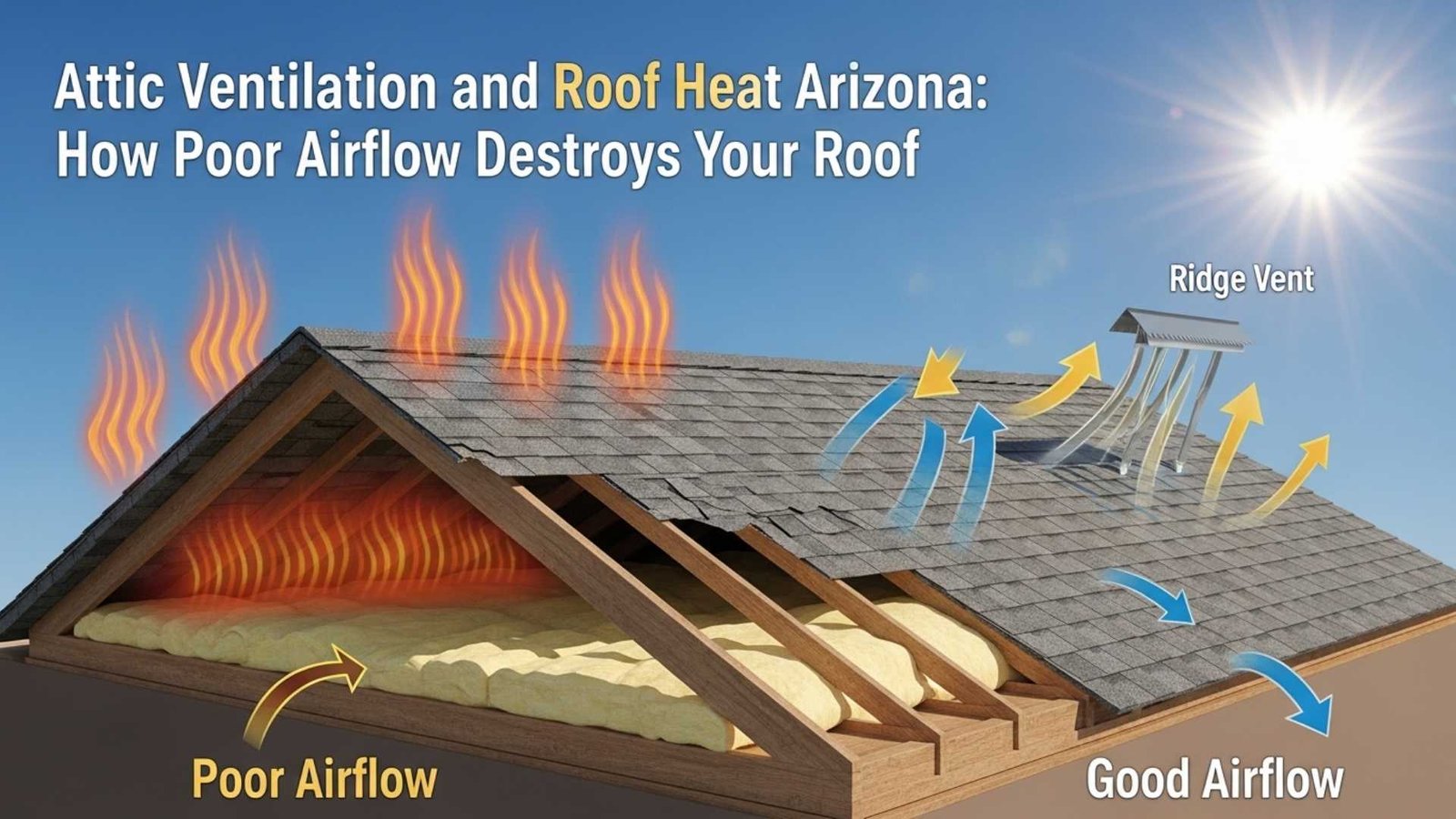
This one surprises homeowners consistently — and it is particularly relevant in Arizona where attic ventilation is a critical performance factor.
Most shingle and underlayment manufacturer warranties specify minimum ventilation requirements for the roof assembly. These requirements are typically expressed as a minimum net free ventilation area ratio — commonly 1 square foot of ventilation per 150 square feet of attic floor area, balanced between intake and exhaust.
The reason ventilation is a warranty condition is straightforward. Manufacturer warranties cover material failures under normal conditions. A shingle or underlayment that degrades prematurely because it is operating above an inadequately ventilated attic — with temperatures reaching 160 degrees Fahrenheit rather than the 130 to 140 degrees a properly ventilated attic achieves — is not failing under normal conditions. It is failing under conditions that the manufacturer specifies as outside the warranty’s coverage scope.
We covered this in depth in our guide on roof ventilation in Phoenix AZ — including the specific ventilation types used in the Valley, the signs of inadequate ventilation, and the cost of addressing it before it becomes a warranty issue. If your home’s attic ventilation has not been professionally assessed, doing so before any warranty claim is filed is important groundwork.
7. Storm Damage Misattributed as a Warranty Claim
This is a warranty misunderstanding rather than a voiding action — but it results in the same outcome: a denied claim.
Manufacturer material warranties cover manufacturing defects. They do not cover physical damage caused by external events — hail, wind, falling branches, monsoon debris impact. Physical damage from storm events is a homeowner’s insurance claim, not a warranty claim.
Arizona homeowners who file warranty claims for storm-damaged roofing frequently receive denials on the basis that the damage is physical impact damage rather than a material defect. This is not the manufacturer acting in bad faith — it is a correct application of what the warranty actually covers.
Understanding the distinction matters particularly after monsoon season. If your roof sustained damage in a storm, the right path is an insurance claim after a Phoenix monsoon — not a manufacturer warranty claim. And if you are unsure whether your home insurance covers the damage, our guide on does home insurance cover roof replacement in Phoenix walks through exactly what standard Arizona policies cover and what they exclude.
8. Using Non-Approved or Incompatible Materials During Repairs
Roofing systems are engineered as integrated assemblies. The membrane, underlayment, adhesives, flashings, and sealants specified by the manufacturer are chosen to work together in a tested and compatible system. Introducing materials that are not part of the manufacturer’s approved system — even if they seem functionally similar — can void warranty coverage.
This situation arises most commonly during repairs. A contractor performing a repair uses a sealant brand that is not on the manufacturer’s approved materials list, or patches a membrane with a product from a different manufacturer than the original membrane. The repair may function adequately — but it has introduced a material that was not part of the warranted system.
This is especially relevant for roof flashing repairs in Phoenix — one of the most frequently repaired components on Arizona roofs and one of the most commonly repaired with non-specified sealants. When selecting a contractor for any repair on a warranted Arizona roof, confirm that they will use manufacturer-approved materials and document the specific products used in the repair work order.
9. Failure to Register the Warranty
This is one of the most overlooked and most avoidable ways Arizona homeowners lose their warranty coverage — and it happens before the roof has been in service for a single day.
Most manufacturer roofing warranties require registration within a specific timeframe after installation — commonly 30 to 90 days. The registration process typically requires the homeowner’s contact information, the property address, the installation date, the contractor’s information, and often the contractor’s manufacturer certification number.
Unregistered warranties provide significantly reduced coverage — or in some cases no coverage — compared to registered warranties. The full warranty term, the transferability of the warranty to a subsequent buyer, and access to the highest tier of manufacturer support are almost always contingent on timely registration.
Confirming that your warranty has been registered — and obtaining documentation of that registration — should be a standard closing step on any new Arizona roofing project. If you are planning a new roof installation in Phoenix AZ, make warranty registration part of your pre-project checklist discussion with your contractor before work begins.
10. Transferring the Property Without Transferring the Warranty
Many Arizona homeowners who sell their homes believe that the roofing warranty transfers automatically to the new owner as part of the property sale. This is not always the case — and when it is possible, it typically requires a specific transfer process that is rarely completed without intentional effort.
Most manufacturer warranties are transferable — but only under specific conditions. The transfer typically must be initiated within a defined window after the property sale closes, requires a transfer fee paid to the manufacturer, and may involve a warranty inspection to confirm the system is in acceptable condition at the time of transfer.
Workmanship warranties from roofing contractors are often non-transferable entirely — meaning they apply only to the original owner and terminate at the point of sale.
For Arizona homeowners selling a property with a relatively new roof, the warranty transferability is a genuine selling point — but only if the transfer process is handled correctly at or before closing. For buyers, this is an important consideration when reviewing roof replacement costs in Phoenix against the remaining warranty value on an existing system.
How to Protect Your Roof Warranty in Arizona
Knowing what voids coverage points directly to what protects it. A few consistent practices preserve your warranty standing throughout the life of your roof.
Keep all installation documentation. Your warranty certificates, installation contracts, permit records, and manufacturer registration confirmations should be stored somewhere accessible. These documents are essential if you ever need to file a claim. Understanding what roofing permits are required in Phoenix and confirming yours were properly filed is part of that documentation foundation.
Document every repair. For every repair performed on a warranted roof — no matter how minor — keep a record of the contractor, their license number, the date, the materials used, and the scope of work.
Coordinate rooftop trade access. Before any trade performs work involving roof penetrations, confirm with your roofing contractor whether that work requires coordination to preserve warranty standing.
Schedule periodic professional inspections. A licensed roofing contractor inspecting your roof on a regular schedule catches developing issues before they become warranty-relevant failures — and creates a documented maintenance history that demonstrates your compliance with warranty maintenance requirements. Our roof inspection checklist for Phoenix metro outlines exactly what a thorough professional inspection covers.
Verify your contractor’s manufacturer certification. Manufacturer warranties often require installation by a contractor certified or approved by that manufacturer. At Reliable Roofing Near Me, our license number is ROC 355096, and we work with manufacturer-approved materials and methods on every project we undertake across the Phoenix metro.
Frequently Asked Questions
Does a roof warranty cover monsoon storm damage in Arizona?
No. Manufacturer material warranties cover manufacturing defects, not physical damage from external events. Monsoon storm damage is a homeowner’s insurance claim. Read our full guide on storm damage roof repair in Phoenix AZ to understand the correct claims process after a major storm event.
Can I file a warranty claim if I had repairs done by a different contractor?
Possibly — depending on what materials the contractor used and how the repair was performed. Repairs using manufacturer-approved materials and methods generally do not void coverage. Keeping documentation of all repairs and the materials used is the most important protective measure.
How long do roofing warranties typically last in Arizona?
Manufacturer material warranties for quality products range from 25 years to lifetime coverage depending on the product tier. Contractor workmanship warranties typically range from one to ten years. The terms, conditions, and exclusions vary significantly — reading the actual warranty document rather than relying on verbal representations is always worthwhile.
Is a lifetime roofing warranty actually lifetime?
Lifetime warranties on roofing materials are typically prorated after the initial coverage period. They also contain the same exclusions as term warranties — unauthorized modifications, improper installation, inadequate ventilation, and failure to register all still apply. A lifetime warranty is better than a shorter-term warranty, but it is not unconditional coverage for the life of the structure.
What should I do if my warranty claim is denied?
Request the denial in writing with the specific exclusion cited. Review the warranty document against the cited exclusion to confirm it applies to your situation. If you believe the denial is incorrect, consult with a licensed Arizona roofing contractor who can assess the roof independently and provide a professional opinion on the failure cause.
Get a Free Roof Inspection Across Arizona
At Reliable Roofing Near Me, we inspect roofs across Phoenix and more than 40 Arizona cities — identifying issues before they become warranty claims, documenting roof condition accurately, and advising you on exactly what your warranty covers and what it does not.
Call us at (480) 867-9986 or visit reliableroofingnearme.com to schedule your free inspection today. We serve Phoenix, Scottsdale, Mesa, Chandler, Gilbert, Glendale, Peoria, Tempe, Surprise, and every community across the Valley.
Reliable Roofing Near Me | (480) 867-9986 | reliableroofingnearme@gmail.com | reliableroofingnearme.com | 12428 N 28th Dr Suite 12430, Phoenix, AZ 85029 | ROC License #355096
“`