
Search for a roofing contractor in Tempe and the results look identical to everywhere else in the Valley — a wall of ads, a cluster of map pins, and a dozen companies all claiming to be the area’s best. The challenge was never finding options. It’s figuring out which of those companies can actually stand up to what a roof in Tempe endures every single year, and which ones are simply good at marketing. A nearby address tells you almost nothing about skill, licensing, material knowledge, or whether a crew genuinely understands desert roofing versus roofing in general.
Why a Nearby Address Isn’t the Same as Being Qualified
A contractor working regularly in Tempe means faster scheduling and quicker response times, and that matters when a monsoon storm just tore off flashing. But proximity says nothing about whether that company has worked extensively on tile roofs baking under direct Arizona sun, or whether they understand how 150 to 165°F attic temperatures quietly destroy underlayment years before it should ever fail. It also says nothing about whether they’ve handled a full tear-off on a 20-year-old tile roof, or whether their crews know how to walk tile without cracking it.
Homes in Tempe face the same punishing conditions as the rest of the Phoenix metro: relentless UV exposure nearly year-round, monsoon storms between June 15 and September 30 that bring both wind gusts and sudden heavy rain, and daily thermal cycling that expands and contracts roofing materials every time the sun rises and sets. A roofer who primarily works in a milder climate, or who simply relocated a business license to Arizona without adapting their approach, often misses the specific failure points that show up here — brittle sealants, warped flashing, and underlayment that dries out and cracks well before the manufacturer’s stated lifespan.
What Tempe’s Climate Really Does to a Roof
Tempe sits in the same desert basin as the rest of Maricopa County, which means roofs here absorb the same slow, cumulative damage patterns seen across the Valley — just concentrated by the urban heat island effect of a dense, built-up city. UV radiation breaks down asphalt shingles and dries out rubber and sealant compounds far faster than in milder climates, causing granule loss on shingles and brittleness in flashing seals years ahead of schedule.
Monsoon storms bring wind-driven rain that finds every weak point in flashing, valleys, or underlayment, and it doesn’t take a major storm to cause damage — even a fast-moving thunderstorm with 50 mph gusts can lift loose tile or shingles that were already weakened by sun exposure. Haboobs, which are common across the Valley during monsoon season, pack roofs with dust and fine debris that clog drainage systems on flat and low-slope roofs, leading to standing water that accelerates membrane breakdown.
Then there’s thermal cycling — the process of roofing materials heating aggressively under direct sun and cooling rapidly after sunset, day after day, for months at a time. This constant expansion and contraction fatigues materials at a molecular level, which is part of why roofs in the Phoenix metro often need replacement well before the 20-to-30-year lifespan often quoted for the same materials in cooler regions. Understanding how long a roof should realistically last in this climate gives Tempe homeowners a far more accurate baseline than manufacturer estimates written for regions with far gentler weather.
Tile Roofs Are Common in Tempe — and They Have Their Own Failure Points
A large share of homes in Tempe, especially in established neighborhoods near the university and in older subdivisions built during the city’s major growth periods, were constructed with concrete or clay tile roofing. Tile itself is genuinely durable, often lasting decades with minimal visible wear. The problem is that tile’s durability creates a false sense of security — the underlayment beneath the tile is the part that actually fails first in desert heat, and it fails silently.
Homeowners frequently assume a roof is fine because the tile looks intact from the ground or even up close, without realizing the underlayment underneath has already dried out, cracked, or separated. Once underlayment fails, water can travel significant distances under the tile before it ever shows up as an interior leak, which means damage is often much more extensive than it first appears by the time it’s discovered. Knowing when tile underlayment needs replacement — typically based on the roof’s age and the condition found during inspection rather than visible symptoms alone — can prevent water intrusion long before it becomes a ceiling stain or structural issue.
It’s also worth understanding how concrete tile compares to clay tile if a full tile replacement is ever on the table, since the two materials handle heat, weight load, and long-term maintenance differently. Concrete tile tends to be more affordable and slightly more impact-resistant, while clay tile often has a longer service life but comes with a higher upfront cost and requires more careful handling during installation and repair.
Flat and Low-Slope Roofing Is Increasingly Common Too
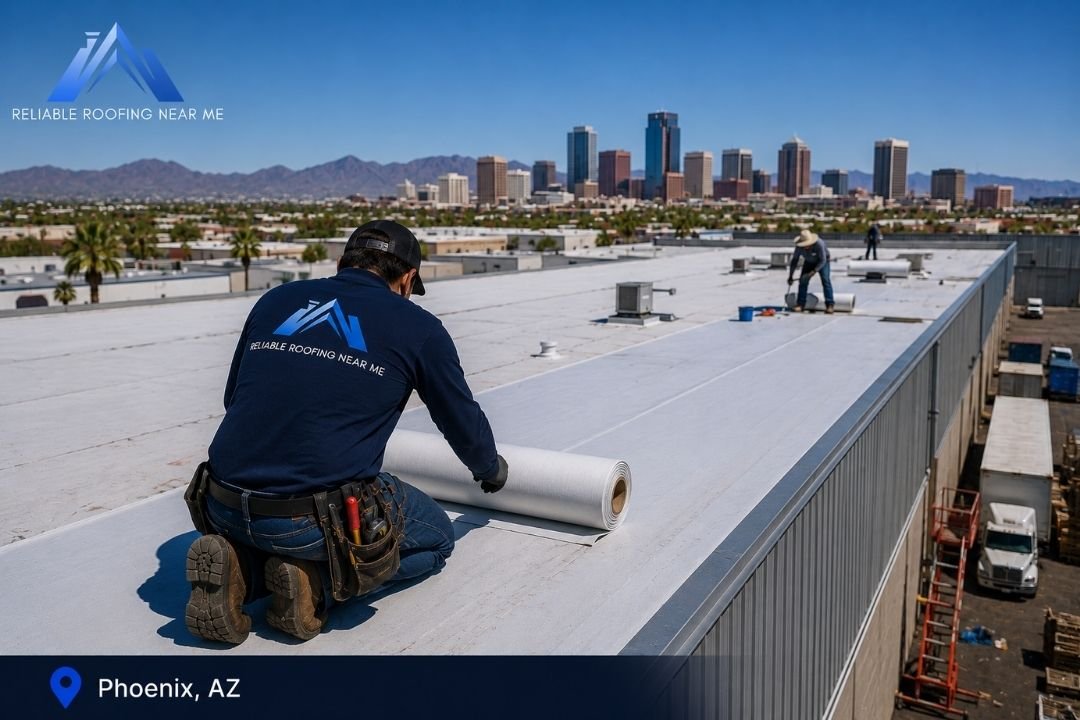
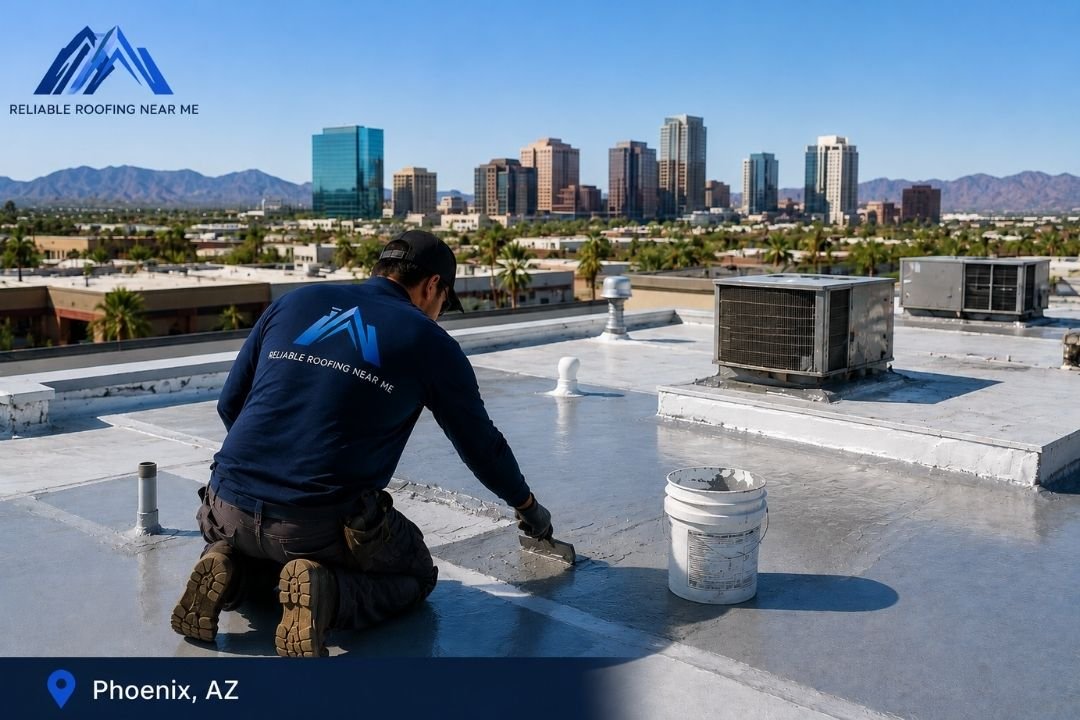
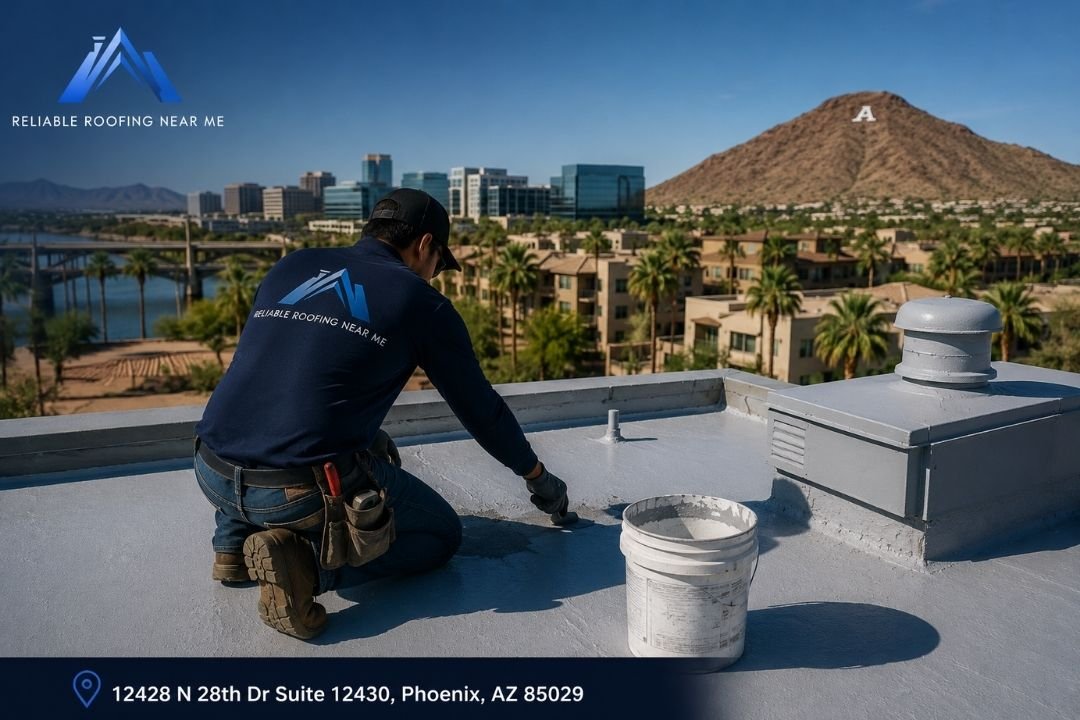
Tempe’s mix of newer townhome developments, commercial buildings, and modern additions means flat and low-slope roofing systems — TPO, foam, and modified bitumen — show up far more often than many homeowners expect. These systems perform differently than tile or shingle roofing and come with their own maintenance needs, particularly around drainage. Flat roofs rely entirely on proper slope and clear drains to move water off the surface, and any debris buildup from haboobs or nearby trees can create standing water that accelerates membrane wear.
Foam roofing, in particular, requires a recoat on a regular cycle to maintain its protective properties against UV degradation, and skipping that maintenance step is one of the most common ways commercial and residential flat roof owners end up facing a full replacement years earlier than necessary.
HOA Considerations Specific to Tempe Neighborhoods
Many communities in Tempe, particularly newer master-planned developments, are part of homeowners associations with strict aesthetic requirements — approved tile colors, specific material types, and sometimes a formal pre-approval process before any roofing work can legally begin. Homeowners who skip this step can end up facing fines, forced removal of completed work, or delays that stretch a simple repair into a months-long dispute.
Understanding HOA roofing rules across the Valley before signing a contract saves significant time, money, and frustration down the line. A contractor with genuine experience working in Tempe should already be familiar with common HOA submission requirements and able to help prepare the documentation needed for approval, rather than leaving the homeowner to figure it out mid-project.
What to Actually Look for in a Tempe Roofing Contractor
Licensing and Insurance
Arizona requires roofing contractors to hold an active ROC license, and this number is public record — easy to verify through the state’s licensing database, and something a legitimate company should hand over without hesitation. Verifying licensing before hiring any roofer is one of the simplest ways to avoid an expensive mistake, and it takes only a few minutes. Insurance matters just as much: general liability coverage and workers’ compensation protect homeowners if a worker is injured on the property or if damage occurs during the project.
Real Experience Working in Tempe, Not Just a Truck That Drives Through
A contractor active in Tempe should be able to speak specifically to the city’s building patterns — the prevalence of tile roofing in older neighborhoods, the growing number of flat-roof townhome communities, and HOA-specific requirements — rather than offering the same generic pitch used everywhere else in the country. Asking a contractor how many roofs they’ve worked on specifically in Tempe, and what they’ve seen go wrong most often, is a fair way to gauge genuine local experience versus a rehearsed sales script.
Transparent, Written Estimates
A trustworthy roofer walks the entire property, documents specific findings with photos, and provides a detailed written scope of work before any money changes hands. That scope should specify materials, labor, timeline, and payment structure. Vague verbal quotes, estimates that change significantly once work begins, or pressure to sign the same day are warning signs in any market, not just Arizona.
Financing Options for Larger Projects
A full roof replacement is a significant expense, and costs vary widely depending on roof size, material, pitch, and the extent of any underlying damage discovered during tear-off. Reputable contractors typically offer financing paths to make that cost manageable rather than requiring full payment upfront. Exploring roofing financing options available across the Phoenix area can turn an overwhelming expense into a predictable monthly payment, and it’s worth asking about upfront rather than after a bid is already on the table.
Signs a Tempe Roof Needs Repair or Replacement
Several warning signs tend to show up consistently on roofs across Tempe before a major failure occurs:
- Cracked, slipped, or missing tile, especially after a monsoon storm
- Granule loss on shingles, visible as bare, shiny patches or excessive grit in gutters
- Sagging areas on flat roofs, which often indicate trapped moisture beneath the membrane
- Rust or separation around flashing at chimneys, vents, and roof-to-wall intersections
- Interior ceiling stains, even small ones, which often indicate a leak that’s been traveling under the roofing material for some time
- Higher-than-expected cooling bills, which can point to failing attic insulation or ventilation tied to roof condition
Catching these signs early is almost always less expensive than waiting, since delaying small storm damage repairs typically allows water intrusion to spread into decking, insulation, and interior finishes.
The Inspection Process Homeowners Should Expect
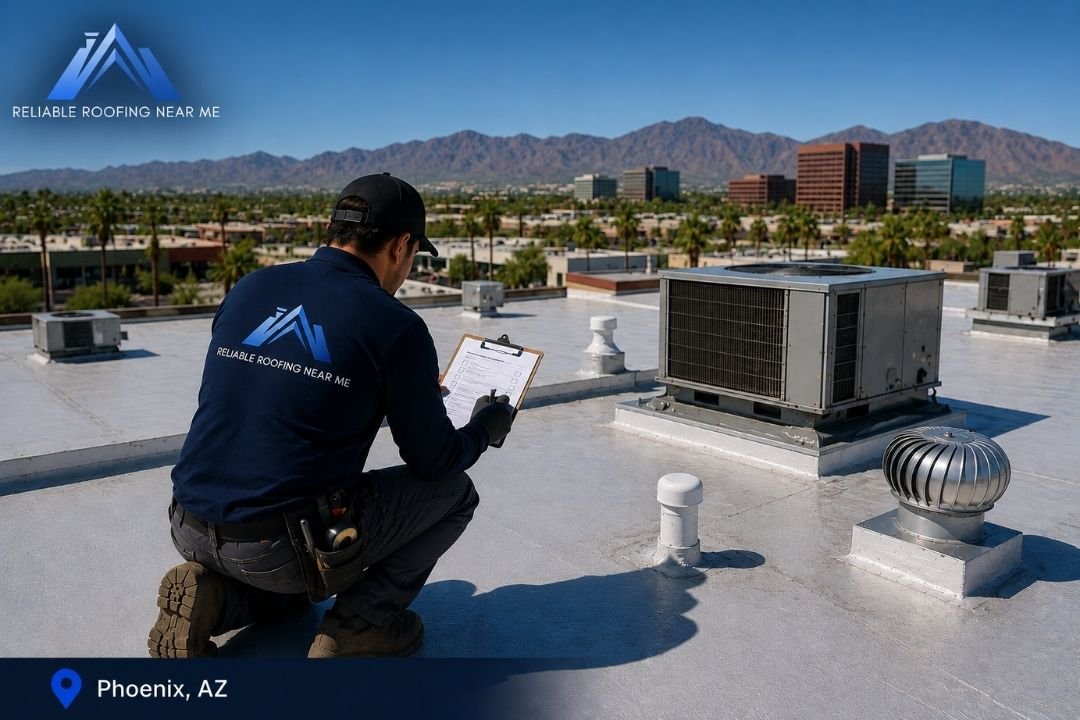
A proper roof inspection in Tempe should go well beyond a quick look from the ground. A thorough roof inspection typically includes a physical walk of the roof surface where safe to do so, a check of all flashing points, an assessment of attic ventilation and any visible moisture inside the attic space, and photo documentation of any problem areas. Homeowners should receive a written report, not just a verbal summary, especially if the inspection is being used to support an insurance claim.
Protecting a Roof’s Warranty
Many homeowners unknowingly void their roof’s warranty through actions that seem harmless — walking on tile incorrectly and cracking it underfoot, using a pressure washer on surfaces not rated for it, or hiring unlicensed labor for what seemed like a minor repair. Knowing what actually voids a roof warranty in Arizona is worth understanding before any DIY project or unlicensed repair, since warranty claims can be denied over surprisingly small missteps that homeowners didn’t realize mattered.
Storm Damage and the Insurance Process
After a significant monsoon storm, insurance claims for roof damage are common across the Valley, and Tempe is no exception. A licensed contractor familiar with the claims process can document damage thoroughly enough to support a claim, distinguishing storm-caused damage from pre-existing wear, which insurers scrutinize closely. Homeowners should be cautious of any contractor who encourages exaggerating damage or who asks to be paid directly from an insurance settlement before work is verified — both are patterns associated with insurance fraud schemes that have targeted Arizona homeowners after major storms.
Red Flags That Should End the Conversation
Certain patterns show up repeatedly with contractors who cause homeowners real problems: door-to-door solicitation immediately after a storm, demands for full payment upfront, no verifiable business address, and refusal to put anything in writing. Storm-chasing crews tend to target Tempe and other Valley neighborhoods heavily during monsoon season, often disappearing once payment is collected and problems surface. Trusting instinct here matters — if a deal feels rushed or a contractor avoids direct answers about licensing, that hesitation is worth listening to.
What a Reliable Roofing Company Should Offer in Tempe
Beyond licensing and insurance, homeowners in Tempe should expect clear communication throughout the project, a documented inspection process with photos, material options genuinely suited to desert conditions rather than one-size-fits-all products, and warranty terms explained in plain language rather than buried in fine print. Residential roofing built specifically for desert climate conditions holds up dramatically better over time than generic systems installed without regard for local stress factors — a standard that should apply whether the property is a single-family home, a townhouse, or a small commercial building.
Frequently Asked Questions
How do I know if a roofing contractor is actually licensed in Arizona?
Every legitimate roofing contractor should have an active Registrar of Contractors (ROC) license number, which can be looked up publicly through the state’s licensing database. A company should provide this number without hesitation.
How often should a roof in Tempe be inspected?
Most roofing professionals recommend at least one inspection per year, ideally before monsoon season begins, along with a follow-up check after any significant storm.
Does homeowners insurance typically cover roof damage in Arizona?
Coverage depends on the policy and the cause of damage. Storm and wind damage are commonly covered, while gradual wear from age or lack of maintenance usually is not. A licensed contractor working in Tempe can help document damage properly for a claim.
What’s the biggest mistake homeowners make when choosing a roofer?
Choosing based on price alone. The lowest bid often means shortcuts on materials, labor, or proper permitting — all of which show up as problems later, sometimes well after the original contractor is gone.
Does my HOA in Tempe need to approve roofing work before it starts?
In many Tempe communities, yes. Material type, color, and sometimes even the contractor need pre-approval, so it’s worth checking HOA guidelines before signing any contract.
Can a roofer handle both tile and flat roof systems in Tempe?
Not always. Tile, shingle, and flat roofing (TPO, foam, modified bitumen) require different expertise. It’s worth confirming a contractor has direct, hands-on experience with the specific system on your Tempe property before hiring.
How can I tell if my roof damage is from this storm or pre-existing wear?
This distinction matters for insurance purposes, and it’s exactly why a professional inspection with photo documentation shortly after a storm is valuable — it creates a clear record tied to a specific event rather than relying on memory later.
Is it worth getting multiple estimates before choosing a contractor?
Generally yes. Comparing a few written estimates helps homeowners spot outliers — either red-flag lowball pricing or vague scopes of work — and gives a clearer sense of what a fair, thorough estimate actually looks like.
Work With a Roofing Company That Actually Knows Tempe
At Reliable Roofing Near Me, we install, repair, and inspect roofs throughout Tempe and more than 40 Arizona cities, with crews who understand exactly what this climate does to a roof over time. Every estimate is written, every license is verifiable, and every recommendation is based on what your roof in Tempe actually needs — not a generic sales pitch. No pressure, no obligation.
Call us at (480) 867-9986 or visit reliableroofingnearme.com to schedule your free roof inspection today. We serve Tempe, Phoenix, Mesa, Scottsdale, Chandler, Gilbert, and every community across the Valley.
Reliable Roofing Near Me | (480) 867-9986 | reliableroofingnearme@gmail.com | reliableroofingnearme.com | 12428 N 28th Dr Suite 12430, Phoenix, AZ 85029 | ROC License #355096