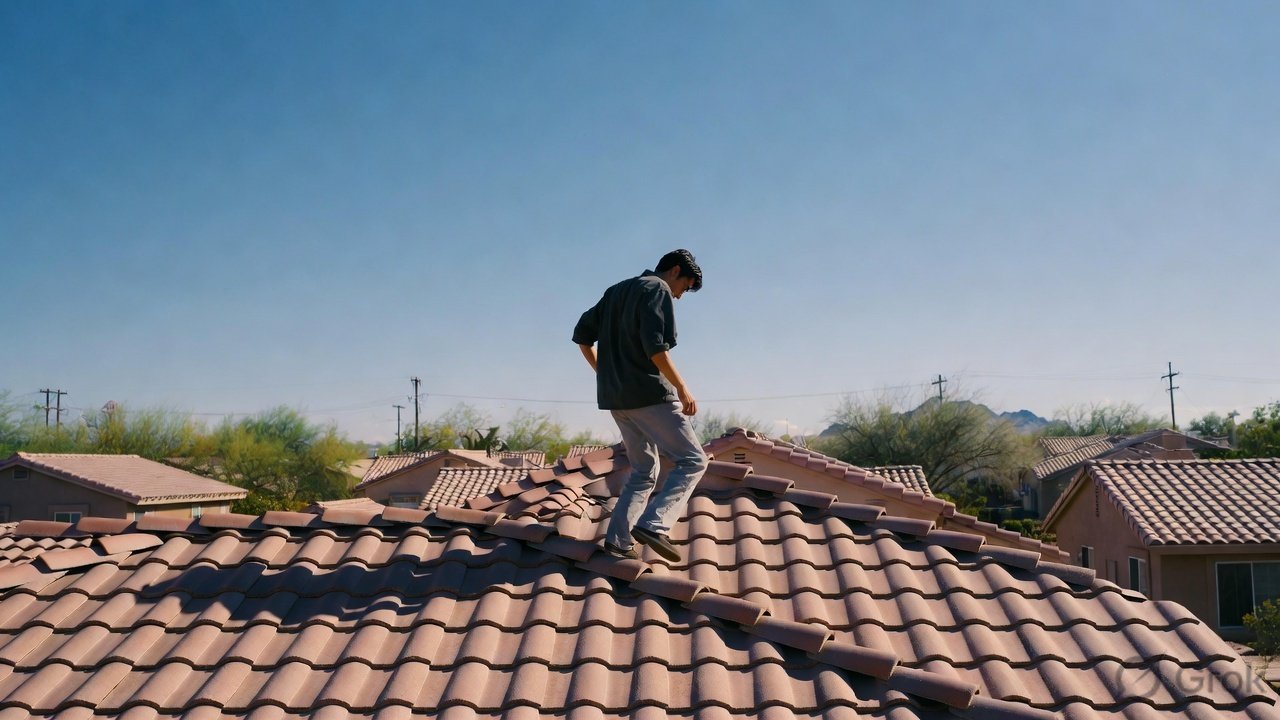
It is one of the most common questions Phoenix homeowners ask when they need to access their roof — to retrieve something, inspect after a storm, check on an HVAC unit, or simply take a look at something that does not seem right from the ground. And it is a question that deserves a straight, honest answer rather than a reflexive “absolutely not” that leaves homeowners with no practical guidance.
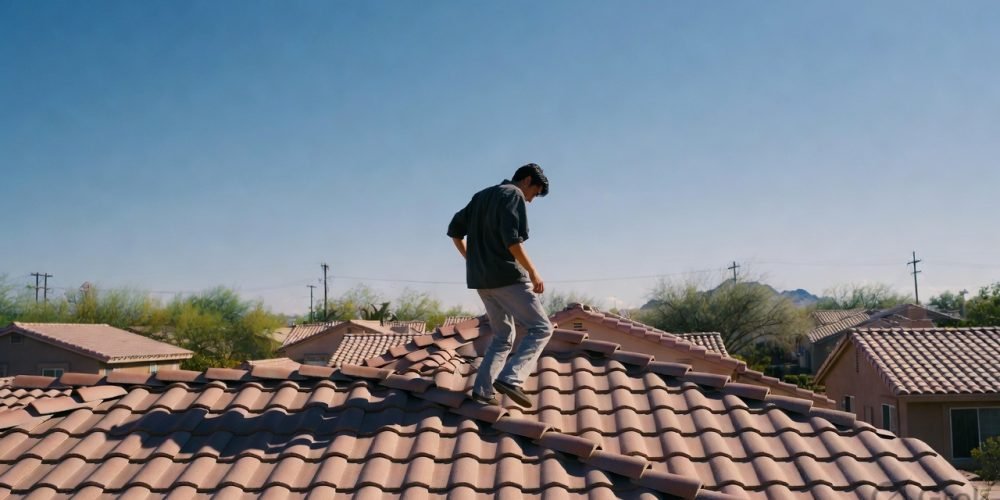
The short answer is yes — you can walk on a tile roof in Phoenix. But how you walk on it, where you step, and what conditions you are walking on determine whether you complete the task without damage or whether you leave behind a trail of cracked tiles that create water entry points across your roof.
Tile is one of the most durable roofing materials available. It handles decades of Phoenix heat, UV exposure, and monsoon storms without flinching. But it is not designed to handle concentrated point loads — the full weight of a person bearing down on a single unsupported tile face. Understanding the difference between safe and damaging foot traffic on a Phoenix tile roof is essential knowledge for any Valley homeowner.
Why Tile Roofs Are Vulnerable to Foot Traffic
To understand why walking technique matters so much on a tile roof, it helps to understand how tile roofing systems are actually constructed.
Tile is not installed as a solid, continuous surface. Each individual tile is a discrete unit, typically installed in overlapping courses from the eave up to the ridge. The tiles sit on top of the underlayment and roof deck beneath them, held in place by fasteners, gravity, and in some installations mortar at the ridges and hips.
The critical structural point is this: each tile is only supported at its lower edge, where it overlaps the course of tiles below it. The upper portion of each tile — the exposed face that is visible from the ground — is essentially cantilevered, supported at the bottom but unsupported across the majority of its face.
When a person steps on the exposed face of a tile in the middle of that unsupported span, the full concentrated load of their body weight bears down on a rigid ceramic or concrete unit that has nowhere to flex. The result is frequently a crack — sometimes immediately visible, sometimes a hairline fracture that is invisible until the next monsoon rain forces water through it.
This is not a defect in the tile. It is a fundamental characteristic of how tile roofing systems are designed and installed. Tile is engineered to handle distributed loads — wind pressure, rain, snow — spread across its full surface. It is not engineered to handle the concentrated point load of a boot heel on an unsupported section.
The Right Way to Walk on a Tile Roof in Phoenix
Knowing that the unsupported face of the tile is the vulnerable zone immediately points to the correct walking technique: step only on the lower third of each tile, at the overlap point where it rests on the course below.
At this location, the tile is supported directly by the tile beneath it and the batten or deck below that. Your weight is transferred through a supported section of the tile rather than bearing down on an unsupported span. This dramatically reduces the risk of cracking compared to stepping on the exposed face.
Here is the practical approach that experienced Arizona roofers use when navigating tile roofs:
Step on the overlap zone. Each tile has an overlap section at its lower edge where it sits on top of the tile below. This is the structural load path — step here, not on the exposed face above it. The overlap zone is typically the lower four to six inches of each tile depending on the tile profile.
Distribute your weight across multiple tiles. Rather than planting your full weight on a single tile, keep your weight spread between both feet at all times. Moving carefully with both feet in contact with the roof surface simultaneously reduces the peak load on any individual tile.
Move slowly and deliberately. Rushing on a tile roof increases the risk of missteps that place weight on unsupported areas. Move one step at a time, confirm your footing before shifting weight, and avoid any sudden movements.
Use a foam kneeling pad for stationary work. If you need to remain in one position on the roof — inspecting a vent, checking a flashing, retrieving something — a foam kneeling pad distributes your weight across a larger surface area and reduces point load concentration on individual tiles.
Avoid the leading edge of tiles. The very top edge of a tile — the portion farthest from the overlap zone — is the most unsupported point on the entire tile. Never step here. It is the location most likely to crack under any foot traffic.
Stay off wet tiles. This is both a safety and a damage concern. Wet tile surfaces in Phoenix — during or after monsoon rain — are slippery and significantly more dangerous than dry tile. Additionally, some tile types have slightly reduced load tolerance when saturated. Never access a tile roof during rain or immediately after.
Tile Profiles and How They Affect Walkability
Not all tile profiles are equally forgiving of foot traffic. The profile of your tile — its shape in cross-section — affects both where you can safely step and how much margin for error exists.
High-Profile Barrel Tile
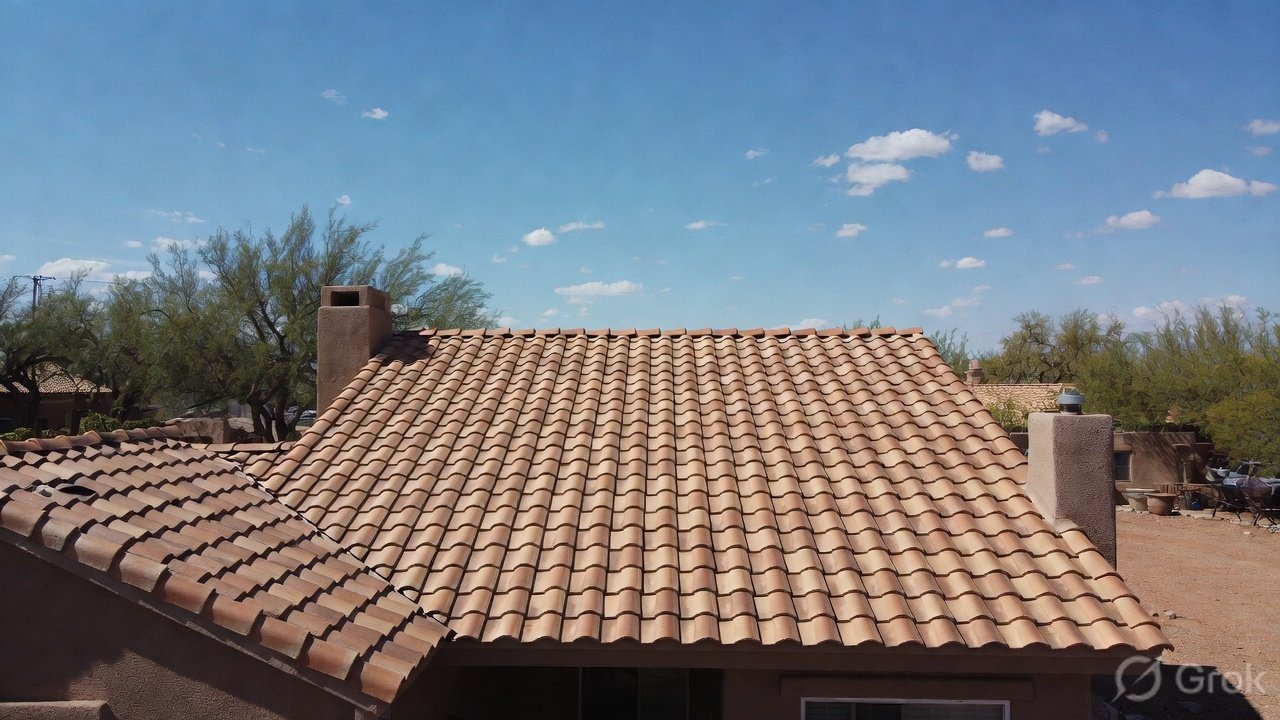
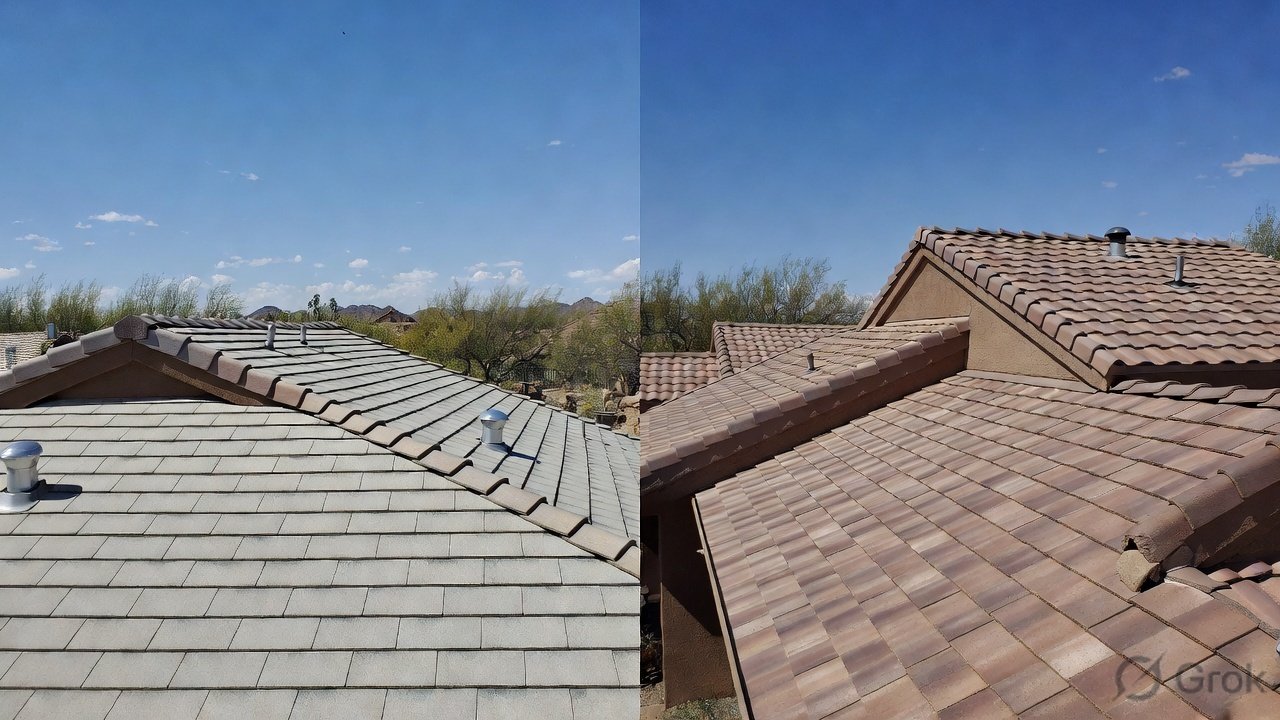
Traditional S-curve or barrel tile — the rounded profile common on Spanish Colonial and Mediterranean-style Phoenix homes — is one of the more challenging profiles to walk on safely. The curved shape means only the overlap zone at the lower edge and the crown of the curve provide stable footing. The valleys between barrel tile crowns are the unsupported spans where cracking risk is highest.
Walking on high-profile barrel tile requires deliberate placement of each step on the crown or lower overlap of each tile, avoiding the valley spans entirely. The raised profile does make the overlap zone somewhat more visually identifiable, which helps with step placement.
Low-Profile Flat Tile
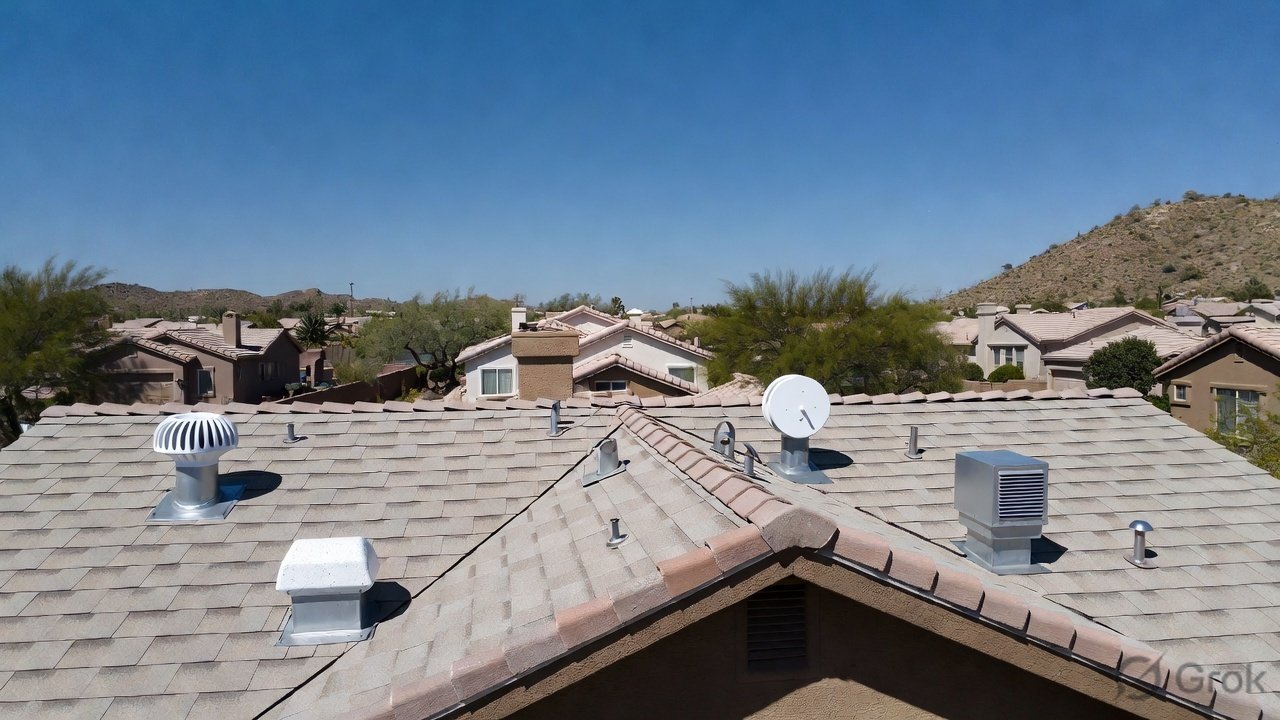
Flat and low-profile concrete tile — increasingly common in newer Phoenix neighborhoods and HOA communities — presents a more uniform walking surface than barrel tile. The flatter profile means the distinction between supported and unsupported zones is less visually obvious, but the same rule applies: step at the lower overlap, not on the exposed face above it.
Flat concrete tile in larger format sizes has a longer unsupported span than smaller format tiles, which makes stepping accuracy more consequential. A slightly misplaced step on a large-format flat tile covers more unsupported area than the same step on a smaller tile.
Medium-Profile Tile
Medium-profile tile — sometimes called low barrel or double Roman — sits between high barrel and flat tile in both walkability and visual complexity. The moderate profile makes the overlap zone reasonably identifiable while providing a more stable footing surface than high barrel tile.
Foot Traffic Damage: What It Looks Like and Why It Matters
Cracked tiles are the obvious and immediate consequence of improper foot traffic on a Phoenix tile roof. But the damage does not stop there — and understanding the downstream consequences of cracked tiles helps explain why this is worth taking seriously.
Cracked Tiles Create Direct Underlayment Exposure
Each cracked tile is a point where the underlayment beneath it is now directly exposed to Phoenix’s UV radiation. Underlayment that is covered by intact tile is protected from direct UV contact and degrades at the rate determined by attic heat. Underlayment exposed through a cracked tile degrades significantly faster — sometimes within a single season of direct exposure.
In Phoenix’s UV environment, a section of underlayment exposed through a cracked tile can become brittle, crack, and fail to function as a waterproof barrier within one to two years. What started as a cracked tile becomes a water entry point at the next monsoon storm.
Hairline Cracks Are Invisible Until They Leak
Not all foot traffic damage produces obvious breaks. Hairline cracks — fractures that run through the tile but do not displace visibly — are common outcomes of borderline impacts on partially unsupported tile faces. These cracks are essentially invisible from the ground, difficult to spot even on close inspection of the roof surface, and fully capable of allowing water infiltration during monsoon storms.
This is why roof inspections after any significant foot traffic event — particularly visits by HVAC technicians, pest control, or other rooftop tradespeople — are worthwhile on Phoenix tile roofs. Identifying and replacing cracked tiles immediately after the event is far less expensive than discovering water damage in your attic or ceiling months later.
Cumulative Damage Across Years of Trade Access
Most Phoenix homes have regular rooftop access from multiple trades over the years — HVAC service, pest control, satellite installation, solar assessment. Each visit by personnel who do not walk tile correctly adds to the cumulative crack count on the roof. A tile roof that looks intact from the ground may have dozens of hairline cracks accumulated from years of improper trade access that collectively compromise the roof’s waterproofing integrity.
When You Should Not Walk on Your Tile Roof in Phoenix
There are situations where even careful walking technique does not adequately reduce the risk of damage, and where calling a licensed roofing contractor is the appropriate and cost-effective decision.
When the tiles are older and already showing surface stress. Tile that has been through decades of Phoenix thermal cycling, particularly concrete tile approaching the end of its service life, has reduced load tolerance compared to new tile. Even careful walking on aged, stressed tile increases cracking risk meaningfully.
When the underlayment is suspected of failing. If your roof is more than 20 years old and the underlayment condition is unknown, walking on the roof before a professional assessment adds risk to a system that may already be compromised. A roofing contractor can assess the roof without the walking risk that an untrained homeowner would introduce.
When you need to access steep sections. Phoenix homes with roof pitches above approximately 4:12 require fall protection equipment and experience to navigate safely. Steep tile roofs are genuinely hazardous without proper equipment — this is not a task for homeowners without professional safety gear and experience.
When you are retrieving something near the ridge or upper sections. The highest sections of a tile roof are the most distant from any ladder access point, the steepest relative to the standing position, and the farthest from the overlap zones that provide safe footing. Retrieving a ball, antenna, or other object near the ridge is a task where the risk of a misstep and a fall — or significant tile cracking across a large area — is high enough to warrant a professional instead.
Any time you are uncertain about your footing. If you reach a section of roof where you are not confident about where to step safely, stop and call a contractor. A service call to have a professional retrieve an object or inspect a section costs far less than a fall or a trail of cracked tiles that need repair.
What Trades Should Know Before Accessing Your Phoenix Tile Roof
One of the most practical steps a Phoenix tile roof owner can take is establishing a clear expectation with any trade that accesses the roof that tile walking technique is required — and confirming they understand it before they set foot on the surface.
HVAC technicians are the most frequent rooftop visitors on Phoenix homes, and not all of them have received training on tile roof access. Pest control technicians, solar assessment crews, satellite installers, and gutter cleaners all access rooftops with varying levels of awareness about tile walking requirements.
Before any trade accesses your tile roof:
Ask directly whether their technicians are trained in tile roof access. A technician who has never been instructed on tile walking technique will default to walking however feels natural — which frequently means stepping on the middle of exposed tile faces.
Consider requesting that a roofing contractor perform any access that requires significant roof navigation. For complex HVAC service that requires extensive movement across the roof surface, having a roofing professional manage the roof access while the HVAC technician focuses on the equipment is a practical arrangement on older or high-value tile roofs.
Schedule a tile inspection after any significant rooftop trade visit. The cost of an inspection and replacing a handful of cracked tiles is low. The cost of water damage from cracked tiles that go undetected through a monsoon season is not.
Roof Repair Costs for Foot Traffic Damage in Phoenix
Individual cracked tile replacement is one of the most straightforward and affordable tile roof repairs available. The cost depends on tile type, profile, color matching difficulty, and the number of tiles needing replacement.
Individual tile replacement (per tile): $35 to $150 per tile depending on profile and sourcing Inspection plus minor crack repairs (up to 10 tiles): $200 to $600 Inspection plus moderate repairs (10 to 25 tiles): $500 to $1,200 Underlayment patch repair where cracked tiles have caused exposure damage: $300 to $800 per affected area
For older tile roofs where the discontinued profile makes exact color matching difficult, sourcing matching replacement tile adds to both cost and timeline. Discussing this possibility with your contractor before the project begins avoids surprises.
Frequently Asked Questions
Will one person walking on my tile roof definitely crack tiles?
Not necessarily — if they walk correctly. A person stepping carefully on the overlap zone of each tile with distributed weight is unlikely to cause cracking. The risk increases significantly with improper stepping on unsupported tile faces, hurried movement, heavy footwear with narrow heel profiles, and aged tile with reduced load tolerance.
How can I tell if my tile roof has been cracked by foot traffic?
Hairline cracks are difficult to identify without close inspection at roof level. Obvious breaks and displaced tile sections are visible from the ground or from the eave line. After any significant rooftop trade access, a professional inspection is the most reliable way to identify damage before it becomes a water entry problem.
Is concrete tile or clay tile more resistant to foot traffic damage?
Concrete tile is denser and slightly more resistant to cracking under foot traffic than clay tile in most cases. However, the difference is less significant than walking technique — properly placed steps on concrete tile and clay tile both produce minimal cracking risk. Improperly placed steps on either material produce cracking.
How do I know if a roofing contractor is walking my roof correctly?
Watch the initial access. A contractor experienced with tile roofing will step deliberately onto the overlap zone at the lower edge of tiles rather than the exposed face, move slowly, and keep weight distributed. Any contractor who walks quickly across tile faces without apparent attention to step placement is not walking the roof correctly.
Can solar panels be installed on a Phoenix tile roof without causing damage?
Yes — when installed by crews trained and experienced in tile roof penetration and access. Solar installation on tile roofs requires specific mounting systems designed to interface with tile profiles correctly, and installation crews should be trained in tile walking technique. Ask your solar installer for their specific tile roof installation protocol and references from tile roof installations before agreeing to proceed.
Schedule a Tile Roof Inspection in Phoenix
At Reliable Roofing Near Me, we inspect and repair tile roofs across Phoenix and more than 40 Arizona cities. If you suspect foot traffic damage, want a post-storm assessment, or simply have not had your roof professionally inspected recently, we will give you a clear, honest report on what we find — no pressure, no obligation.
Call us at (480) 867-9986 or visit reliableroofingnearme.com to schedule your free inspection today. We serve Phoenix, Scottsdale, Mesa, Chandler, Gilbert, Glendale, Peoria, Tempe, Surprise, and every community across the Valley.
Reliable Roofing Near Me | (480) 867-9986 | reliableroofingnearme@gmail.com | reliableroofingnearme.com | 12428 N 28th Dr Suite 12430, Phoenix, AZ 85029 | ROC License #355096