Scottsdale is one of the most desirable addresses in the entire Southwest — exceptional neighborhoods, strong property values, and a standard of living that attracts homeowners who take their properties seriously. But behind the well-maintained exteriors and manicured landscaping that define Scottsdale’s residential character, thousands of homes are dealing with the same roofing reality that affects every property in the Valley: a climate that is genuinely punishing on roofing systems and does not give homeowners much margin for error when problems develop.
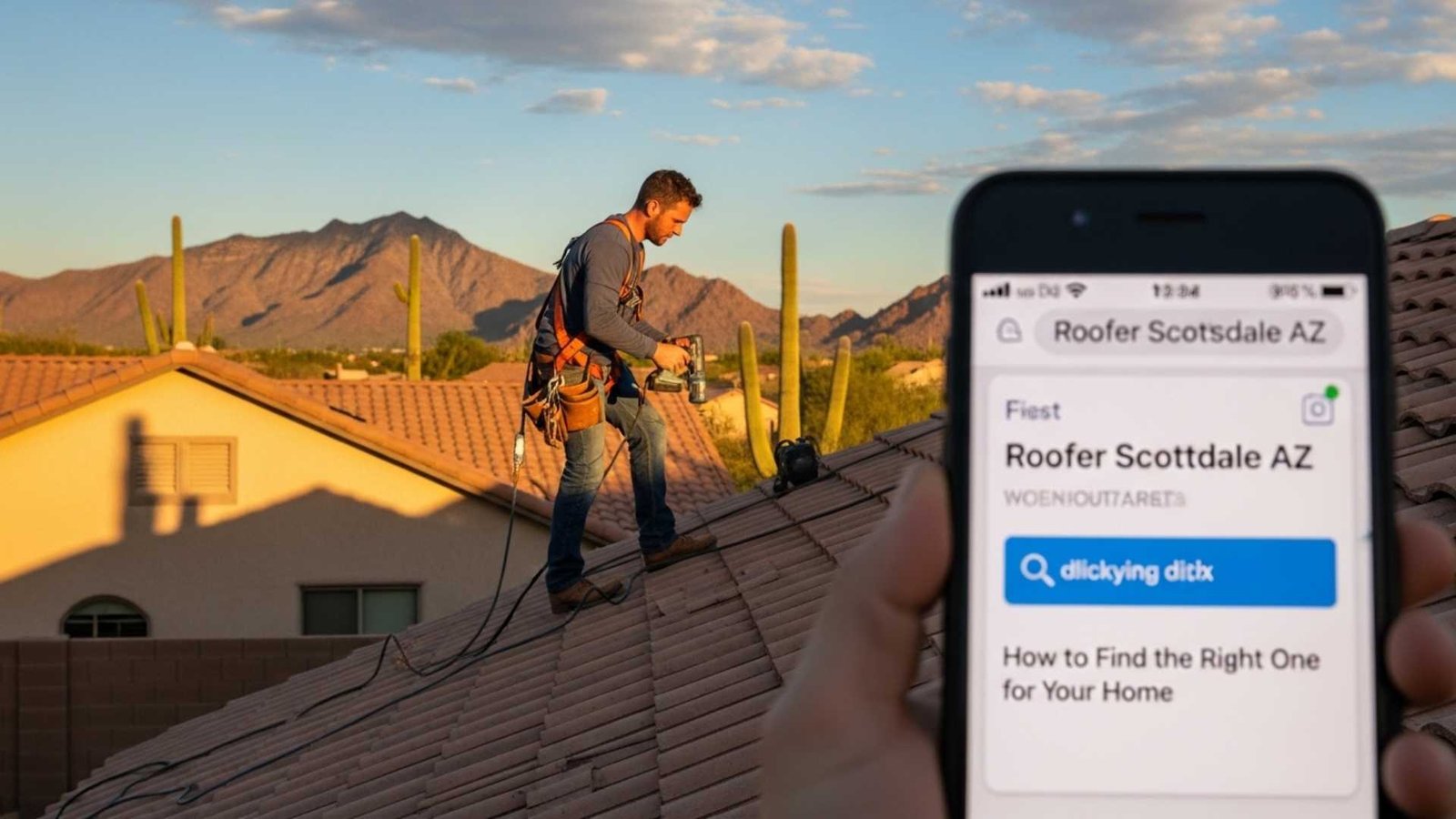
Finding the right roofer in Scottsdale AZ is not as straightforward as it might seem. The market has no shortage of contractors who will show up with a truck and a ladder — but the difference between a licensed, experienced Scottsdale roofing contractor and an unlicensed or inexperienced one is not measured in days. It is measured in years of roof life, thousands of dollars in avoidable repair costs, and the difference between a warranty that holds and one that is voided on a technicality the homeowner never knew existed.
This guide gives Scottsdale homeowners a clear, practical framework for identifying the right roofer — what to look for, what questions to ask, what Scottsdale’s specific roofing conditions require, and what red flags to walk away from regardless of the price being offered.
What Scottsdale Roofs Are Up Against
Before evaluating any roofer in Scottsdale AZ, it helps to understand what roofing systems in this market face — because the conditions here are more demanding than most of the country, and the contractor you choose needs to understand those conditions specifically.
Scottsdale sits in the northern reaches of the Sonoran Desert, and its roofing environment reflects that position. The city receives approximately 300 days of sunshine per year. Summer temperatures regularly exceed 110 degrees Fahrenheit. UV radiation intensity is among the highest of any major metropolitan area in the United States. And from mid-June through late September, Scottsdale’s monsoon season delivers sudden, violent storms with wind gusts that can exceed 60 miles per hour and rainfall that arrives in volumes the drainage systems are designed — sometimes barely — to handle.
The specific consequences for Scottsdale roofing systems include accelerated underlayment degradation from sustained attic heat, UV breakdown of sealants at flashing transitions far faster than manufacturer specifications suggest, tile cracking and mortar failure from daily thermal cycling of 30 to 40 degrees, and the wind and impact damage that monsoon storms introduce every year during storm season.
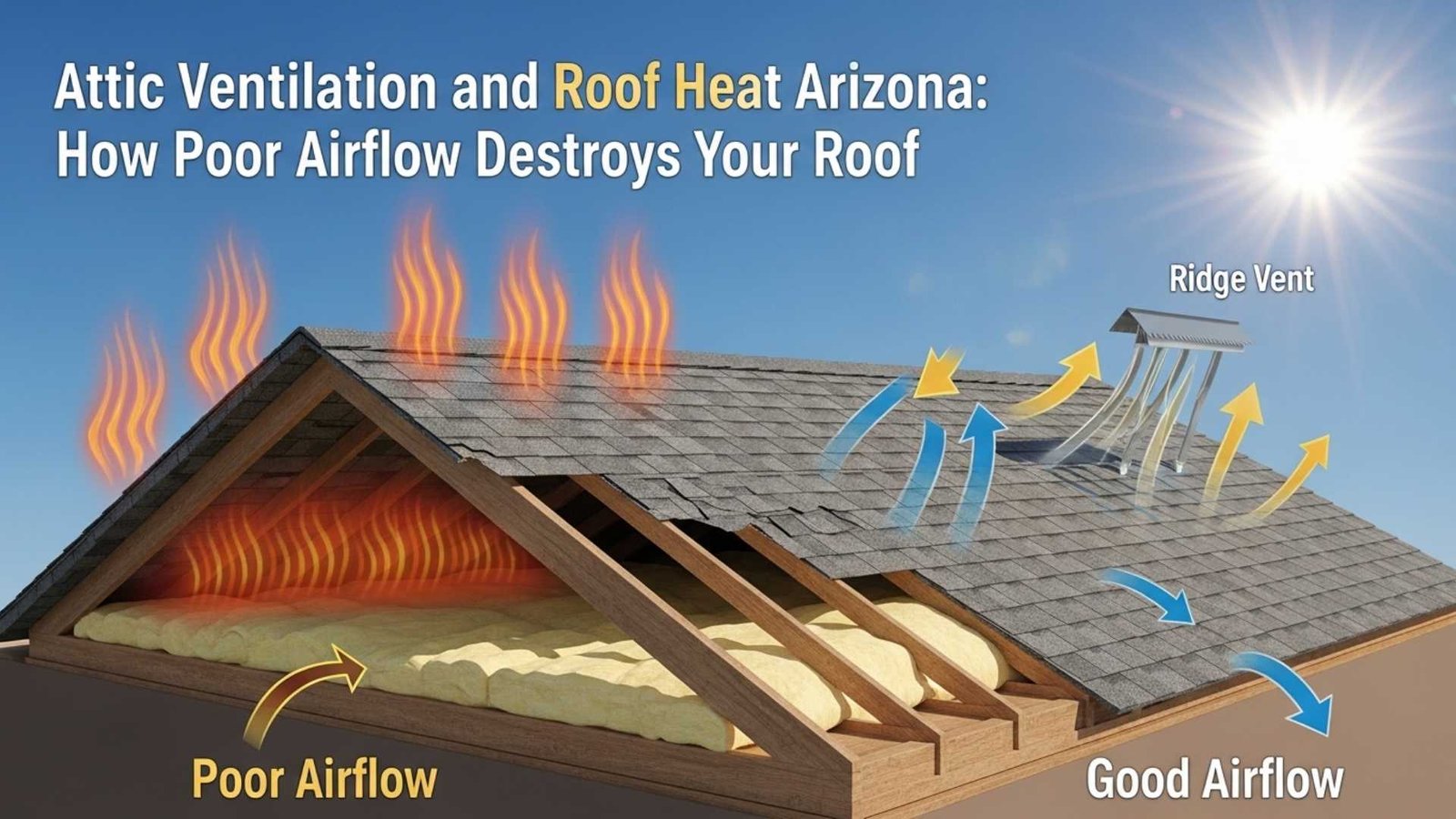
Understanding how Phoenix area heat reduces roof lifespan is foundational context for any Scottsdale homeowner evaluating roofing decisions — because a contractor who does not understand these dynamics cannot give you accurate guidance on what your roof needs or when it needs it.
The Non-Negotiable: Arizona ROC Licensing
The single most important credential to verify before hiring any roofer in Scottsdale AZ is an active Arizona Registrar of Contractors license. This is not a preference — it is a legal requirement.
In Arizona, performing roofing work for compensation without an active ROC license is illegal. The ROC licensing system exists to protect homeowners by ensuring that licensed contractors have met minimum experience, examination, and insurance requirements before performing work on residential properties. It also creates a formal accountability mechanism — licensed contractors can be subject to ROC disciplinary action, including license suspension and revocation, for substandard work or unethical conduct.
Homeowners who hire unlicensed roofing contractors in Scottsdale have no ROC recourse if the work fails. No formal complaint mechanism. No disciplinary path. No bond protection. The only remedy is civil litigation — which is slow, expensive, and uncertain, particularly when the unlicensed contractor has dissolved or disappeared by the time the problems manifest.
Verifying an Arizona ROC license takes approximately 60 seconds at the official Arizona Registrar of Contractors website. You enter the contractor’s name or license number and confirm that the license is active, in good standing, and covers the correct classification for residential roofing work. Our detailed guide on finding a licensed roofing contractor in Arizona walks through this verification process step by step.
At Reliable Roofing Near Me, our Arizona ROC license number is ROC 355096 — active, in good standing, and verifiable at any time.
What Scottsdale Homeowners Should Look for in a Roofer
Beyond the baseline of ROC licensing, evaluating a roofer in Scottsdale AZ involves several additional dimensions that determine whether you are getting genuinely qualified professional service or simply a licensed version of a low-quality contractor.
Local Market Experience
Roofing in Scottsdale is not the same as roofing in a moderate climate. A contractor with 20 years of experience in a northern state but limited Arizona work history does not bring 20 years of relevant experience to your Scottsdale roof. They bring experience that does not account for the underlayment specifications, ventilation requirements, tile relay practices, and flashing sealant protocols that Scottsdale’s specific climate demands.
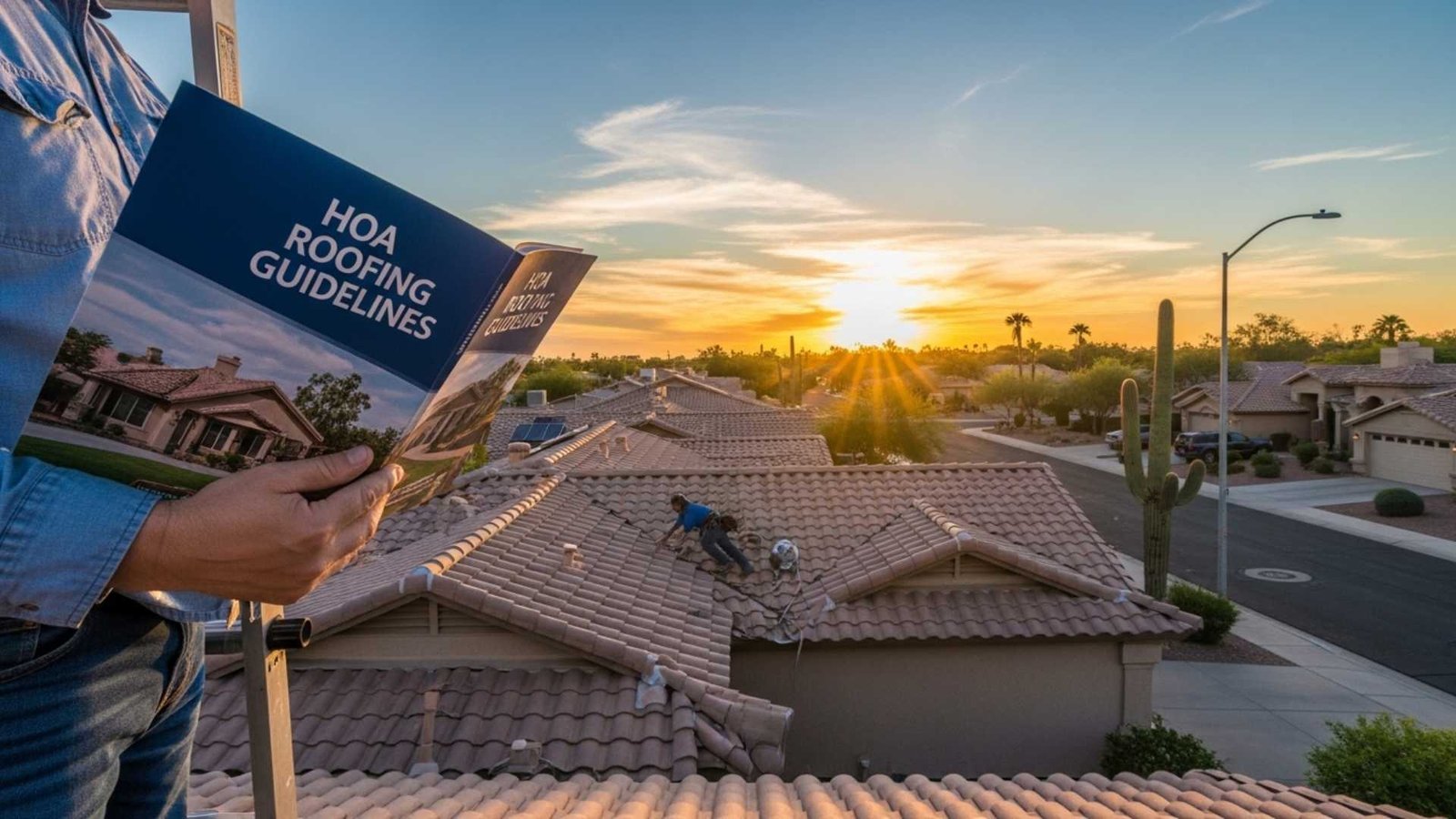
Ask specifically how long the contractor has been operating in the Scottsdale and Phoenix metro market. Ask for references from Scottsdale homeowners — not just the Valley broadly. A contractor with a genuine local track record in Scottsdale’s specific neighborhood types — from the established estates of north Scottsdale to the mid-century homes near Old Town — understands the material profiles, HOA landscapes, and permit environments that define roofing work in this market.
Insurance Documentation
Active ROC licensing includes a bonding requirement, but homeowners should additionally verify that their roofing contractor carries current general liability insurance and workers’ compensation coverage. Request certificates of insurance directly — not verbal assurances — and confirm that coverage limits are adequate for the scope of work being performed on your property.
General liability insurance protects you if the contractor causes property damage during the project. Workers’ compensation coverage protects you from liability if a worker is injured on your property during the project. A contractor who cannot or will not provide current certificates of insurance for both coverages should not be allowed on your Scottsdale roof regardless of their price or their pitch.
Written, Itemized Estimates
A professional roofer in Scottsdale AZ provides written, itemized estimates that specify the scope of work in detail — not a one-line price for “roof replacement” or “roof repair.” The estimate should identify the specific materials to be used including manufacturer, product name, and any relevant specifications such as underlayment type and thickness, the scope of preparation work including tear-off and deck inspection, permit handling, warranty terms for both materials and workmanship, and the project timeline.
Estimates that arrive as a single number with minimal detail are not estimates — they are opening bids that leave room for cost expansion once the project is underway and you have limited practical ability to push back. Get at minimum two written estimates before committing to any Scottsdale roofing project, and evaluate them against current market pricing. Our guides on roof repair costs in the Phoenix metro and roof replacement costs in Phoenix metro give you the reference benchmarks to evaluate whether any estimate is within market range before you sign anything.
Warranty Terms
Both material warranties and workmanship warranties matter on a Scottsdale roofing project. Material warranties are issued by the manufacturer and cover defects in the roofing products themselves. Workmanship warranties are issued by the contractor and cover installation defects.
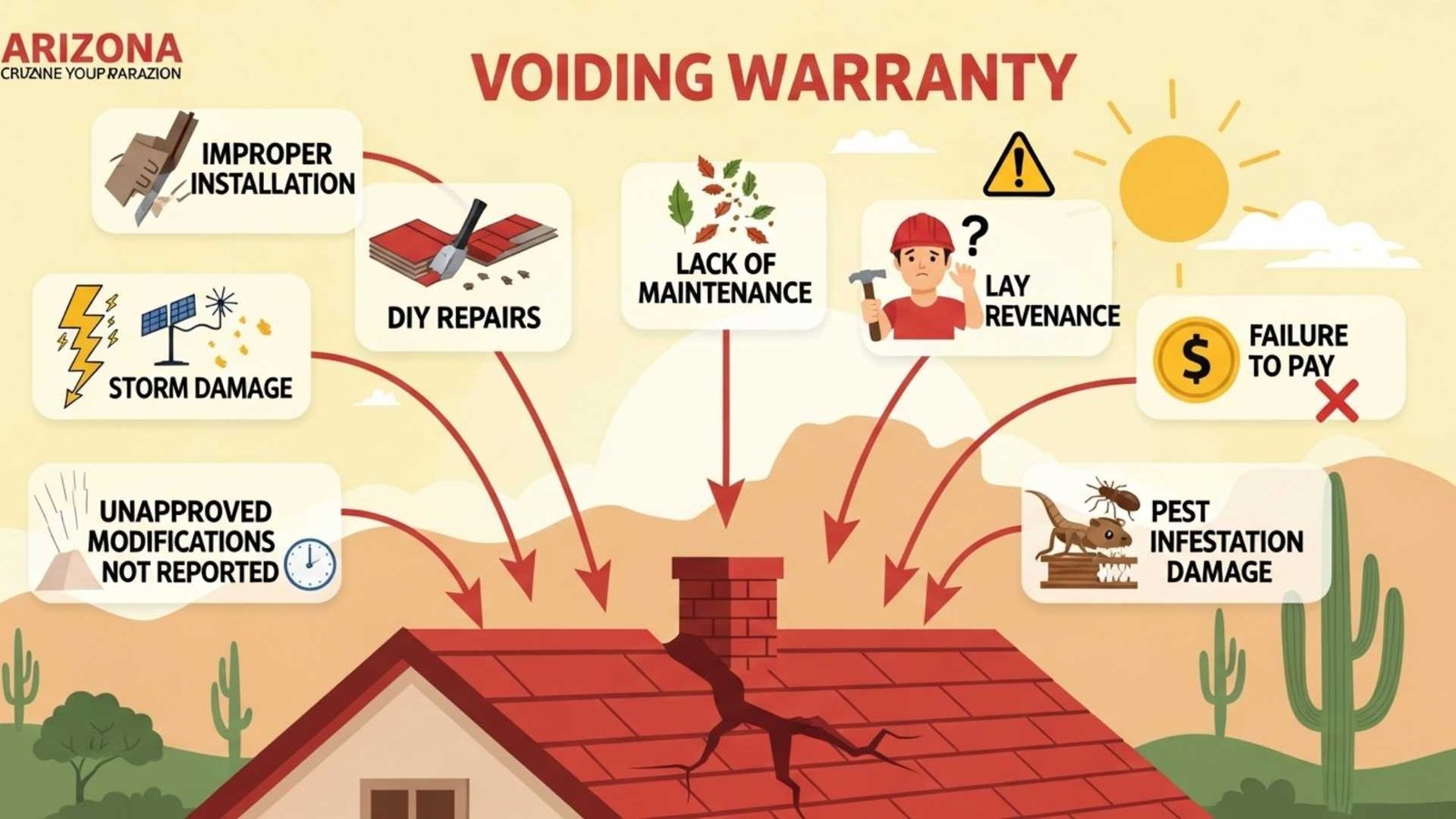
Ask every contractor you evaluate what workmanship warranty they provide and get it in writing before the project begins. A contractor offering a 1-year workmanship warranty is providing significantly less protection than one offering 5 or 10 years — and that difference tells you something about how confident they are in the quality of their work. Understanding what voids roof warranty in Arizona also helps you evaluate whether the contractor’s proposed installation approach preserves your manufacturer warranty coverage fully.
Permit Handling
In Scottsdale, as throughout Maricopa County, permits are required for full roof replacements and most significant roofing work. A professional roofing contractor handles permit filing as a standard part of the project — not as an optional add-on. Any contractor who suggests that permits are unnecessary, that you can pull them yourself, or who is vague about the permit process should not be trusted with a significant roofing project.
Unpermitted roofing work in Scottsdale creates serious complications at the point of sale — title companies and buyers’ inspectors routinely flag unpermitted work — and may void material warranties that require permitted installation. Our full guide on Phoenix area roof permits clarifies exactly what requires a permit and what the process involves.
Common Roofing Issues Scottsdale Homeowners Face
Understanding the most common roofing problems in Scottsdale helps you recognize them early — and helps you evaluate whether a contractor’s proposed scope addresses the actual issue rather than just the visible symptom.
Tile Roof Underlayment Failure
Scottsdale’s established neighborhoods are dominated by tile roofing — clay and concrete tile installations that were built across the city’s major growth periods from the 1980s through the 2000s. Many of those roofs are now at or past the 20 to 25-year underlayment service life that Arizona’s attic heat conditions impose on most underlayment products.
Tiles that look intact from the street can be sitting on underlayment that has been failing for years — cracked, brittle, and no longer functioning as a continuous waterproof barrier. Interior water stains appearing after monsoon storms, moisture in the attic, or recurring leaks that tile-level repairs do not resolve are the primary indicators. Our guide on when to replace tile roof underlayment in Arizona covers the specific age thresholds and warning signs in detail.
Flashing Failures at Penetrations and Transitions
Scottsdale homes — particularly the larger custom properties in north Scottsdale with complex roof geometries, multiple chimneys, and numerous skylights — have extensive flashing systems at every penetration and transition point. Each of those flashing locations is a potential water entry point when sealants fail or metal deteriorates.
Phoenix’s UV radiation breaks down flashing sealants faster than manufacturer specifications developed for moderate climates suggest. Annual inspection of flashing sealant condition — and timely renewal before failure creates active water intrusion — is one of the most cost-effective maintenance practices for Scottsdale homeowners. Our guide on roof flashing repair in Phoenix: signs, costs and what to do covers every flashing type and failure mode in detail.
Monsoon Storm Damage
Scottsdale’s monsoon season brings sudden, high-intensity storms that test every weak point in a roofing system. Tiles that have been stressed by years of thermal cycling can shift, crack, or be displaced in a single night of high winds. Flashing that was marginally sealed can be breached by the wind-driven rain that monsoon storms deliver at angles that normal rainfall never approaches.
A professional post-storm inspection after any significant monsoon event identifies damage before the next storm arrives and before minor issues compound into major ones. If you have experienced storm damage, our guide on storm damage roof repair in Phoenix AZ covers the documentation and claims process — including how to work with your homeowner’s insurance effectively when storm damage is the cause.
Flat Roof Deterioration on Additions and Garages
Many Scottsdale homes have flat or low-slope roof sections — on additions, casitas, garages, and covered patios — that require different roofing systems and maintenance approaches than the primary sloped tile roof above. These sections are among the most frequently neglected areas on Scottsdale residential properties and among the most vulnerable to monsoon water intrusion when their roofing membrane deteriorates.
Understanding the flat roofing options available for Scottsdale residential properties — including TPO roofing pros and cons and foam roof coating costs in Phoenix — helps Scottsdale homeowners make informed decisions when these sections need attention.
Red Flags to Walk Away From When Hiring a Roofer in Scottsdale AZ
The Phoenix roofing market — including Scottsdale — has its share of contractors whose practices do not serve homeowners well. Knowing the warning signs allows you to disqualify problematic contractors before you have signed anything or paid any money.
No ROC license or reluctance to provide it. Any contractor who cannot immediately provide an active Arizona ROC license number — or who provides one that does not verify as active at the ROC website — should be disqualified immediately. There is no legitimate reason for a professional roofing contractor to be unable to provide this information on request.
High-pressure same-day decision demands. A contractor who presents an estimate and insists the price is only available if you sign today is creating artificial urgency to prevent you from comparing bids or reviewing the terms carefully. Professional roofing contractors give you time to make an informed decision. Walk away from any contractor who does not.
Unusually low bids without explanation. A bid that is significantly below every other estimate you have received deserves scrutiny, not celebration. Low bids in the Scottsdale roofing market typically mean something — lower-grade materials than specified, skipped prep work, no permit filing, unlicensed subcontractors, or a price that will escalate once the project is underway. Ask specifically what the low bid excludes relative to higher-priced alternatives.
Offering to waive your insurance deductible. This practice is illegal under Arizona law. Any contractor who offers to waive, absorb, or rebate your homeowner’s insurance deductible as an inducement to hire them is violating Arizona Revised Statutes. Walk away and report the practice to the Arizona Department of Insurance.
Door-to-door solicitation immediately after a storm. Storm-chasing contractors — who arrive unsolicited in neighborhoods after major weather events — are a consistent feature of post-monsoon Scottsdale. Some are legitimate. Many are not. Any contractor soliciting your business after a storm deserves the same verification process as any other — ROC license check, insurance certificates, written estimate, references — before any conversation about your roof proceeds.
Vague or verbal-only warranty terms. Any contractor who cannot provide warranty terms in writing before work begins is not offering a warranty that will protect you after the project is complete. Written, specific warranty documentation — covering both materials and workmanship with defined terms and exclusions — is a baseline expectation from any professional Scottsdale roofing contractor.
The Right Questions to Ask a Roofer in Scottsdale AZ
Asking the right questions before hiring gives you the information needed to evaluate each contractor fairly and make a genuinely informed selection. Here are the questions that matter most for a Scottsdale roofing project.
What is your Arizona ROC license number, and can I verify it? The correct answer is an immediate license number and confirmation that you can verify it at the ROC website. Any hesitation or deflection is a red flag.
Do you carry general liability and workers’ compensation insurance, and can you provide current certificates? The correct answer is yes to both, with certificates provided before any work begins.
What specific underlayment product will you install, and what is its specification for Arizona’s climate? A knowledgeable Scottsdale roofer will specify the underlayment product by name, explain why it is appropriate for Arizona’s heat conditions, and be able to discuss the difference between felt, synthetic, and high-temperature underlayment options. Vague answers about “standard underlayment” indicate limited technical depth.
How will you handle attic ventilation as part of this project? A professional contractor assesses existing ventilation as part of every roofing project and recommends corrections if the current configuration is inadequate. Understanding the relationship between attic ventilation and roof heat in Arizona is foundational knowledge for any contractor working in this market.
Will you pull the required permits, and how does the inspection process work? The correct answer is that the contractor files all required permits as standard practice and coordinates the required inspections as part of the project close-out process.
What workmanship warranty do you provide, and what does it cover? Expect a written answer specifying the warranty term, what it covers, and what exclusions apply. Compare workmanship warranty terms across contractors as one factor in your evaluation.
Can you provide references from Scottsdale homeowners who have had similar work completed? A contractor with a genuine Scottsdale track record will provide references readily. Follow up on those references — a five-minute phone call with a previous customer is one of the most reliable quality indicators available.
Roof Repair vs Replacement: The Decision Scottsdale Homeowners Face Most Often
One of the most consequential decisions a Scottsdale homeowner makes with a roofer is whether the situation calls for repair or full replacement. This decision has significant cost implications — and it is one where a contractor’s recommendation should be understood clearly before it is accepted.
A contractor who recommends replacement for a roof that genuinely only needs targeted repair is not serving your interests — they are maximizing their revenue. A contractor who recommends repair for a roof that has deteriorated to the point where targeted repairs will not hold is also not serving your interests — they are deferring a necessary decision and generating repeat repair revenue in the interim.
The factors that determine whether repair or replacement is the right call for a Scottsdale roof include the age and overall condition of the underlayment, the extent and distribution of visible damage, the history of previous repairs, and whether the existing issues are isolated or symptomatic of system-wide deterioration. Our guide on Phoenix roof replacement vs repair walks through the decision framework in detail — giving you the knowledge to evaluate a contractor’s recommendation independently rather than accepting it on faith.
Roofing Inspections in Scottsdale: Why They Matter
Many Scottsdale homeowners only call a roofer when something has already gone wrong — a visible leak, interior water damage, or tiles displaced after a storm. The most cost-effective approach to roofing in Scottsdale’s climate is the opposite: a professional inspection before problems develop that allows you to address issues at the maintenance stage rather than the emergency stage.
A professional roof inspection in Scottsdale covers the tile or shingle surface condition, underlayment integrity where tiles can be lifted in representative areas, flashing condition at all penetrations and transitions, attic ventilation adequacy, ridge and hip mortar condition, and drainage system performance. Our roof inspection checklist for Phoenix metro outlines every element a thorough professional inspection should cover.
For Scottsdale homeowners with roofs more than 15 years old, an annual inspection is a sound investment. For roofs in the 10 to 15-year range, every two to three years is appropriate. In both cases, a post-storm inspection after any significant monsoon event is worthwhile — because damage that arrives suddenly needs to be identified and addressed before the next storm tests the same weak points again.
Frequently Asked Questions
How much does a roofer cost in Scottsdale AZ?
Roofing costs in Scottsdale reflect the Valley-wide market for labor and materials, with some premium for the higher-value property market and the more complex roof geometries common on north Scottsdale custom homes. Roof repair costs range from $300 to $3,000 or more depending on the scope and type of repair. Full roof replacements range from $10,000 to $40,000 or more depending on material, roof size, and complexity. Our guide on roof replacement costs in Phoenix metro provides detailed pricing by material category that applies across the Valley including Scottsdale.
Do I need a permit for roof work in Scottsdale AZ?
Yes — for full roof replacements and most significant roofing work, a permit is required in Scottsdale through the City of Scottsdale Development Services Department. A licensed roofing contractor handles permit filing as a standard part of the project. Minor repairs that do not constitute a full replacement may not require a permit, but confirming with your contractor before assuming no permit is needed is the prudent approach.
How long does a roof last in Scottsdale AZ?
It depends on the material. Clay tile can last 50 years or more in Scottsdale’s climate with underlayment replaced at the appropriate interval. Concrete tile typically lasts 30 to 50 years. Asphalt shingles typically last 15 to 25 years in the Valley’s heat. The underlayment beneath tile — the component that actually keeps water out — typically needs replacement every 20 to 25 years in Arizona’s attic heat conditions. Our guide on how long a tile roof lasts in Arizona covers this in complete detail.
What is the best roofing material for Scottsdale AZ?
For most Scottsdale homes — particularly those in HOA communities where tile is required — clay tile is the highest-performing long-term option. It handles UV, heat, and thermal cycling better than any alternative and can last 50 to 100 years with proper underlayment maintenance. Concrete tile is the most widely used material and performs well at a lower cost. Metal roofing is gaining traction in Scottsdale for its longevity and energy efficiency. Our comparison of concrete tile vs clay tile in Arizona covers the two dominant options in detail.
How do I know if my Scottsdale roof needs replacing or just repairing?
Key indicators that replacement rather than repair is the appropriate scope include a roof more than 20 years old with no documented underlayment replacement, recurring leaks that tile-level repairs have not resolved, moisture or water staining visible in the attic after rain events, widespread tile cracking or surface deterioration, and multiple failed repair attempts at the same locations. A professional inspection with tiles lifted in representative areas is the definitive assessment — and our guide on when to replace your roof in Phoenix metro gives you the full decision framework.
Your Trusted Roofer in Scottsdale AZ
At Reliable Roofing Near Me, we serve Scottsdale homeowners with the same licensed, professional, and fully documented roofing service that we bring to every community across the Phoenix metro. We inspect honestly, estimate transparently, install correctly, and stand behind our work with written warranty terms that mean something.
Whether you need a full roof installation, targeted roof repair, a comprehensive roof inspection, or guidance on whether your situation calls for repair or replacement, we will give you a straight answer and a written estimate with no pressure and no obligation.
Call us at (480) 867-9986 or visit reliableroofingnearme.com to schedule your free Scottsdale roof inspection today. We serve Scottsdale, Phoenix, Mesa, Chandler, Gilbert, Glendale, Peoria, Tempe, Surprise, and every community across the Valley.
Reliable Roofing Near Me | (480) 867-9986 | reliableroofingnearme@gmail.com | reliableroofingnearme.com | 12428 N 28th Dr Suite 12430, Phoenix, AZ 85029 | ROC License #355096