If you own a tile roof in Arizona, you have probably heard some version of this claim: tile roofs last forever. Contractors say it, neighbors repeat it, and real estate listings use it as a selling point. And there is a grain of truth in it — quality tile is one of the most durable roofing materials available anywhere in the world.
But “tile roofs last forever” is one of the most misleading statements in Arizona real estate and roofing. Because a tile roof is not a single material — it is a system. And while the tile itself can last an extraordinarily long time under Arizona’s conditions, the system beneath it has a lifespan that is far shorter, far less understood, and far more consequential to your home’s protection than most homeowners ever realize until water starts appearing on their ceiling.
Understanding how long a tile roof actually lasts in Arizona — what determines the real numbers, what fails first and why, and what you can do to maximize the service life of your investment — is essential knowledge for any Arizona homeowner with tile above their head.
The Two Lifespans Every Arizona Tile Roof Has
This is the single most important concept in understanding tile roof longevity in Arizona, and it is the one that catches the most homeowners off guard.
A tile roof in Arizona has two distinct lifespans running simultaneously — and they are very different numbers.
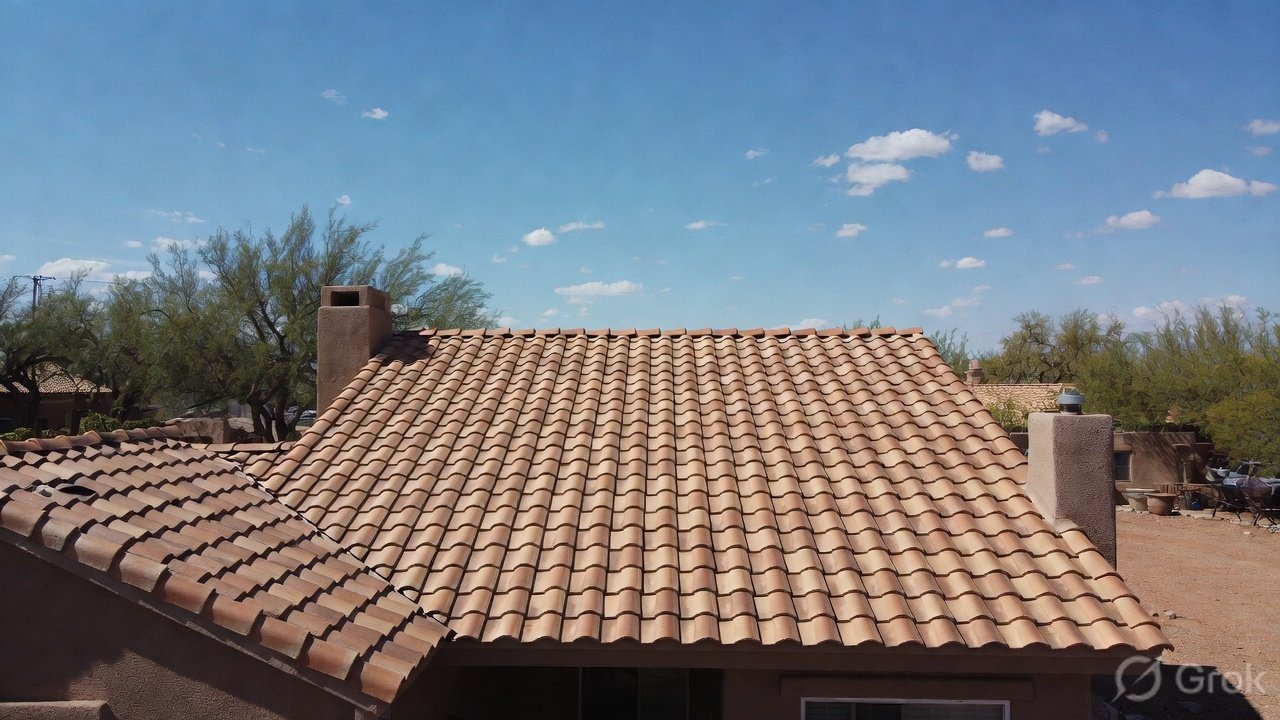
The tile itself — the clay or concrete unit sitting on top of your roof — is genuinely long-lived. Clay tile fired to vitrification can last 50 to 100 years or more in Arizona’s desert climate. Concrete tile, while not quite as durable as clay, realistically lasts 30 to 50 years under Valley conditions. In both cases, the tile is rarely the component that ends a roof’s service life.
The underlayment beneath the tile — the waterproof membrane installed between the tile and your roof deck — is the component that actually keeps water out of your home. And in Arizona’s extreme attic heat, that underlayment has a realistic service life of 20 to 25 years for most products, and shorter for older felt-based systems.
When the underlayment fails, it does not matter how good your tiles look. Water gets through the tile surface — it always does during monsoon storms — and instead of being redirected safely off the roof by intact underlayment, it reaches your deck, your attic framing, and eventually your interior ceilings.
This is why the honest answer to how long a tile roof lasts in Arizona is not a single number. It is two numbers — and the shorter one is the one that drives your actual maintenance and replacement decisions.
How Long Does Clay Tile Last in Arizona
Clay tile is the gold standard of Arizona roofing for a reason. The manufacturing process — forming natural clay and firing it at extreme temperatures until it vitrifies — produces a material that is essentially impervious to the conditions that degrade most other roofing products.
Clay tile in Arizona realistically lasts 50 to 100 years. Some original clay tile installations from the mid-twentieth century are still structurally sound today, sitting on roofs that have had their underlayment replaced one or more times beneath them.
Several properties make clay tile particularly well suited to Arizona’s specific conditions:
True impermeability: Vitrified clay does not absorb water. It does not react to UV radiation in the way that polymer-based materials do. It does not experience the surface erosion and color fading that concrete tile undergoes over time. A clay tile exposed to decades of Phoenix sun maintains essentially the same physical properties it had when it left the kiln.
Thermal stability: Clay tile handles the extreme thermal cycling of Arizona’s daily temperature swings — 30 to 40 degree differentials between afternoon peaks and nighttime lows — without the dimensional changes and stress accumulation that affect concrete and polymer-based materials. It expands and contracts minimally, which means less stress on the installation system over time.
UV resistance: The color in clay tile runs through the full thickness of the material because it is part of the clay body itself, not a surface coating. This means UV radiation cannot bleach or erode the color away. A clay tile roof installed decades ago in Arizona still carries essentially its original color — something no concrete tile installation can claim.
The limiting factor for clay tile in Arizona is almost never the tile. It is the underlayment beneath it, the flashings at penetrations and transitions, and occasionally the mortar at ridge and hip caps. A clay tile roof that receives timely underlayment replacement at the 20 to 25-year mark and has its flashings maintained properly can serve a home for the better part of a century.
How Long Does Concrete Tile Last in Arizona
Concrete tile is the most widely installed roofing material across the Phoenix metro — driven largely by its lower cost compared to clay and its wide availability through Arizona’s major roofing supply channels.
Concrete tile in Arizona realistically lasts 30 to 50 years — a genuinely durable performance that outlasts asphalt shingles by a significant margin, but notably shorter than clay tile under the same conditions.
The difference in lifespan compared to clay comes down to concrete tile’s specific vulnerabilities in Arizona’s climate:
Surface erosion and color fading: Concrete tile color is a surface slurry applied during manufacturing — not a through-body characteristic. Over time, Arizona’s UV radiation erodes this surface coating, and the underlying gray concrete body becomes progressively more visible. The roof fades, loses its original aesthetic, and in HOA communities can drift outside approved color parameters. This is an aesthetic limitation rather than a structural one, but it is real and consistent across aging concrete tile roofs in the Valley.
Moisture absorption: Concrete is porous. Unlike vitrified clay, concrete tile absorbs water at a measurable rate. In Arizona’s dry climate this is less consequential than in wetter regions, but it is relevant during monsoon season when tiles cycle repeatedly between soaking rain and extreme drying heat. Over decades this absorption cycle contributes to surface degradation and, in some cases, accelerated cracking.
Thermal expansion stress: Concrete tile is heavier than clay tile and experiences more dimensional change with temperature variation. Over years of Arizona’s thermal cycling, this accumulating stress contributes to cracking — particularly on tiles in exposed locations and at high-stress points like ridges and hips.
As with clay tile, the underlayment beneath concrete tile fails before the tile itself in the majority of Arizona roofs. The tile may have significant remaining service life when the underlayment reaches the end of its reliable performance — which means a tile relay and underlayment replacement, not a full tile replacement, is the appropriate and cost-effective response in most cases.
What Actually Determines How Long Your Tile Roof Lasts in Arizona
Tile type sets the upper boundary of your roof’s potential lifespan. What it actually achieves within that range is determined by several other factors that are at least as important as the material itself.
Underlayment Quality and Type
The single greatest determinant of how long a tile roof system performs in Arizona is the underlayment specification. Felt underlayment — the standard product used on Arizona tile roofs through the 1990s and into the early 2000s — degrades faster than modern alternatives in Arizona’s attic heat. Most felt underlayment on Arizona roofs installed before the mid-2000s is at or past its reliable service life.
Modern synthetic underlayment performs significantly better than felt in Arizona’s conditions, with realistic service lives of 20 to 25 years. High-temperature modified bitumen underlayment — the premium specification for Arizona tile roofs — extends that range to 25 to 35 years. The underlayment product specified at installation determines the maintenance interval the entire roof system is built around.
Attic Ventilation
This is the most underappreciated factor in tile roof longevity in Arizona. Attic temperatures in inadequately ventilated Phoenix homes regularly reach 150 to 165 degrees Fahrenheit during summer afternoons. At those temperatures, underlayment degradation accelerates significantly — turning a 25-year product into a 15-year one or less.
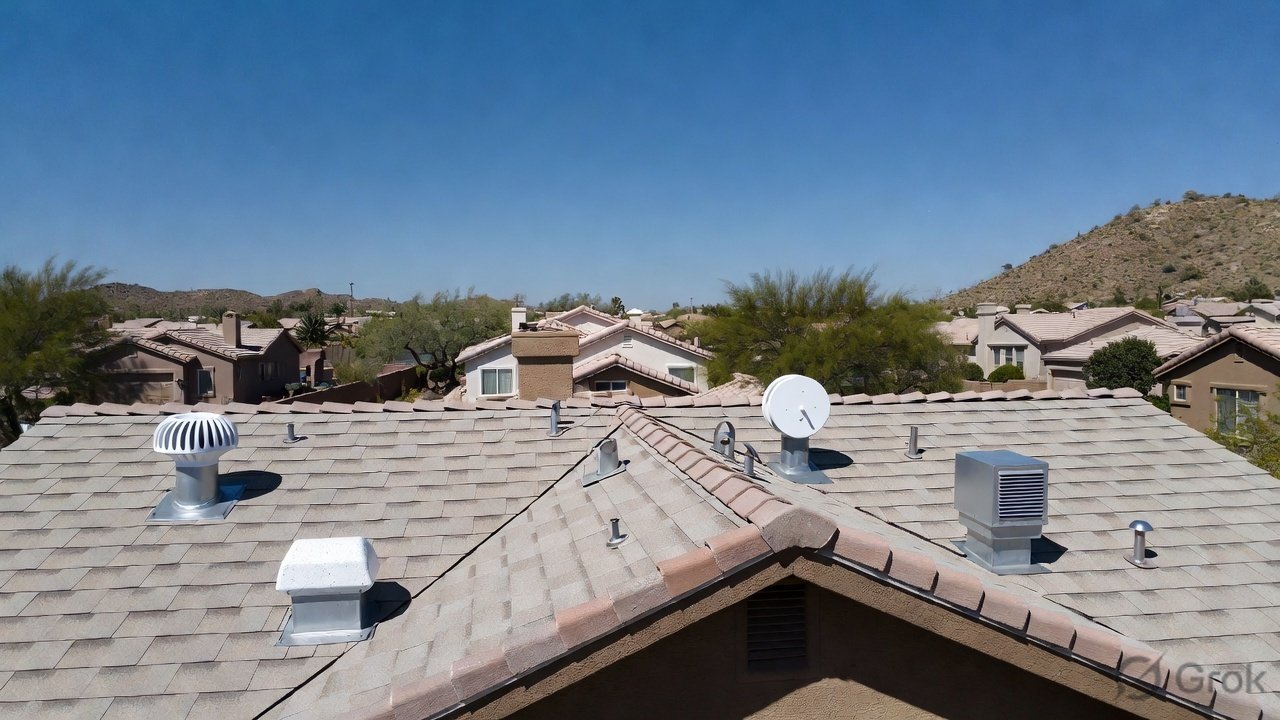
A tile roof sitting above a properly ventilated attic — one that maintains continuous airflow through soffit intake and ridge exhaust — operates in substantially cooler conditions than the same roof above an inadequately ventilated attic. This temperature difference translates directly into extended underlayment service life and, by extension, extended roof system performance.
If your tile roof is aging faster than expected, an attic ventilation assessment should be part of the diagnostic process before any roofing work is undertaken. Installing new underlayment above an inadequately ventilated attic without correcting the ventilation simply repeats the same shortened-lifespan outcome.
Installation Quality
The service life of a tile roof in Arizona is only as good as the installation beneath the tile. Underlayment lapped and fastened to manufacturer specifications, flashings properly integrated at every penetration and transition, ridge and hip mortar correctly applied, and tile fastened per local wind load requirements — these details determine whether a roof system approaches its potential lifespan or falls short of it.
Poor original installation compresses lifespan. A tile roof that was installed with insufficient underlayment overlap, inadequate flashing integration, or mortar that was mixed incorrectly will show failure earlier than the material specifications suggest, regardless of tile type.
Maintenance and Inspection History
A tile roof that receives periodic professional inspection — every three to five years and after significant monsoon storm events — catches developing issues before they become structural problems. Cracked tiles identified and replaced early prevent underlayment exposure and accelerated degradation in that area. Flashing sealant renewed on schedule prevents water intrusion at the most vulnerable points. Mortar at ridges and hips repointed before it fails completely prevents tile displacement during monsoon winds.
Tile roofs that have never been professionally inspected in 15 or 20 years have almost always accumulated a range of developing issues that a single inspection and minor repair visit would have caught and addressed for far less than the cost of the damage they ultimately cause.
Foot Traffic and Physical Damage
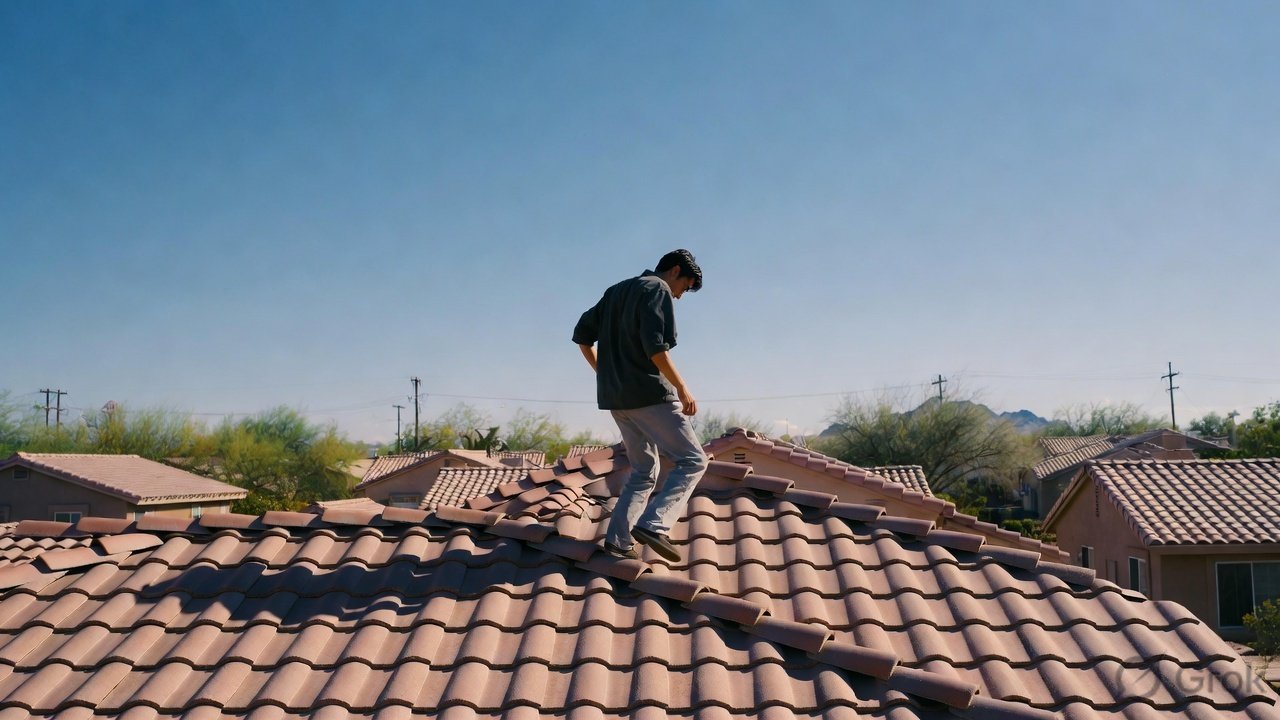
Tile is durable against weather but vulnerable to impact. Foot traffic from HVAC technicians, pest control visits, satellite dish installers, and other rooftop tradespeople is one of the most common causes of cracked tile on Arizona residential roofs. Each cracked tile is a point where underlayment is directly exposed to UV radiation and rain — and in Phoenix’s climate, exposed underlayment degrades rapidly.
Establishing a clear policy that any rooftop trades work on your property is performed by personnel who understand how to walk on tile — stepping on the lower overlap of each tile rather than the exposed face — significantly reduces this source of damage over the life of the roof.
The Underlayment Replacement Decision: What Arizona Homeowners Need to Know
Because underlayment is the limiting component of a tile roof system in Arizona, the most consequential maintenance decision most tile roof owners will face is when to replace it.
The indicators that underlayment replacement is warranted include:
Age alone: A tile roof more than 20 years old in Arizona should be treated as having underlayment at or near the end of its reliable service life. This is true regardless of how the tiles look from the street.
Interior water stains appearing after rain: Water reaching your ceilings through a tile roof almost always means underlayment has failed, not the tiles themselves.
Moisture in the attic: Any evidence of water intrusion in the attic space after rain events indicates the underlayment is no longer performing its waterproofing function.
Recurring leaks despite tile-level repairs: If tile repairs do not permanently resolve a leak, the underlayment beneath is the actual source.
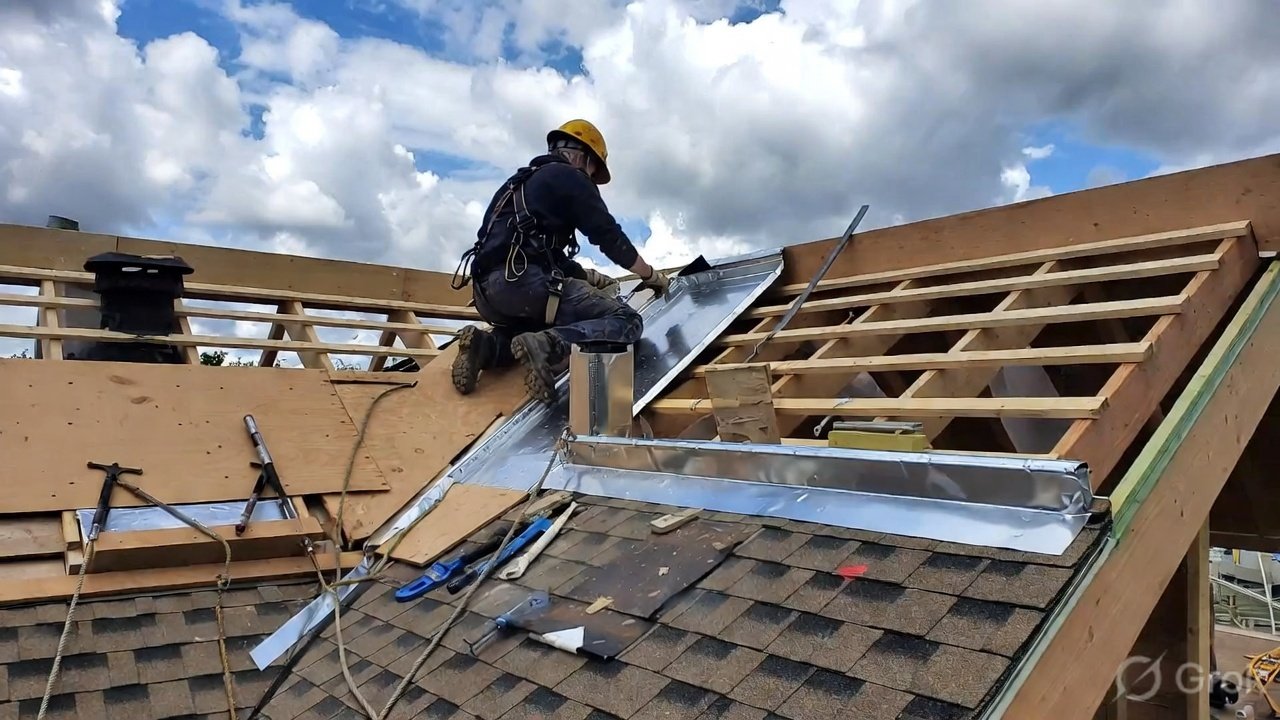
Underlayment replacement on a tile roof — sometimes called a tile relay or tile re-roof — involves removing the existing tiles, stripping the old underlayment, inspecting and repairing the deck, installing new underlayment, and relaying the tiles above it. In most cases 85 to 95 percent of existing tiles are salvaged and reused, which significantly reduces total project cost compared to full material replacement.
Addressing underlayment replacement at the appropriate time extends a tile roof’s total service life by another 20 to 25 years — essentially resetting the system clock while preserving the tile investment above.
Realistic Total Service Life: What to Expect From Your Arizona Tile Roof
Putting the components together, here is what realistic total service life looks like for Arizona tile roofs maintained appropriately:
Clay tile with one underlayment replacement at approximately 20 to 25 years: Total system service life of 50 to 75 years or more is realistic. The tile itself may remain in service indefinitely with individual cracked pieces replaced as needed.
Concrete tile with one underlayment replacement at approximately 20 to 25 years: Total system service life of 40 to 60 years is realistic. The concrete tile itself will show aesthetic aging — fading and surface erosion — that may drive replacement before the tile reaches structural failure.
Clay or concrete tile with no underlayment replacement and no inspection history: Water intrusion damage typically begins 20 to 25 years after installation and accelerates from there. Structural deck damage and interior water damage add significantly to the eventual replacement cost.
The message is consistent: the tile is the durable component. The underlayment is the maintenance item. Treating it as such — inspecting on a regular schedule and replacing it at the appropriate age threshold — is what separates a 75-year tile roof from a 25-year one.
Frequently Asked Questions
Do I need to replace my tile roof if the tiles look fine?
Not necessarily — but you may need to replace the underlayment beneath them. Tiles that look fine from the street can be sitting above underlayment that has been failing for years. If your roof is more than 20 years old and the underlayment has never been replaced, a professional inspection is warranted regardless of the tile’s outward appearance.
How do I know if my tile roof underlayment needs replacing?
The most reliable indicators are interior water stains appearing after rain, moisture visible in the attic, recurring leaks despite tile repairs, and a roof age of more than 20 years without a documented underlayment replacement. A professional inspection where tiles are lifted in representative areas is the definitive assessment.
Is it worth replacing the underlayment rather than the whole roof?
In most cases, yes — particularly for clay tile roofs and concrete tile roofs where the tile itself is structurally sound. A tile relay with new underlayment costs significantly less than full material replacement and extends the system’s service life by another 20 to 25 years while preserving the existing tile investment.
Does Arizona heat really shorten tile roof lifespan?
For the tile itself — particularly clay — Arizona’s dry heat is actually beneficial compared to climates with freeze-thaw cycling. For the underlayment beneath the tile, Arizona’s extreme attic temperatures are a genuine accelerant of degradation. The tile lasts longer in Arizona than in northern climates. The underlayment beneath it lasts shorter. Both statements are true simultaneously.
How often should I have my Arizona tile roof inspected?
A professional inspection every three to five years is a sound maintenance interval for Arizona tile roofs. Additionally, a post-storm inspection after any significant monsoon event — particularly those with high winds or hail — is worthwhile to identify and address any tiles that have cracked, shifted, or been displaced before the next rain event.
Does homeowner’s insurance cover tile roof replacement in Arizona?
Standard homeowner’s insurance covers damage from specific covered events — storm damage, wind, hail — but does not cover normal wear and aging. If your tile roof needs underlayment replacement due to age, that is a maintenance expense. If it was damaged in a covered storm event, document the damage immediately and consult a licensed roofing contractor before filing a claim.
Get a Free Tile Roof Inspection Across Arizona
At Reliable Roofing Near Me, we inspect tile roofs across Phoenix and more than 40 Arizona cities — lifting tiles, assessing underlayment condition honestly, and giving you a clear written report on where your roof stands and what it needs. No pressure, no obligation.
Call us at (480) 867-9986 or visit reliableroofingnearme.com to schedule your free inspection today. We serve Phoenix, Scottsdale, Mesa, Chandler, Gilbert, Glendale, Peoria, Tempe, Surprise, and every community across the Valley.
Reliable Roofing Near Me | (480) 867-9986 | reliableroofingnearme@gmail.com | reliableroofingnearme.com | 12428 N 28th Dr Suite 12430, Phoenix, AZ 85029 | ROC License #355096