Introduction: Roofing in Phoenix Is Not Like Anywhere Else
Most national roofing guides tell you to replace your roof every 20 to 25 years. That advice was written for climates with mild summers, moderate UV exposure, and predictable precipitation. Phoenix is none of those things.
If you own a home in the Phoenix Metro area, roof replacement decisions need to be made with local reality in mind. Summers push past 110°F for weeks at a time. The UV index regularly hits 10 or 11 from May through August. Then monsoon season arrives between June and September, bringing sudden high-wind storms, heavy rain, and hail that can cause damage in a matter of minutes. Add to that more than 300 sunny days per year, and you have one of the most demanding roofing environments in the entire country.
Knowing the right time for roof replacement in Phoenix is not just a financial decision. It is a structural one. A failing roof in this climate can lead to accelerated interior damage, mold growth from monsoon moisture intrusion, and energy costs that climb as your attic loses its thermal efficiency. This guide walks through the timelines, warning signs, and practical considerations Phoenix homeowners need to make an informed decision.
Realistic Roof Lifespan Expectations in Phoenix Metro
Asphalt Shingles
Asphalt shingles are the most common roofing material in the U.S., and they are widely used across Phoenix, Glendale, Tempe, and Mesa. Nationally, three-tab asphalt shingles are rated for 15 to 30 years. In Phoenix, expect the lower end of that range.
The combination of intense UV radiation and sustained high heat accelerates the granule loss and cracking process that eventually makes asphalt shingles fail. Three-tab shingles in the Phoenix Metro often show significant deterioration within 12 to 18 years. Architectural or dimensional shingles, which are thicker and more heat-resistant, typically last 18 to 22 years under local conditions. If your asphalt roof is approaching 15 years old, it deserves a professional inspection regardless of how it looks from the ground.
Tile Roofs (Concrete and Clay)
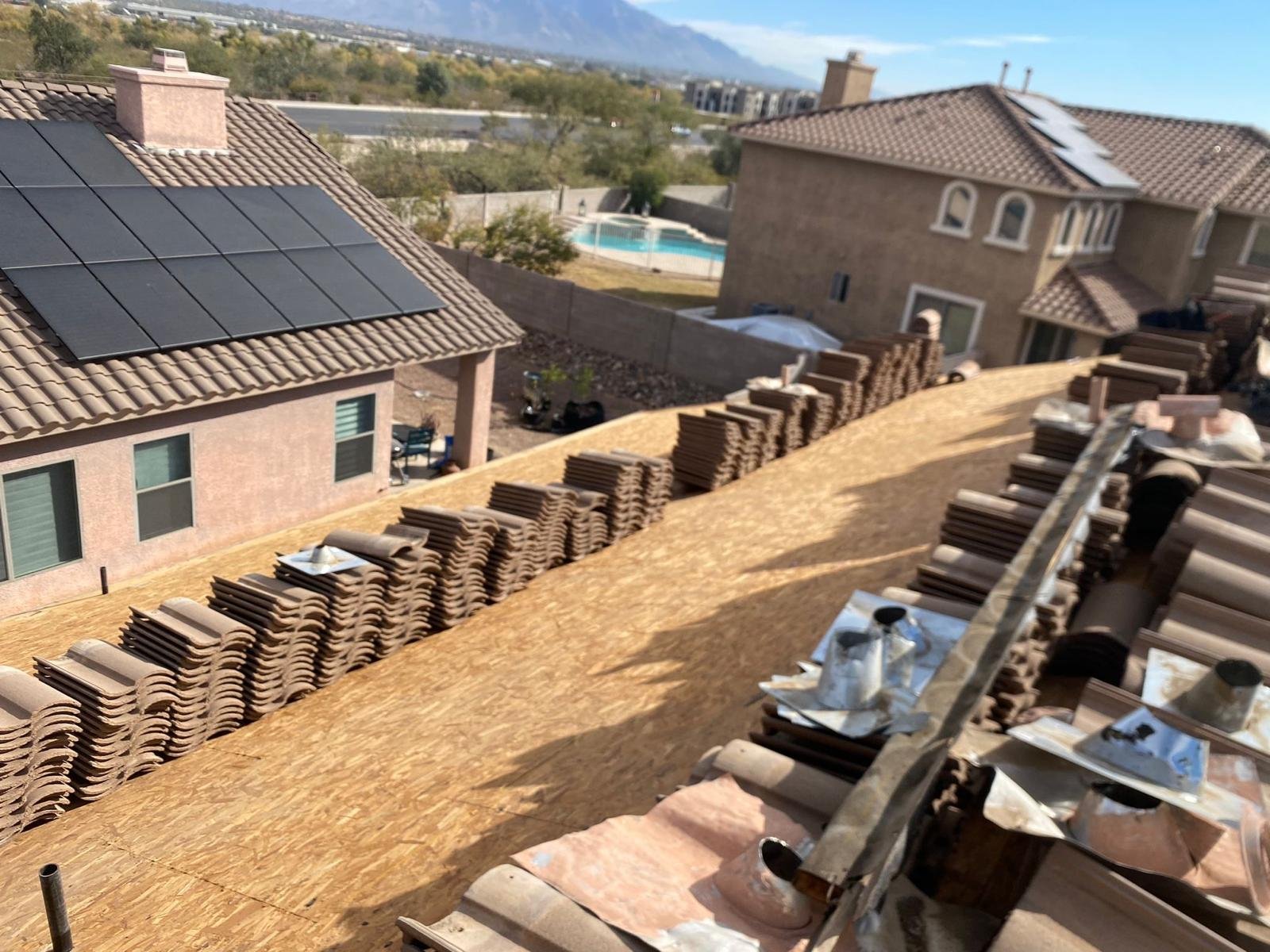
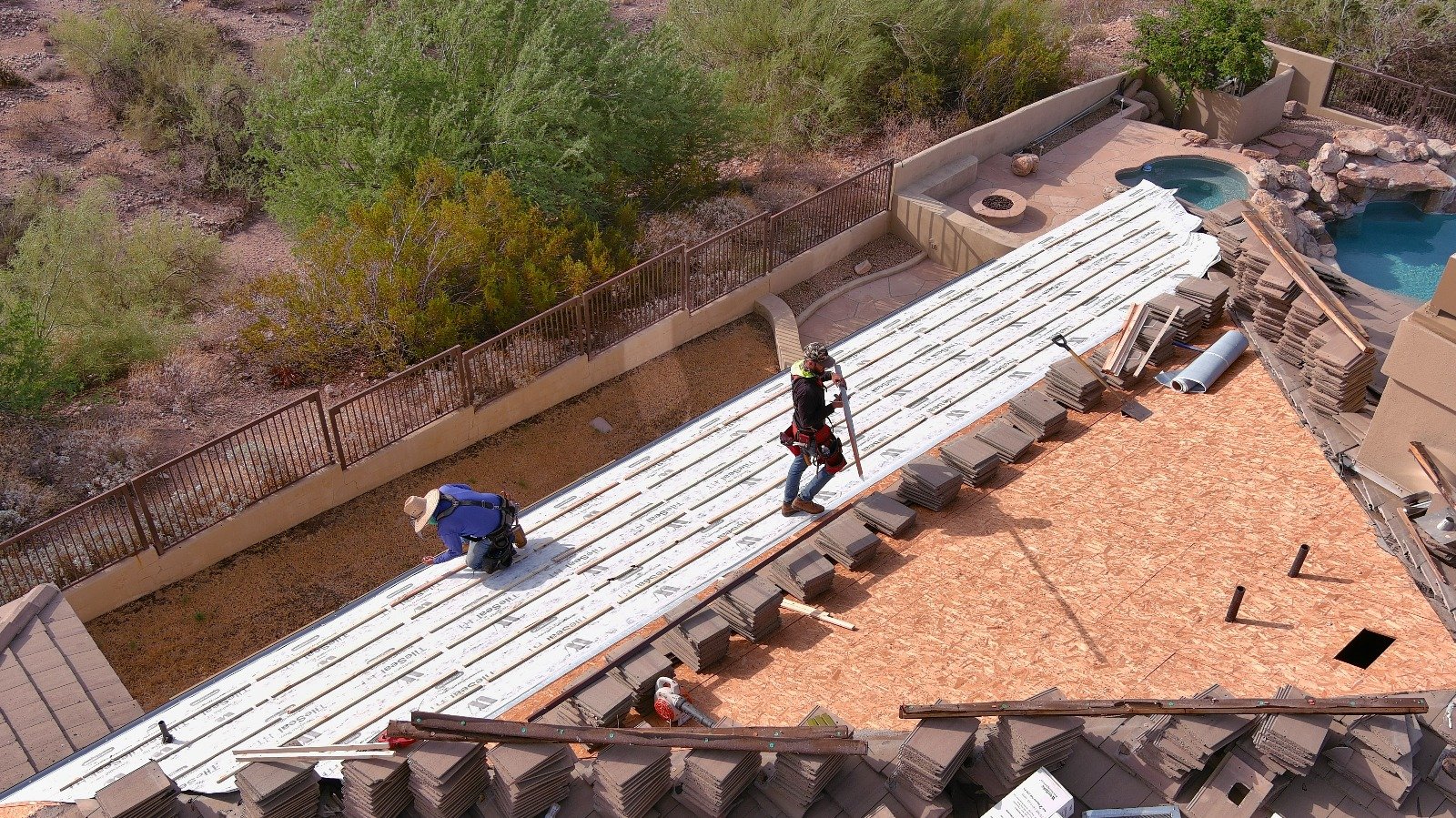
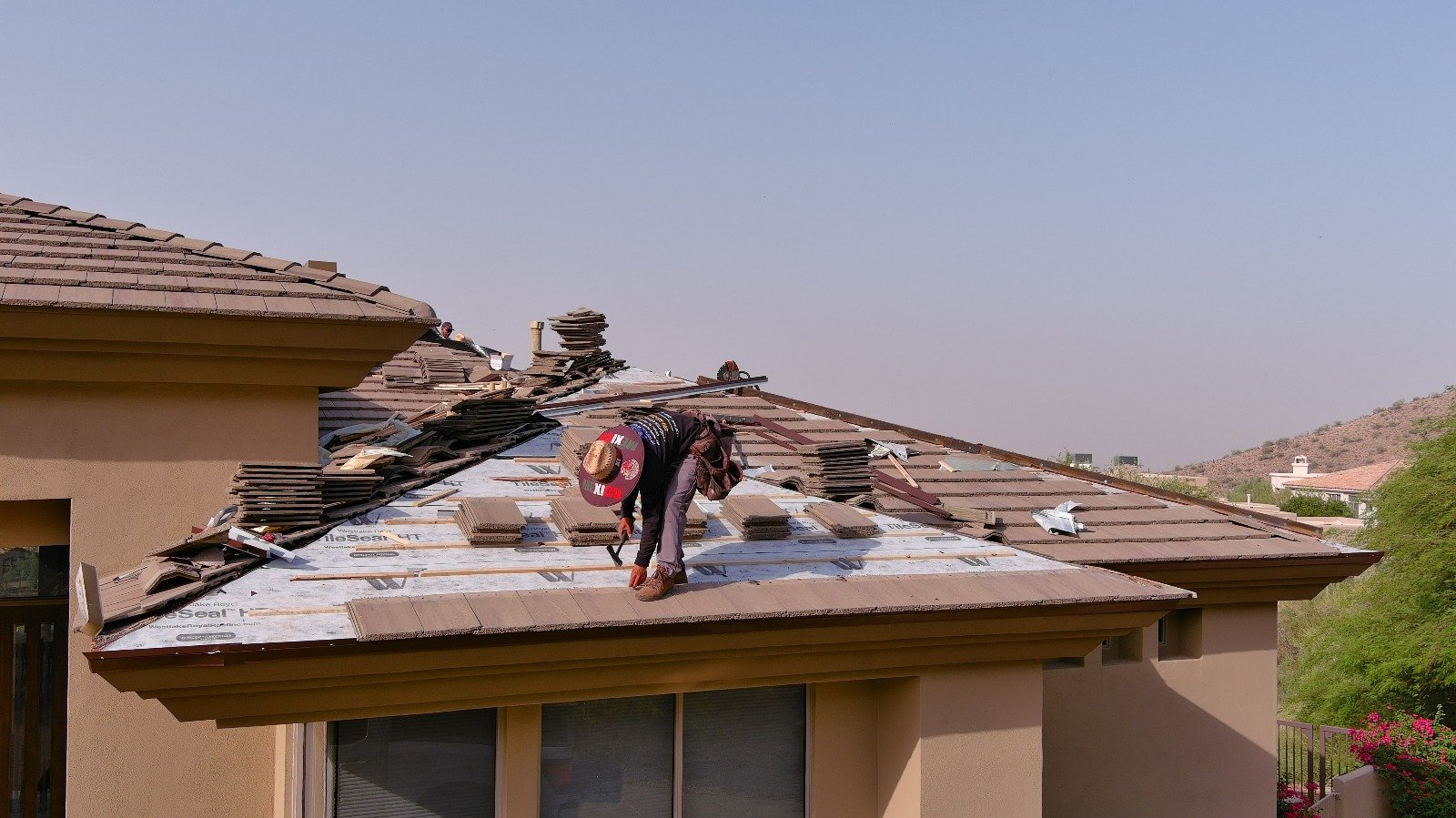
Tile is the dominant material in higher-end Phoenix neighborhoods and is widely used across Scottsdale, Chandler, and Peoria. Tile itself is extremely durable in the Arizona heat and can last 40 to 50 years or more. However, the tile is only part of the equation.
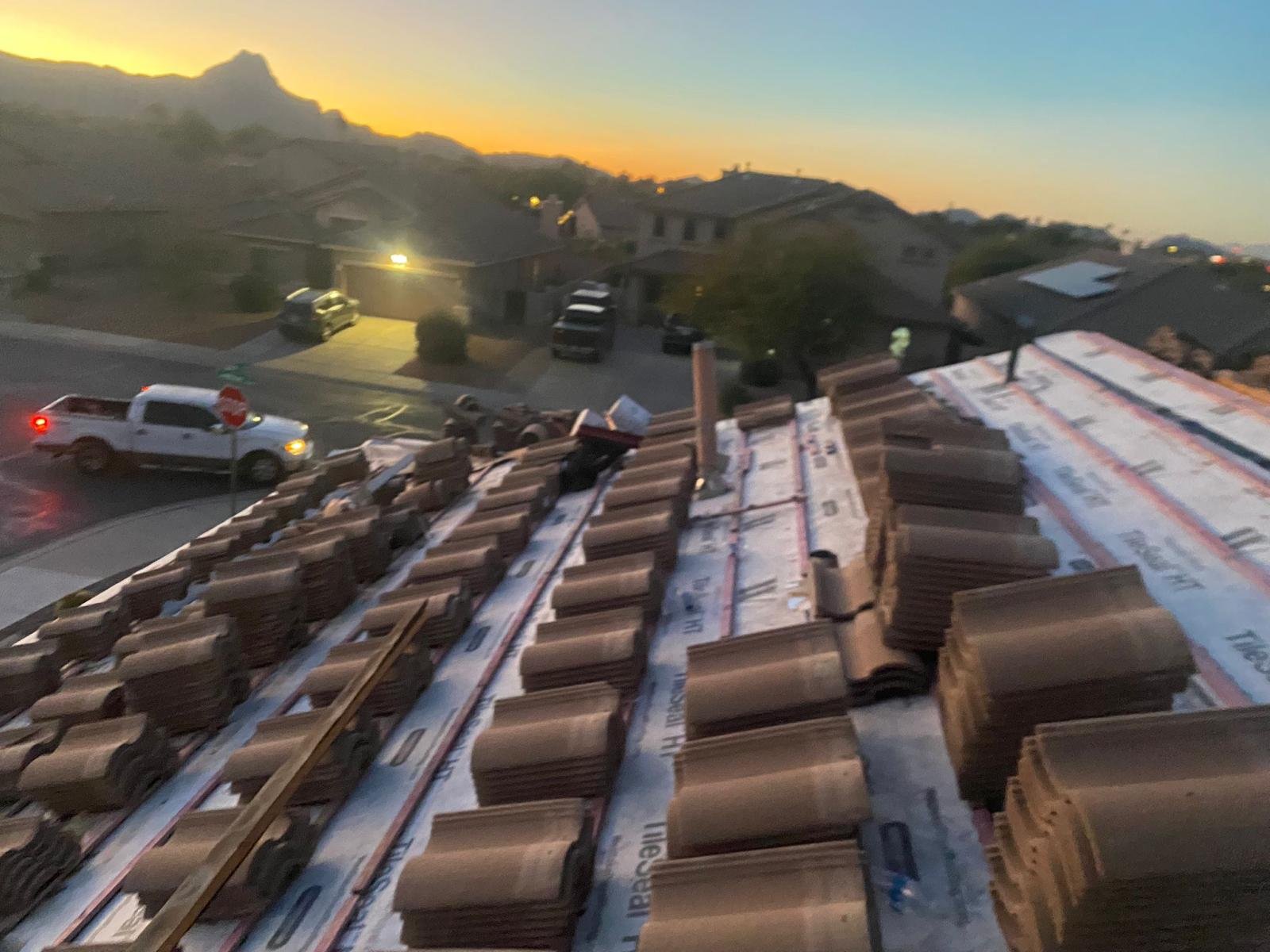
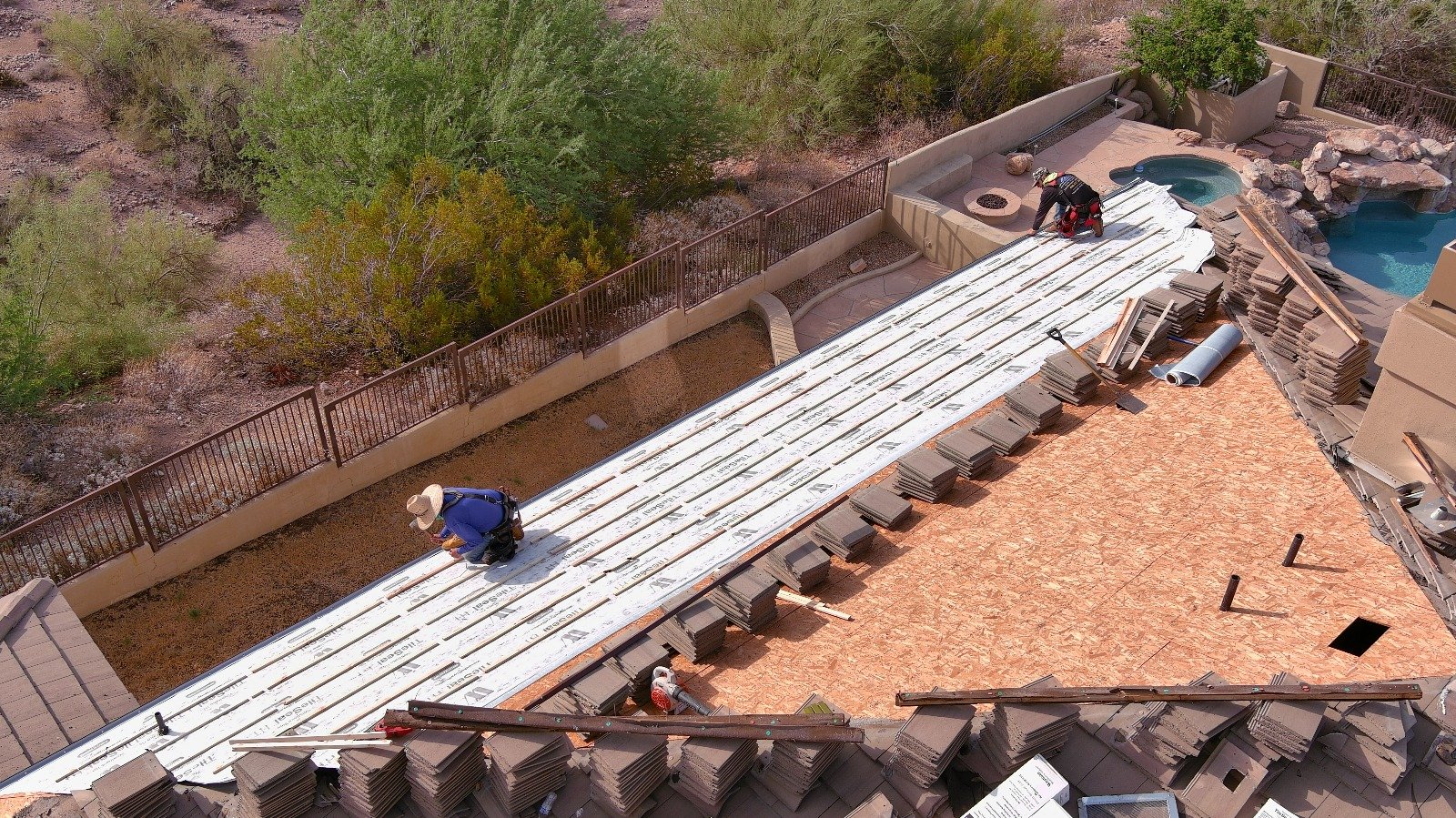
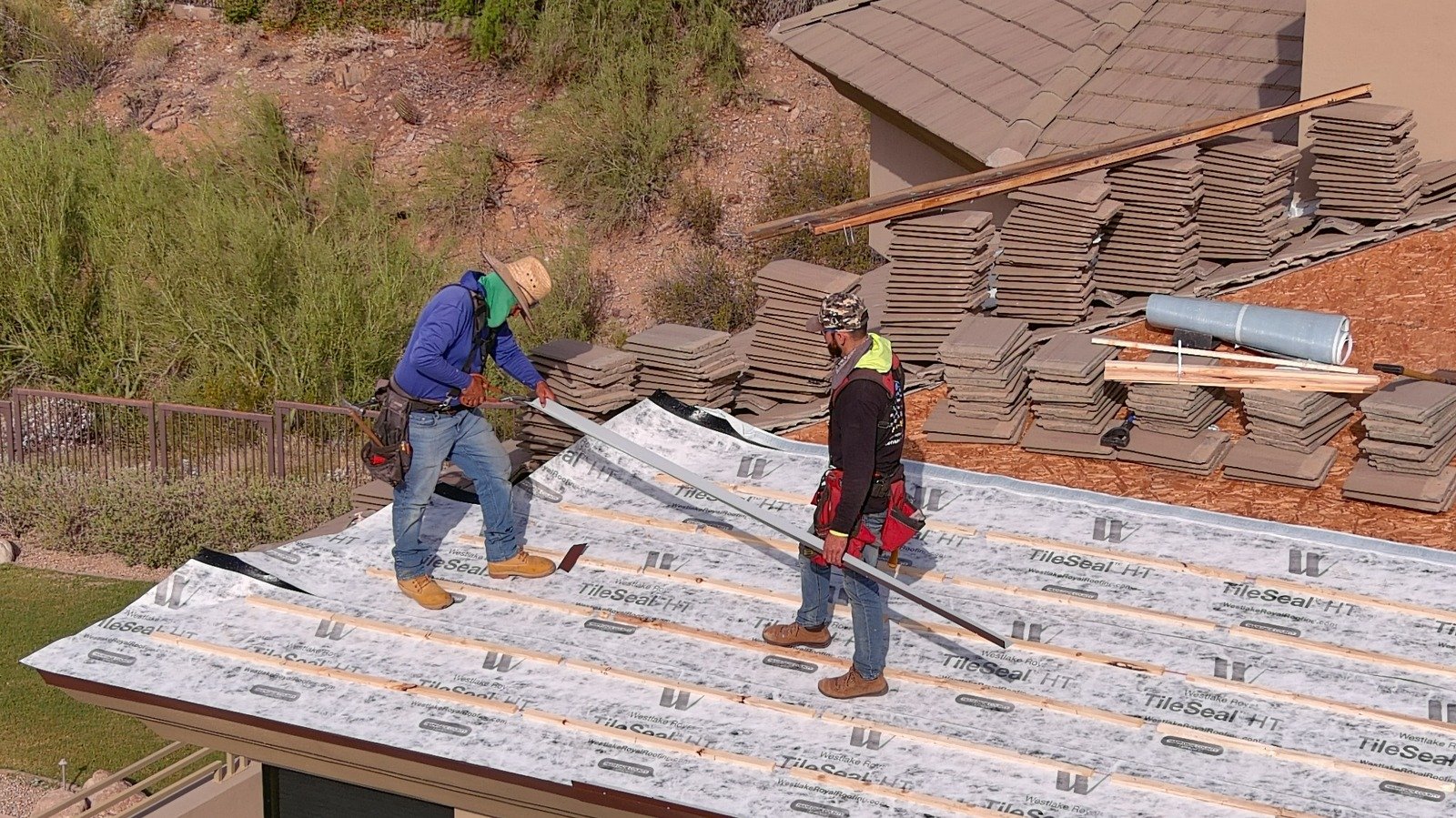
The underlayment beneath the tile — typically a synthetic or felt barrier — has a significantly shorter lifespan, often 20 to 30 years depending on installation quality and product type. When the underlayment fails, the tiles above may still look intact while water is already getting through during monsoon rains. Many tile roof replacements in Phoenix are not about the tile at all. They are about the degraded underlayment underneath.
Flat and Low-Slope Roofs
Flat roofs are common on both commercial properties and certain residential styles throughout the Phoenix Metro. TPO, modified bitumen, and built-up roofing systems are the most common materials. In Phoenix, flat roofs typically last 15 to 20 years with proper maintenance. Heat is particularly hard on membrane systems, causing them to expand, contract, and eventually blister or separate at seams.
Foam Roofing (SPF)
Spray polyurethane foam roofing is used on many Arizona homes for its insulating properties. With proper recoating every 5 to 10 years, an SPF roof can last 20 to 30 years. Without recoating, UV degradation can compromise the surface within a few years.
Phoenix Climate Factors That Accelerate Roof Aging
Extreme Heat and Thermal Cycling
Phoenix averages 110°F or higher for 20 or more days per year, with roof surface temperatures regularly reaching 150°F to 170°F on dark-colored materials. This causes constant thermal expansion and contraction that stresses every component of a roofing system over time. Fasteners loosen, seams open, and materials that were rated for 25 years under normal conditions can deteriorate noticeably faster.
UV Radiation
The Phoenix Metro sits at a relatively high elevation and low latitude, producing a UV index that averages between 10 and 11 in peak months. Prolonged UV exposure breaks down the binders in asphalt, dries out caulking and flashing materials, and fades and weakens tile coatings. This is one reason Phoenix homeowners should not rely solely on manufacturer warranties, which are typically tested under conditions far less extreme than a Sonoran Desert summer.
Monsoon Season
Arizona’s monsoon season runs from June 15 through September 30 each year, according to the National Weather Service. During this period, the Phoenix Metro sees thunderstorms, microbursts with wind gusts over 60 mph, blowing dust, and occasional hail. A roof that has been weakened by years of heat stress can sustain significant damage in a single monsoon event. Peeling flashing, cracked tiles, and blistered membranes become entry points for water the moment a storm hits.
Warning Signs Your Phoenix Roof May Need Replacement
Homeowners in Phoenix, Glendale, Scottsdale, and across the Metro should watch for these specific indicators:
Granule accumulation in gutters or downspouts. Asphalt shingles shed granules as they age. If you are seeing significant granule deposits after rain, the shingles are nearing the end of their useful life.
Cracked, curling, or cupped shingles. These are signs of heat and UV damage. When shingles lose their flat profile, they are no longer sealing properly.
Visible daylight in the attic. If light is visible through the roof deck during a daytime attic inspection, there are gaps in the roofing system that need to be addressed immediately.
Water stains on interior ceilings or walls. These are often the first visible sign of active moisture intrusion. In Phoenix, monsoon season can turn a minor leak into significant interior damage quickly.
Blistering or bubbling on the roof surface. Common on flat and foam roofs, blistering occurs when heat causes trapped moisture or air pockets to expand under the membrane.
Cracked or displaced tiles. Even individual cracked tiles can compromise the underlayment below them. Multiple cracked tiles indicate that age and thermal stress are taking a widespread toll.
Sagging or uneven roof deck. Any visible sagging or depression in the roof plane is a serious structural concern and warrants immediate professional evaluation.
Flashing failures. Flashing around chimneys, skylights, vents, and valleys is especially vulnerable in Phoenix’s heat. Lifted, cracked, or separated flashing is a common source of leaks.
Age alone. If your asphalt roof is over 15 years old or your tile underlayment has not been inspected in over 20 years, schedule a professional evaluation even without visible symptoms. Many roof failures in Phoenix develop slowly and are not obvious from the ground.
Roof Inspection Checklist for Phoenix Homeowners
Before calling a contractor, you can do a basic visual check from the ground and from inside the attic. This is not a substitute for a professional inspection, but it can help you identify obvious concerns.
From the ground, look for missing, cracked, or curling shingles. Examine the ridge line for straightness. Look at flashing around any protrusions. Check gutters for granule deposits.
From inside the attic, look for light penetration, water stains, or wet insulation. Check the underside of the decking for dark spots or soft areas.
After any significant monsoon event, do a post-storm visual walkthrough. Debris impacts, wind-lifted materials, and dislodged tiles often appear immediately after major storms.
When Repair Is Enough vs. When You Need Full Replacement
Not every roofing issue requires a full replacement. A professional contractor can help you assess the cost-benefit comparison for your specific situation.
Repair is generally appropriate when damage is isolated to a small section, the roof is less than half its expected lifespan, the underlying deck is structurally sound, and flashing or sealing issues are contained.
Full replacement is typically more cost-effective when the roof is within five years of its expected lifespan, damage is widespread or affecting more than 30 percent of the surface area, the underlayment on a tile roof has failed, or repeated repairs have not resolved persistent leaks.
In Phoenix, one consideration that often tips the decision toward replacement is energy performance. An older, degraded roof loses its ability to reflect heat effectively. Modern roofing materials — including cool-roof asphalt shingles, lighter-colored tile, and reflective TPO membranes — can meaningfully reduce attic temperatures and lower cooling costs during Phoenix summers, which run six months or longer.
Preventative Steps That Extend Roof Life in Phoenix Metro
Regular maintenance is the most effective way to get the most out of any roofing system in the Arizona heat.
Schedule a professional roof inspection at least once a year, ideally in spring before monsoon season begins. Post-monsoon inspections in October are also recommended.
Keep gutters and downspouts clear of debris. Standing water in gutters can back up under roofing materials, particularly on lower-pitch sections.
Trim any tree branches that hang over the roof. During high-wind monsoon events, branches can become projectiles or cause abrasion damage to shingles and tiles.
Inspect and reseal flashing around penetrations every few years. Phoenix’s thermal cycling loosens sealants faster than in cooler climates.
For foam roofs, stay on schedule with recoating. Missing a recoat cycle allows UV degradation to compromise the foam itself, which is a far more expensive repair than the coating.
When to Call a Roofing Professional in Phoenix
Call a licensed roofing contractor when you notice any of the warning signs listed above. You should also call after any major monsoon storm, particularly if there was hail or wind-driven debris. Do not wait for visible interior damage before getting an evaluation. By the time water stains appear on a ceiling, moisture has typically been present in the roof assembly for some time.
When selecting a contractor, verify their Arizona Registrar of Contractors license number. This protects you against unlicensed work and gives you recourse in the event of a dispute.
Conclusion: Timing Your Roof Replacement in Phoenix
Roof replacement in Phoenix Metro is not a decision that follows a national calendar. The extreme heat, intense UV, and monsoon weather that define life in the Valley accelerate material aging in ways that make local expertise essential. If your asphalt roof is approaching 15 years, your tile underlayment has not been inspected in two decades, or you have noticed any of the warning signs described in this guide, now is the time to get a professional opinion.
A timely roof replacement in Phoenix protects your home structure, improves energy efficiency, and prevents the kind of water damage that turns a roofing problem into a whole-home repair project. Do not wait for a monsoon to make the decision for you.
Schedule Your Roof Inspection in Phoenix Metro
Reliable Roofing Near Me Phone: (480) 867-9986 Email: reliableroofingnearme@gmail.com Address: 12428 N 28th Dr Suite 12430, Phoenix, AZ 85029 Website: https://reliableroofingnearme.com License: ROC 355096
Serving the Phoenix Metro area including Phoenix, Glendale, Scottsdale, Tempe, Mesa, Chandler, and Peoria.
Contact Reliable Roofing Near Me to schedule a professional roof inspection. Whether you are planning ahead or dealing with a specific concern, a licensed evaluation gives you the information you need to make the right decision for your home.