What Does It Cost to Replace a Roof in Phoenix Metro?
For most Phoenix homeowners, a roof replacement is one of the largest single home improvement expenses they will face. It is also one of the most consequential. In a climate defined by sustained extreme heat, intense UV radiation, and a monsoon season that tests every component of a roofing system between June and September, the quality of that replacement directly affects the long-term performance of your home.
Roof replacement cost in Phoenix Metro in 2026 typically ranges from $8,000 on the low end for a small home with a basic asphalt shingle system to $35,000 or more for a larger property with high-grade tile, complex geometry, or significant structural work. Most homeowners in Phoenix, Glendale, Scottsdale, Tempe, Mesa, Chandler, and Peoria fall somewhere in the middle of that range, depending on roof size, material choice, existing deck condition, and contractor selection.
This guide breaks down every major cost factor in plain terms so you can approach contractor quotes with a clear frame of reference.
Key Factors That Determine Your Roof Replacement Cost in Phoenix
Before getting into specific price ranges by material, it helps to understand the variables that push a project toward the higher or lower end of the range. In Phoenix Metro, several of these factors are locally specific and will not appear in national cost guides.
Roof Size
Roofing is priced by the square, which is a unit equal to 100 square feet of roof surface. A 2,000-square-foot home does not have a 2,000-square-foot roof. Roof area is measured along the actual surface, which means pitch and complexity add to the measurable area beyond the home’s footprint. A moderately pitched roof on a 2,000-square-foot home typically measures 22 to 28 squares. Steeper roofs measure more.
Knowing your roof’s approximate square footage before speaking with contractors helps you evaluate per-square pricing and catch significant discrepancies between quotes.
Roof Pitch and Complexity
Low-slope and flat roofs are less labor-intensive to work on than steep-pitched roofs. Homes in Scottsdale and north Phoenix with steep tile roofs, multiple valleys, dormers, or complex layouts require more time, more safety equipment, and more material to complete. These factors increase both labor cost and total project price, sometimes by 20 to 40 percent compared to a simple gable roof of the same square footage.
Existing Material Removal
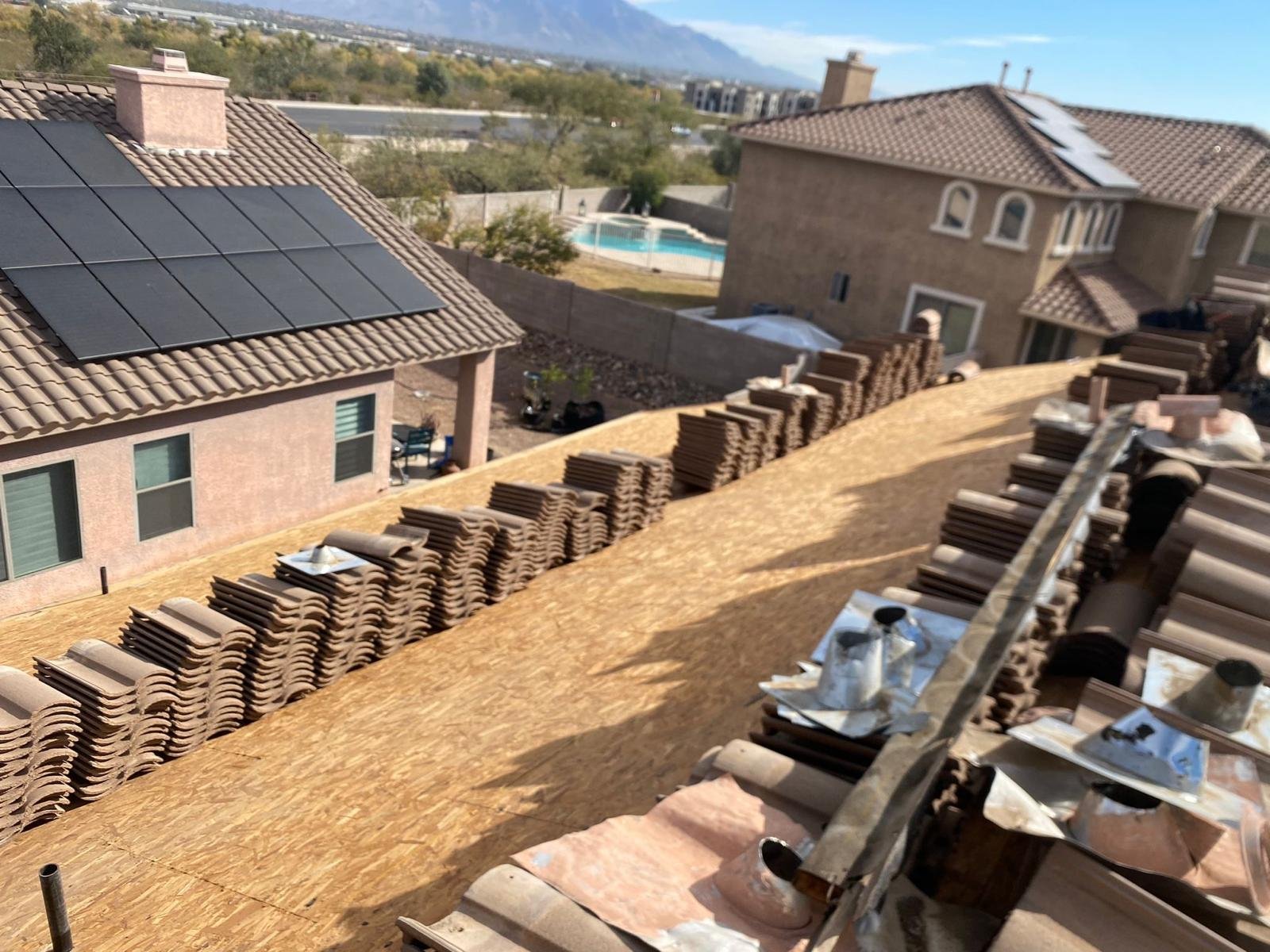
Every replacement project includes tear-off, which is the removal of the existing roofing material before new material is installed. In Phoenix, tile tear-off is more labor-intensive than shingle removal, adding meaningful cost to any tile-to-tile or tile-to-shingle replacement. Some flat roofing systems are installed over the existing membrane under certain conditions, though this practice has limitations and is not always appropriate.
Deck Condition
Once the existing material is removed, the contractor will inspect the roof deck, which is the structural sheathing beneath the roofing system. In Phoenix, years of extreme heat combined with any history of moisture intrusion can leave sections of the deck soft, warped, or rotted. Deck repair or replacement is typically quoted as an additional cost per sheet of plywood or OSB, usually $80 to $150 per sheet installed. The number of sheets needing replacement cannot be known with certainty until tear-off is complete, so reputable contractors will provide a base quote with a separate line item for deck repairs discovered during the project.
Permit Requirements
The City of Phoenix and surrounding municipalities require permits for roof replacements. Permit costs in the Phoenix Metro area typically range from $150 to $500 depending on project scope and jurisdiction. A licensed contractor will pull the permit on your behalf and include this cost in the project quote. Be cautious of any contractor who suggests skipping the permit process. Unpermitted work can complicate insurance claims and home sales.
Time of Year
Phoenix’s climate creates seasonal pricing pressure in the roofing market. Demand peaks during and immediately after monsoon season, when storm damage drives emergency replacement needs across the Valley. Scheduling a replacement during the slower winter months, typically November through February, often results in better contractor availability, more competitive pricing, and more comfortable working conditions for the crew.
Roof Replacement Cost by Material in Phoenix Metro
Asphalt Shingles
Asphalt shingles remain the most affordable roofing option in the Phoenix Metro market and are widely used across Tempe, Mesa, and Glendale. Within the asphalt category, there are meaningful differences in cost and performance.
Three-tab asphalt shingles are the most basic option, with installed costs typically ranging from $4.50 to $6.50 per square foot in Phoenix. They are the least expensive upfront but also the shortest-lived in the Arizona heat, often requiring replacement within 12 to 18 years.
Architectural or dimensional shingles are thicker, more durable, and more heat-resistant than three-tab options. Installed costs in Phoenix run approximately $5.50 to $8.50 per square foot. For most Phoenix homeowners choosing asphalt, architectural shingles represent a better long-term value despite the higher upfront cost.
Premium and designer asphalt shingles, including impact-resistant options rated Class 3 or Class 4 for hail resistance, run $8.00 to $12.00 per square foot installed. These are worth considering in areas of the Phoenix Metro that see more frequent hail activity during monsoon season.
For a typical 2,000-square-foot Phoenix home with a moderate pitch, an asphalt shingle replacement project falls in the range of $9,000 to $18,000 all in, depending on shingle grade, deck condition, and project complexity.
Concrete and Clay Tile
Tile is the defining roofing material of the Phoenix Metro landscape and dominates neighborhoods across Scottsdale, Chandler, Peoria, and north Phoenix. It is well suited to the Arizona climate, offering excellent thermal mass and longevity when properly maintained. It is also significantly more expensive to install than asphalt.
Concrete tile installations in Phoenix Metro typically run $10 to $16 per square foot installed, including tear-off of existing material, new underlayment, and tile installation. Clay tile, which is lighter and often more visually refined, runs $14 to $22 per square foot installed due to higher material cost.
For a 2,000-square-foot home, a full concrete tile replacement typically falls between $20,000 and $32,000. Clay tile on the same home runs $28,000 to $44,000 or more depending on tile selection and roof complexity.
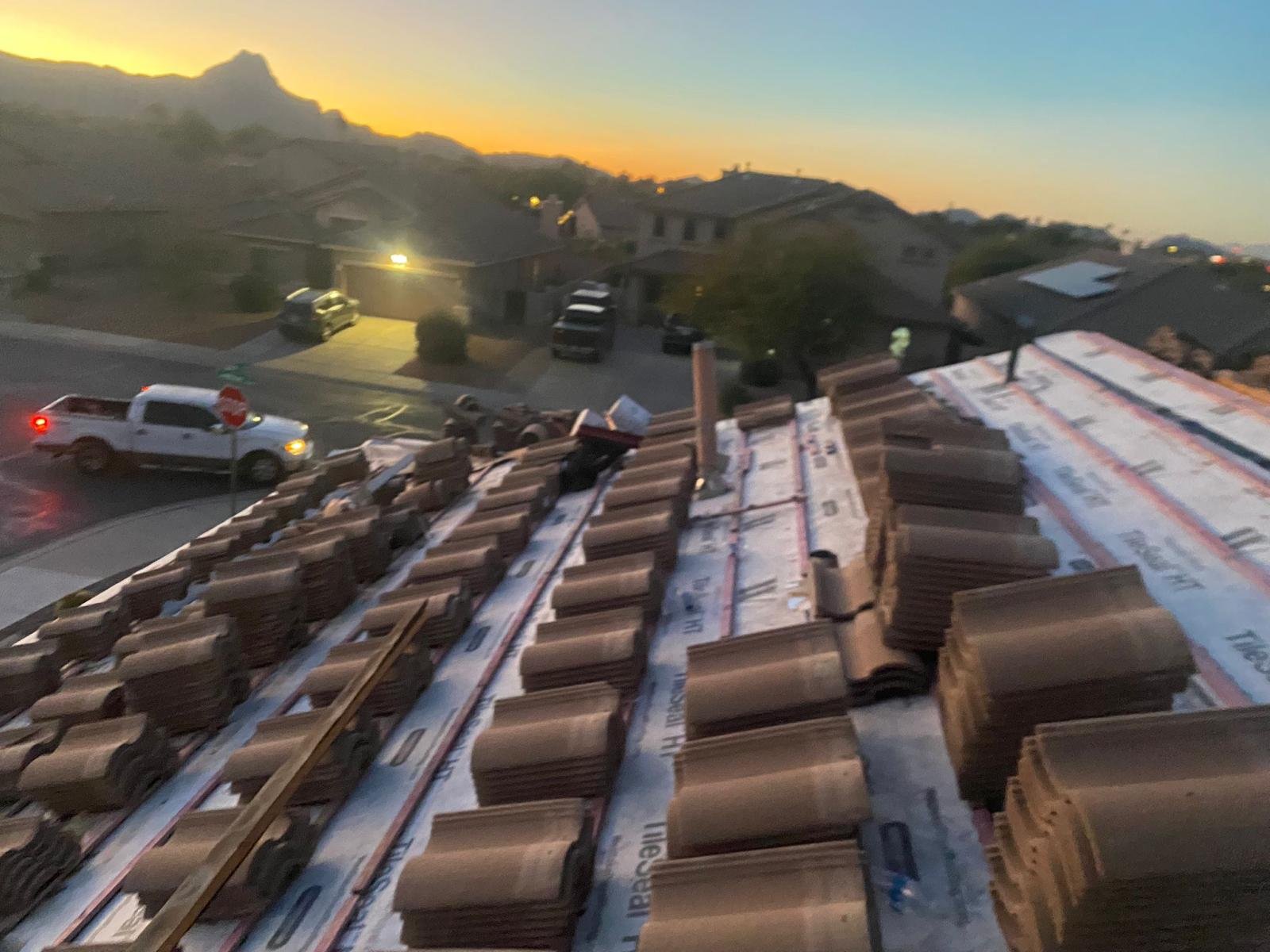
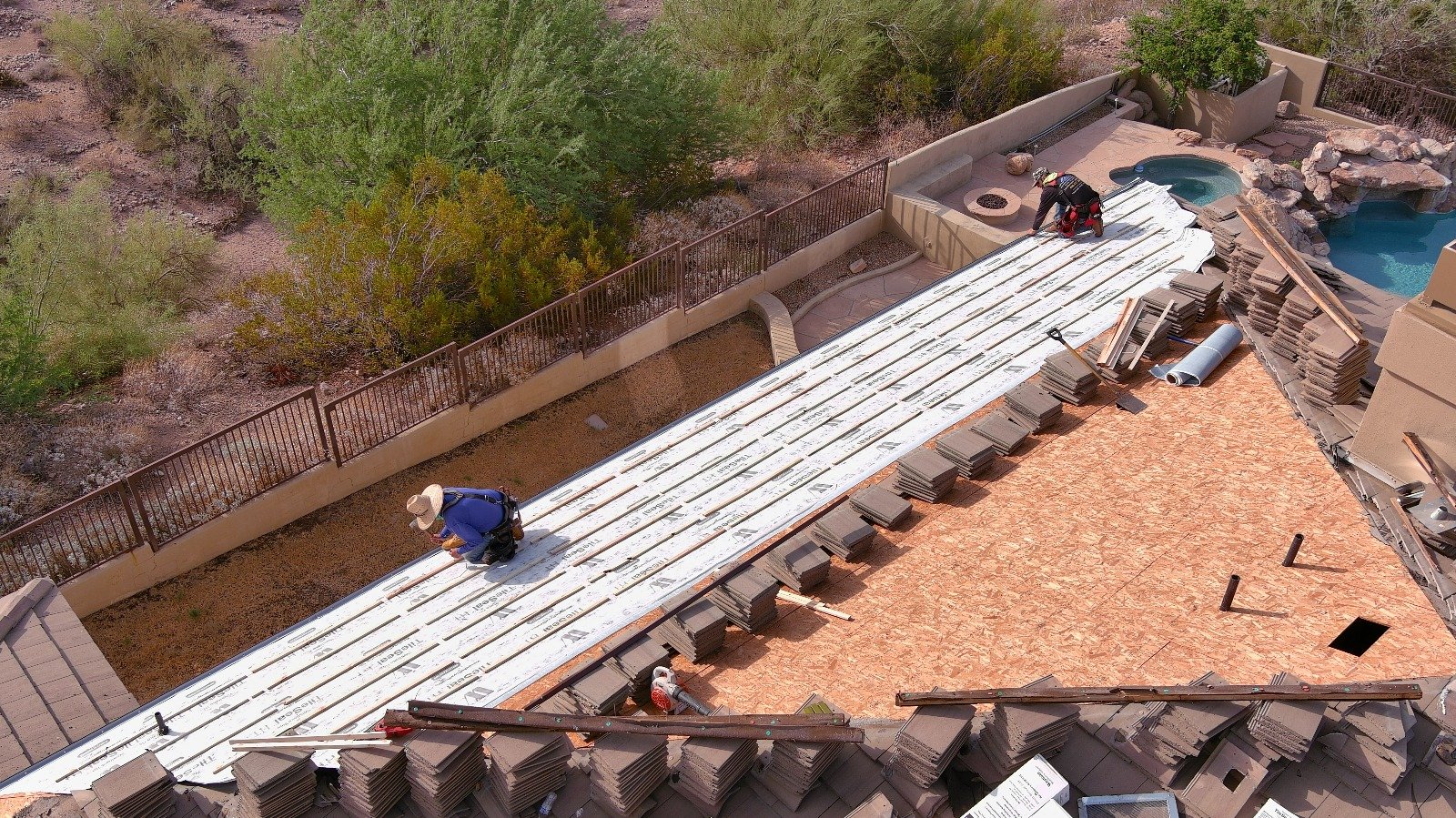
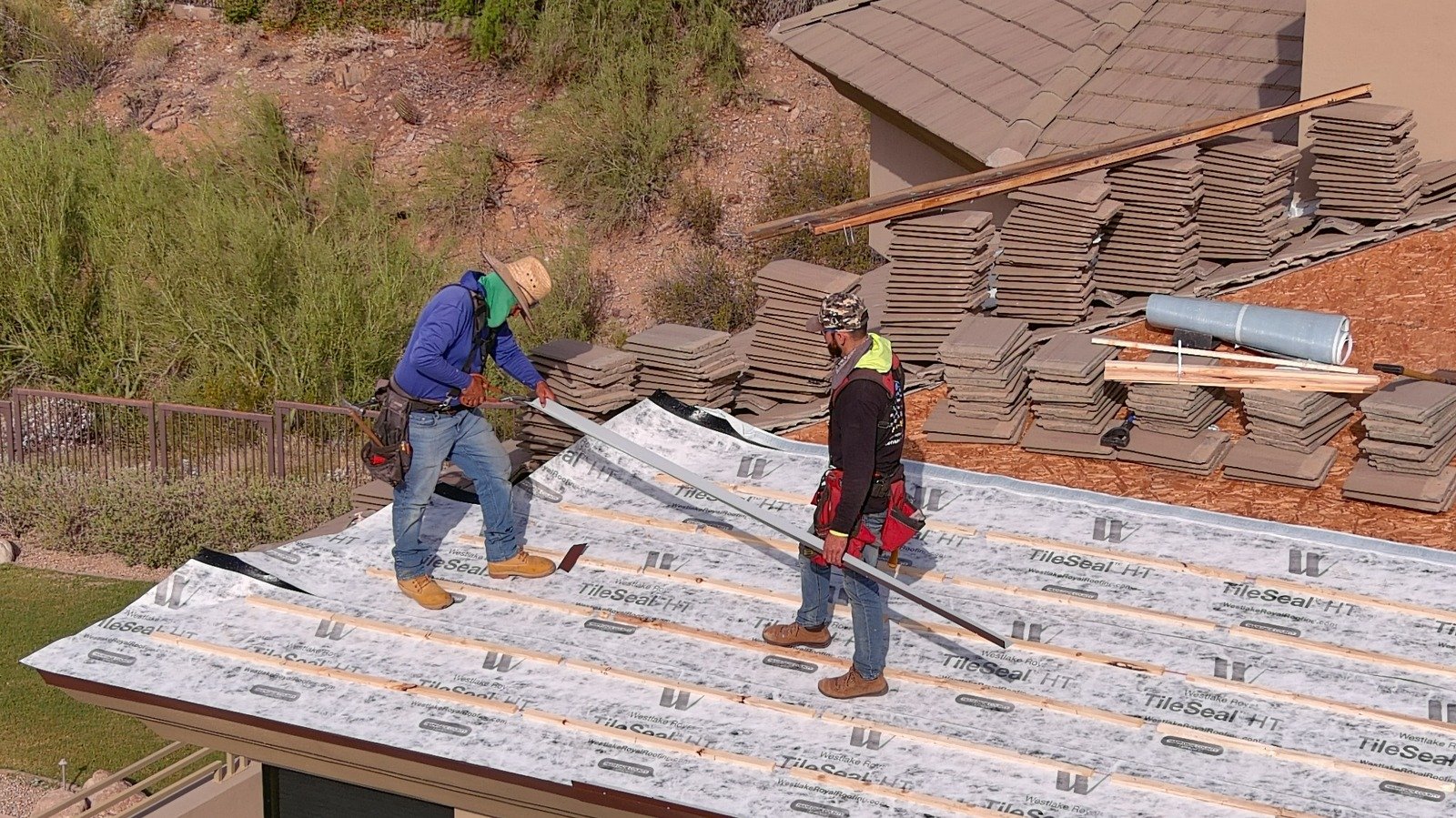
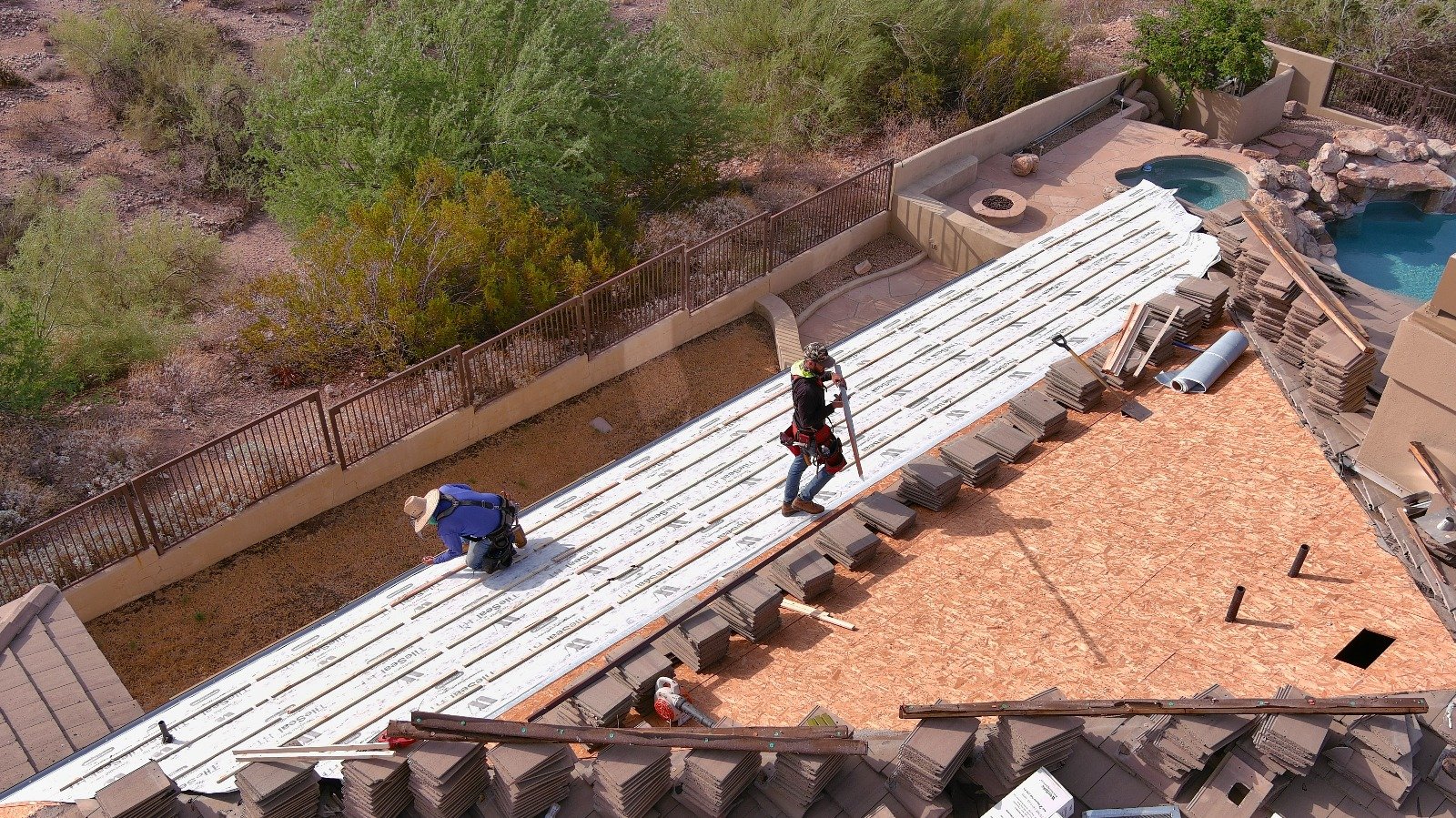
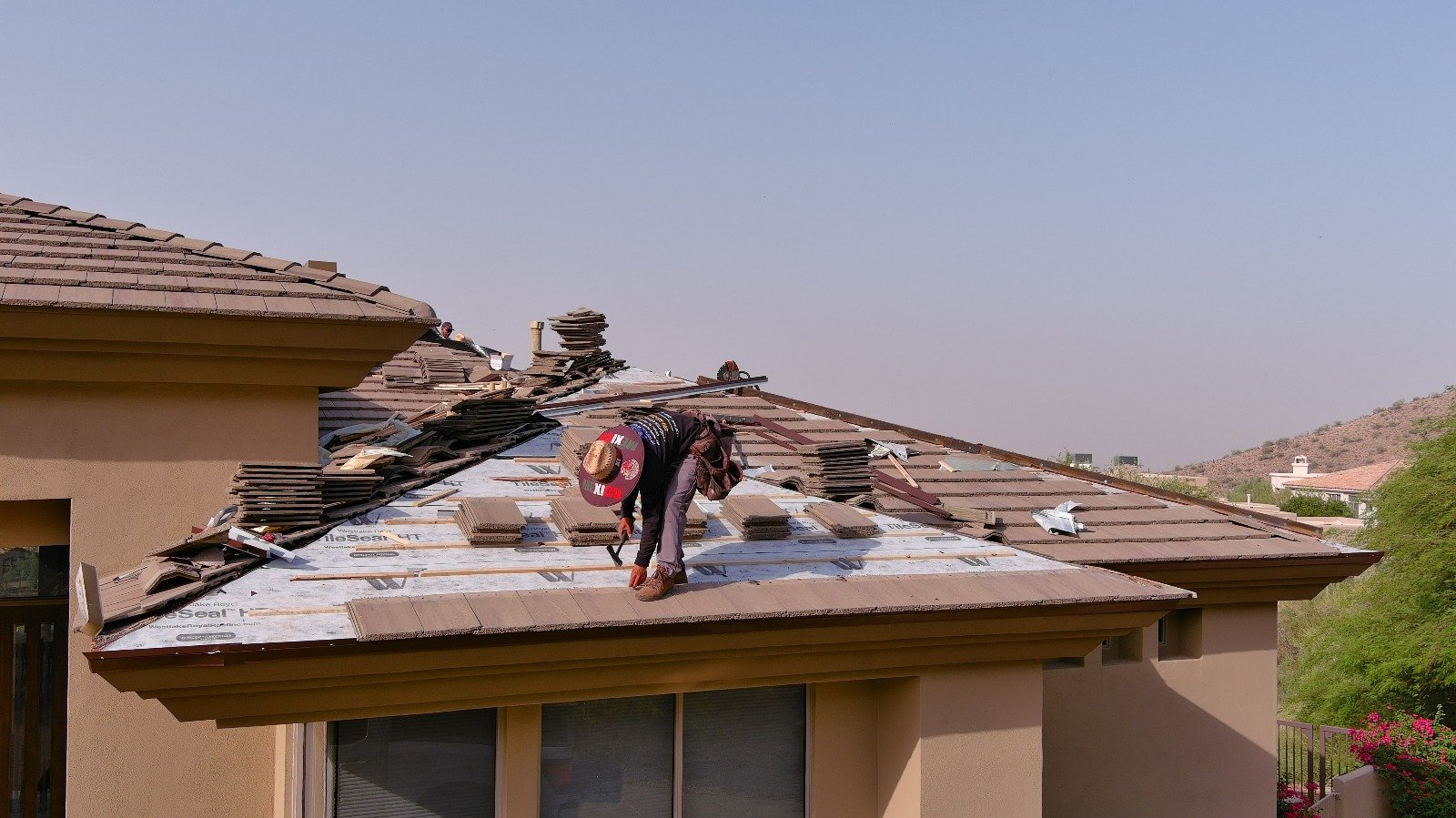
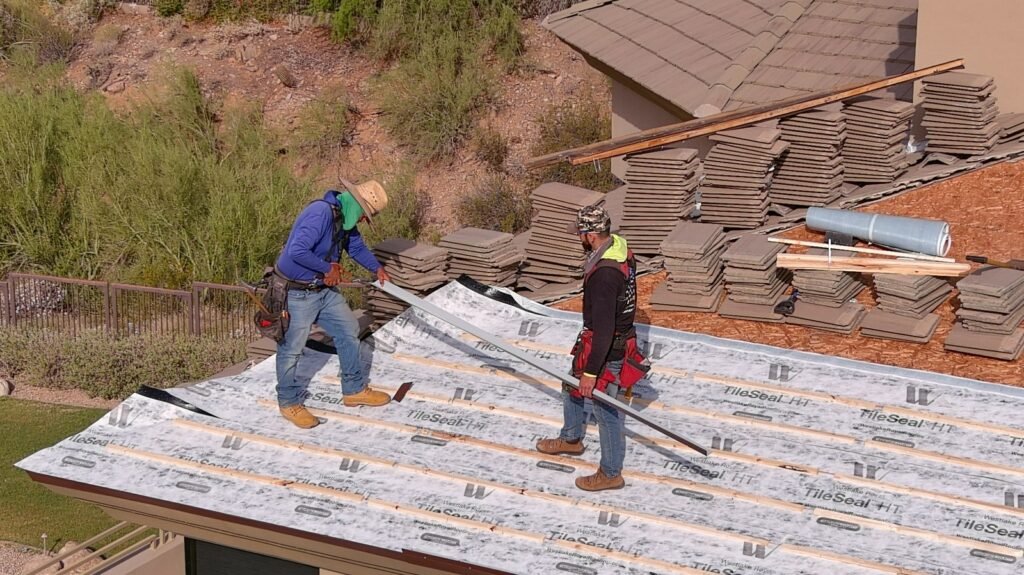
One important nuance for Phoenix homeowners: many tile roof replacement projects are underlayment replacements rather than full tile replacements. When the tile itself is in acceptable condition but the felt or synthetic underlayment beneath it has degraded, the tile is carefully removed, new underlayment is installed, and the original tile is reinstalled. This is less expensive than full replacement but still a significant project, typically running $6 to $11 per square foot depending on tile type and condition.
Flat and Low-Slope Roofing Systems
Flat and low-slope roofs are common on commercial properties throughout the Phoenix Metro and on certain residential styles, particularly in urban Phoenix and Tempe. The most common systems in this market are TPO, modified bitumen, and built-up roofing.
TPO membrane roofing is the most widely used flat roofing system in Phoenix at present. It offers good heat reflectivity, which is a meaningful advantage in a climate where roof surface temperatures regularly exceed 160°F. Installed cost for a full TPO replacement runs approximately $7 to $13 per square foot, depending on membrane thickness, insulation requirements, and project size.
Modified bitumen is a durable option with a long track record in Arizona’s heat. Installed costs run $6 to $11 per square foot. Built-up roofing, or BUR, is less common on new installations but still used for certain commercial applications, running $6 to $10 per square foot installed.
For a 1,500-square-foot flat roof on a Phoenix home, a full TPO replacement typically runs $10,500 to $19,500.
Spray Polyurethane Foam (SPF)
Foam roofing is used on many Arizona homes and commercial properties, valued for its seamless application, insulating properties, and relatively low weight. A full SPF roof installation runs approximately $5 to $9 per square foot installed, including the protective elastomeric coating applied over the foam.
SPF roofing requires ongoing maintenance in the form of recoating every 5 to 10 years. Factoring this into the total cost of ownership is important when comparing foam against other options. A homeowner who stays current on recoating can expect a well-installed foam roof to last 20 to 30 years in the Phoenix climate.
Metal Roofing
Standing seam metal roofing and stone-coated steel roofing are growing in popularity in the Phoenix Metro, particularly among homeowners looking for longevity and energy efficiency. Metal roofing handles Phoenix’s UV load and thermal cycling better than most other materials, and its reflective properties can reduce cooling costs.
Installed costs for standing seam metal in Phoenix run $14 to $22 per square foot, making it one of the more expensive options upfront. Stone-coated steel, which offers a tile or shingle aesthetic with metal performance, runs $12 to $18 per square foot installed. The longevity of quality metal roofing, which can exceed 40 years with minimal maintenance, makes the higher initial cost worth evaluating in the context of total lifecycle cost.
Sample Project Cost Estimates for Phoenix Metro Homes
These estimates represent all-in project costs including tear-off, underlayment, materials, labor, permits, and standard flashing. They assume moderate pitch, average complexity, and a deck in acceptable condition. Deck repairs and premium material upgrades would add to these figures.
A 1,500-square-foot home with a basic asphalt shingle replacement would typically run $8,000 to $13,000. With architectural shingles, expect $11,000 to $17,000.
A 2,000-square-foot home with a concrete tile replacement runs $20,000 to $32,000. The same home with clay tile runs $28,000 to $44,000.
A 2,500-square-foot home with a standing seam metal replacement runs $35,000 to $55,000.
A 1,500-square-foot flat roof with a full TPO replacement runs $10,500 to $19,500.
These are realistic working estimates for the Phoenix Metro market in 2026. Actual contractor quotes will vary based on the specific variables of your property.
What Is Included in a Complete Roof Replacement
A thorough, professional roof replacement in Phoenix should include the following components. Reviewing your written quote against this list helps ensure nothing critical is missing.
Complete removal of existing roofing material and responsible disposal. Inspection of the exposed roof deck with written documentation of any damaged sections. Replacement of damaged deck sections, typically quoted per sheet. Installation of new underlayment appropriate for the chosen roofing material and Phoenix’s climate demands. Installation of new roofing material per manufacturer specifications. Replacement of all flashings, including valley flashing, pipe boot flashings, chimney flashing, and any skylight flashings. Ridge cap installation. Gutter inspection and clearing of debris from the work area. Final inspection and cleanup. Permit documentation and, where applicable, city inspection sign-off.
Ask for a written scope of work before signing any contract. A detailed scope protects both you and the contractor and eliminates ambiguity about what is and is not included in the quoted price.
Hidden Costs Phoenix Homeowners Should Plan For
Several cost categories are not always apparent until a replacement project is underway. Planning for these reduces the chance of unpleasant surprises.
Deck replacement, as noted earlier, cannot be fully quantified until tear-off is complete. Setting aside a contingency of $500 to $2,000 for deck repairs on an older Phoenix home is prudent, particularly for homes built before 2000.
Skylight replacement is often recommended during a roof replacement, since the labor cost of addressing a skylight later is significantly higher than incorporating it into the current project. If your home has skylights that are aging, discuss replacement timing with your contractor.
Fascia and soffit damage, while not part of the roof itself, is sometimes discovered during roof replacement. Rotted or damaged fascia boards may need replacement before new drip edge and flashing can be properly installed.
Ventilation upgrades are sometimes needed when an older attic ventilation system is inadequate. Proper attic ventilation is especially important in Phoenix, where trapped attic heat accelerates roofing material degradation from beneath. If your contractor identifies ventilation deficiencies, take the recommendation seriously.
How to Evaluate Roofing Quotes in Phoenix Metro
Getting multiple quotes is standard practice and genuinely useful for a project of this size. When comparing quotes from different Phoenix Metro contractors, look beyond the bottom-line number.
Verify that each quote covers the same scope of work. A quote that excludes certain flashing replacements or uses a thinner underlayment product will appear less expensive on paper while delivering a less complete result.
Confirm that the contractor holds a current Arizona Registrar of Contractors license. You can verify any contractor’s license number directly on the ROC website. This is not optional due diligence. Unlicensed work voids manufacturer warranties, complicates insurance claims, and leaves homeowners without legal recourse if the work fails.
Ask each contractor about their warranty terms. Most reputable manufacturers offer workmanship warranties of 10 to 25 years on qualifying installations, in addition to product warranties. Understand what is and is not covered before signing.
Evaluate communication and responsiveness as part of your decision. A contractor who is slow to provide a written quote, vague about their license status, or unwilling to answer basic questions about materials and scope is a risk regardless of their price.
Financing and Insurance Considerations
Homeowner’s Insurance
If your roof replacement is driven by storm or hail damage from a monsoon event, your homeowner’s insurance policy may cover a portion of the cost. The extent of coverage depends on your policy type, deductible, and the age of your existing roof. Policies that pay actual cash value rather than replacement cost value will deduct depreciation from the settlement, which can significantly reduce the payment on an older roof.
Document any storm damage thoroughly before any work begins. Photographs, contractor damage assessments, and the date of the weather event all support an insurance claim. Your contractor can assist with documentation and work with your adjuster, but the claim is ultimately between you and your insurance company.
Financing Options
Many Phoenix roofing contractors offer financing through third-party lenders, with terms ranging from 12-month interest-free promotions to multi-year installment plans. If you are considering financing, compare the total cost including interest against your other available options, such as a home equity line of credit, before committing to a contractor-arranged financing product.
Preventative Maintenance to Extend Your New Roof’s Life in Phoenix
A new roof is a significant investment. In Phoenix’s demanding climate, protecting that investment through regular maintenance is practical and cost-effective.
Schedule a professional inspection every one to two years, with an additional post-monsoon inspection each October. Annual inspections allow a contractor to identify sealant failures, small flashing issues, and surface degradation before they become larger problems.
After every significant monsoon storm, do a ground-level visual check and inspect your attic for any signs of moisture. Early detection of a problem dramatically reduces repair cost.
Keep attic ventilation functioning properly. Adequate ventilation moderates attic temperatures, which directly affects the lifespan of roofing materials from beneath.
For tile roofs, avoid walking on the surface unless absolutely necessary and only with proper technique. Tile is durable under weather loads but brittle under point pressure from foot traffic.
Conclusion: Making a Confident Roof Replacement Decision in Phoenix
Roof replacement cost in Phoenix Metro is shaped by a set of variables that are specific to this market, this climate, and the materials most common across the Valley’s neighborhoods. Armed with realistic price ranges, an understanding of what drives costs locally, and a clear checklist for evaluating contractor quotes, Phoenix homeowners are well positioned to make a decision that protects both their home and their budget.
If your roof is showing signs of age, you have sustained storm damage, or you simply want an honest professional assessment of what you are working with, the next step is a licensed inspection from a contractor who knows the Phoenix Metro market.
Schedule Your Free Roof Replacement Estimate in Phoenix Metro
Reliable Roofing Near Me Phone: (480) 867-9986 Email: reliableroofingnearme@gmail.com Address: 12428 N 28th Dr Suite 12430, Phoenix, AZ 85029 Website: https://reliableroofingnearme.com License: ROC 355096
Serving Phoenix, Glendale, Scottsdale, Tempe, Mesa, Chandler, Peoria, and the greater Phoenix Metro area.
Contact Reliable Roofing Near Me to schedule a professional roof inspection or replacement estimate. Whether you are planning ahead or responding to storm damage, a detailed, no-obligation evaluation from a licensed Arizona roofing contractor gives you the information you need to move forward with confidence.