When Sandra Lopez bought her home in West Phoenix, the inspection report said the roof had “at least 10–12 years of life left.” That gave her peace of mind. The roof looked fine, the tiles were intact, and there were no visible leaks.
Six summers later — not ten — Sandra noticed a crack forming in her ceiling after a week of record-breaking heat. By the time a roofer inspected it, the underlayment beneath her tile roof had dried, split, and failed. The roof hadn’t aged out. It had burned out.
This is a reality many homeowners don’t expect — and it’s why roof repair in Phoenix AZ is needed far earlier than most people plan for. The biggest culprit isn’t rain or storms. It’s heat.
Phoenix Heat Is Not “Normal” Heat for Roofs
Phoenix consistently ranks among the hottest cities in the United States. Summer temperatures frequently exceed 115°F, and roofs absorb far more heat than the air temperature suggests.
On a 115°F day:
- Roof surfaces can exceed 170°F
- Attic temperatures can reach 150°F
- Roofing materials expand beyond design limits
This constant exposure causes roofs in Phoenix to deteriorate years earlier than the same roofs in cooler climates.
The Heat Factor Most Homeowners Don’t Understand
Many homeowners believe rain causes roof damage. In Phoenix, rain only reveals damage that heat already created.
Extreme Heat Causes:
- Underlayment drying and cracking
- Tile expansion and hairline fractures
- Shingle granule loss
- Flashing separation
- Sealant breakdown
- Membrane shrinkage on flat roofs
These failures begin quietly — long before leaks appear.
Why Tile Roofs Fail Early in Phoenix
Tile roofs are extremely popular across Phoenix, but they are also misunderstood.
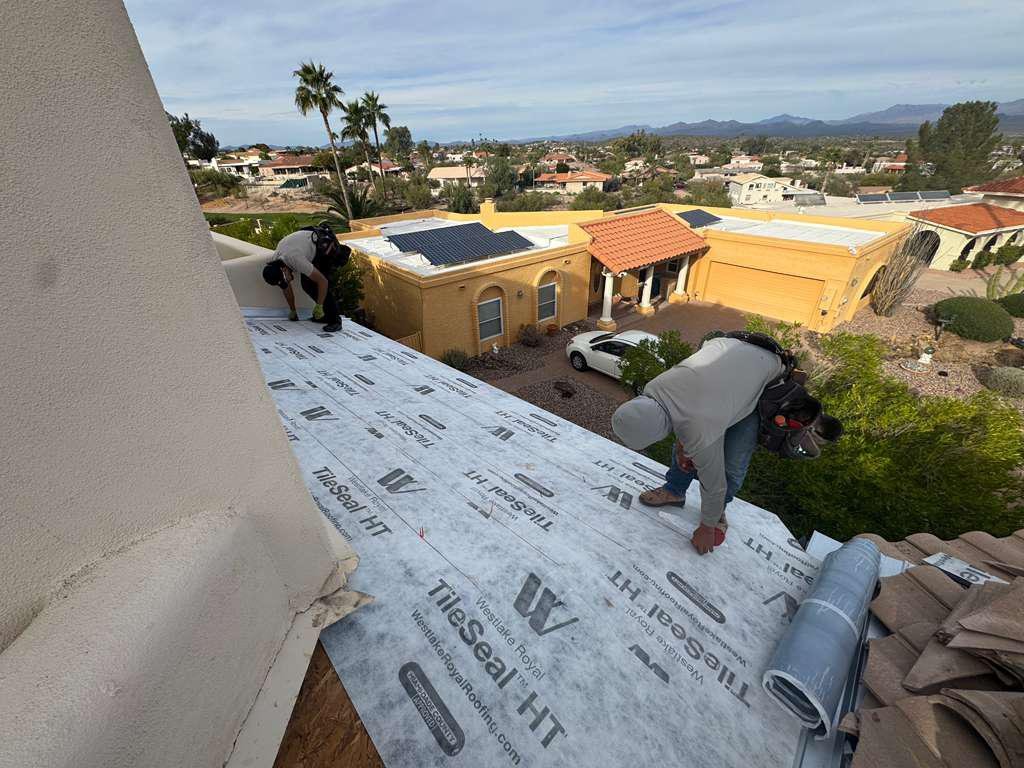
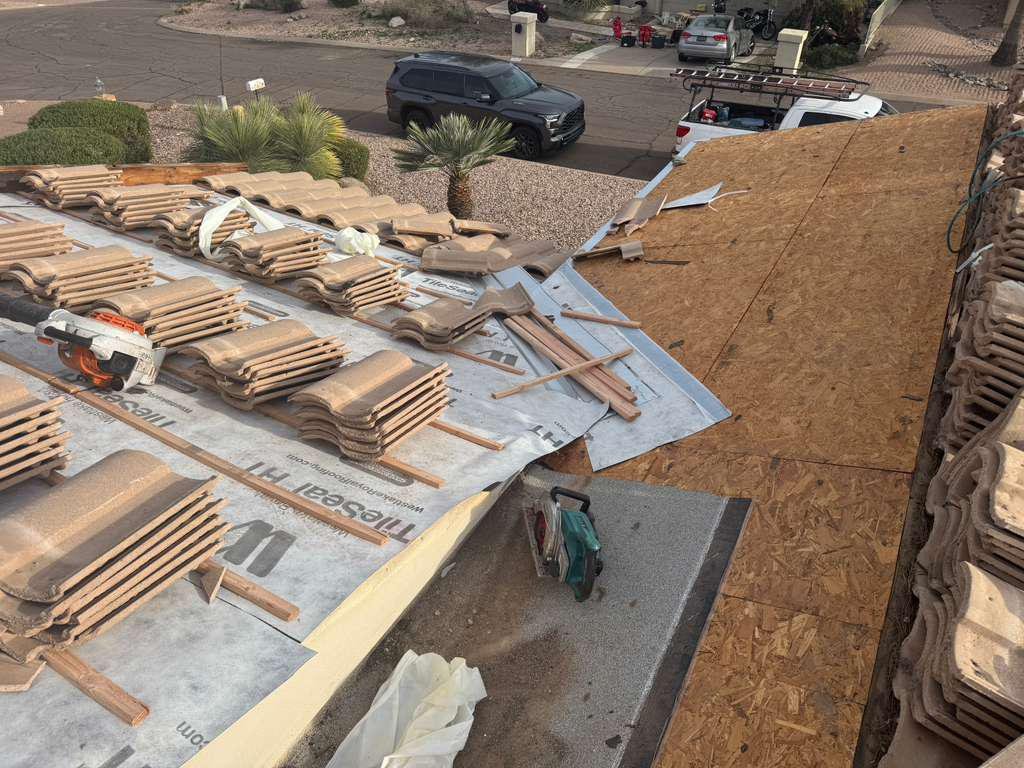
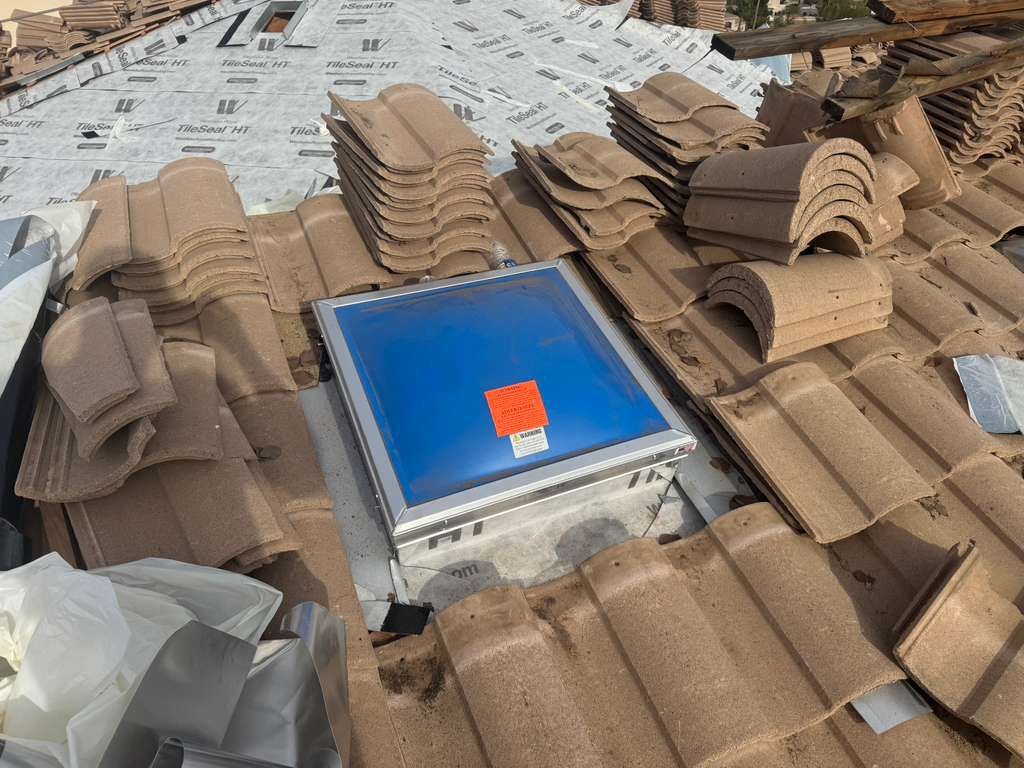
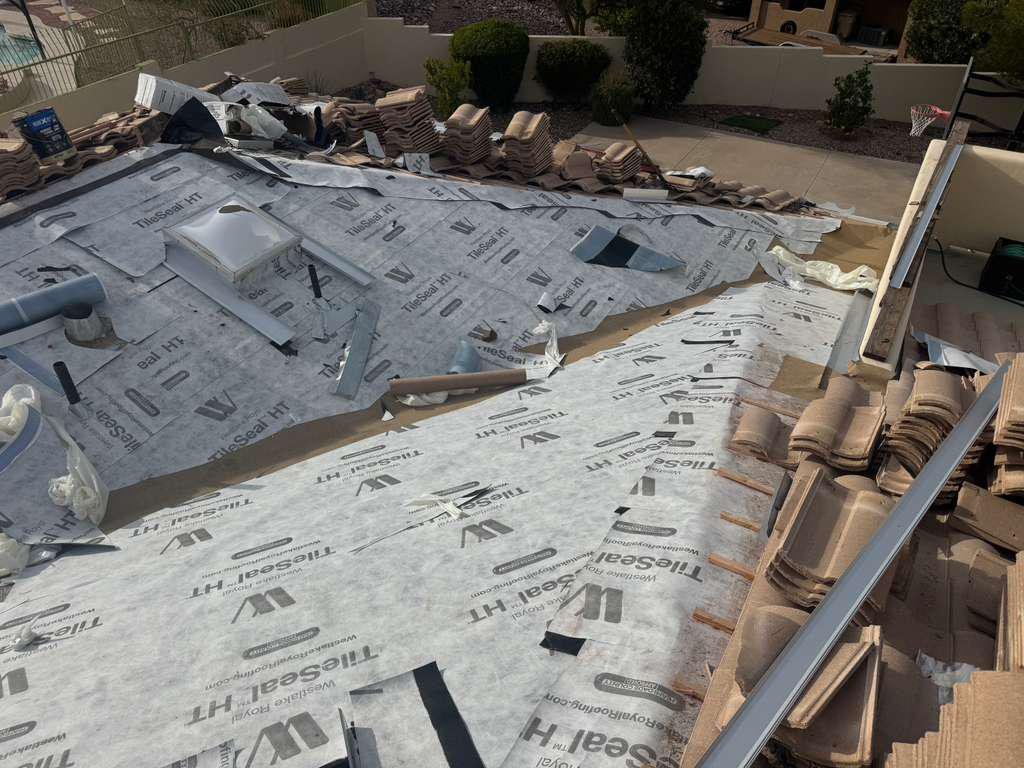
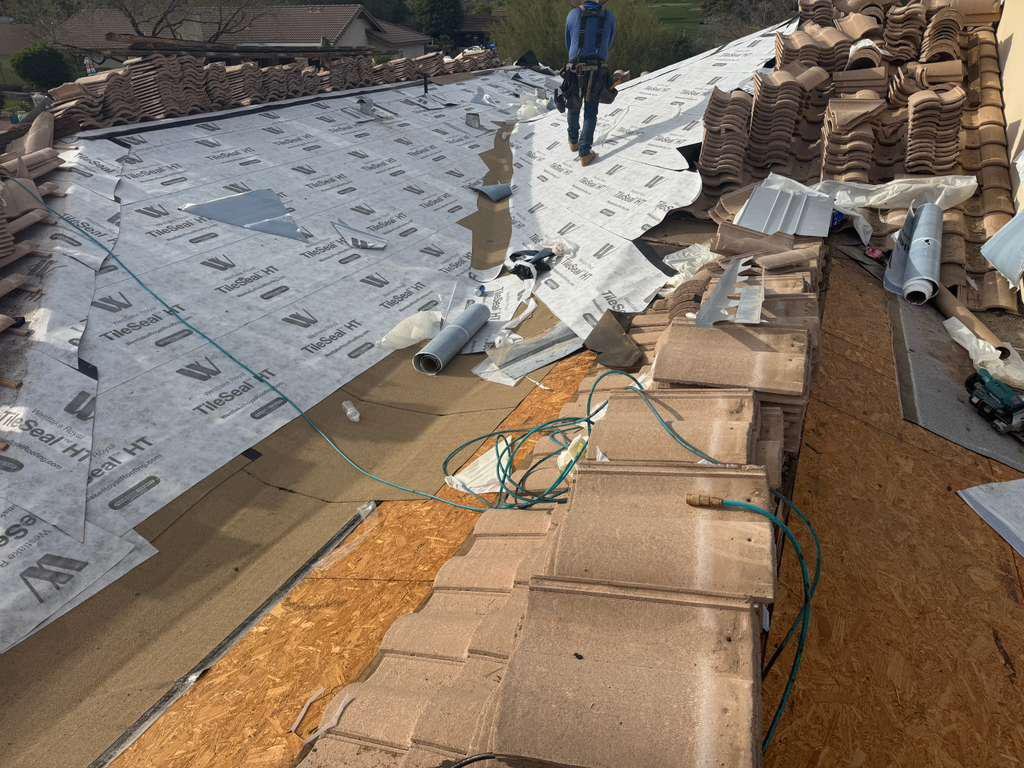
Tiles are not waterproof. They act as a protective shield for the underlayment underneath. When Phoenix heat dries out that underlayment, water has a direct path into your home.
Common heat-related tile roof issues include:
- Brittle underlayment splitting beneath intact tiles
- Micro-cracks forming in concrete and clay tiles
- Tiles shifting due to repeated expansion and contraction
- Fastener fatigue near ridges and valleys
From the ground, the roof looks perfect. Underneath, it’s failing.
Why Shingle Roofs Age Faster in Phoenix
Shingle roofs degrade rapidly under intense UV exposure.
In Phoenix, shingles often:
- Lose protective granules faster
- Become brittle within 8–12 years
- Curl at edges from heat stress
- Expose fiberglass mats to sunlight
Once granules are gone, shingles no longer protect against water — even if they haven’t blown off yet.
That’s why shingle roof repair in Phoenix often becomes necessary much sooner than homeowners expect.
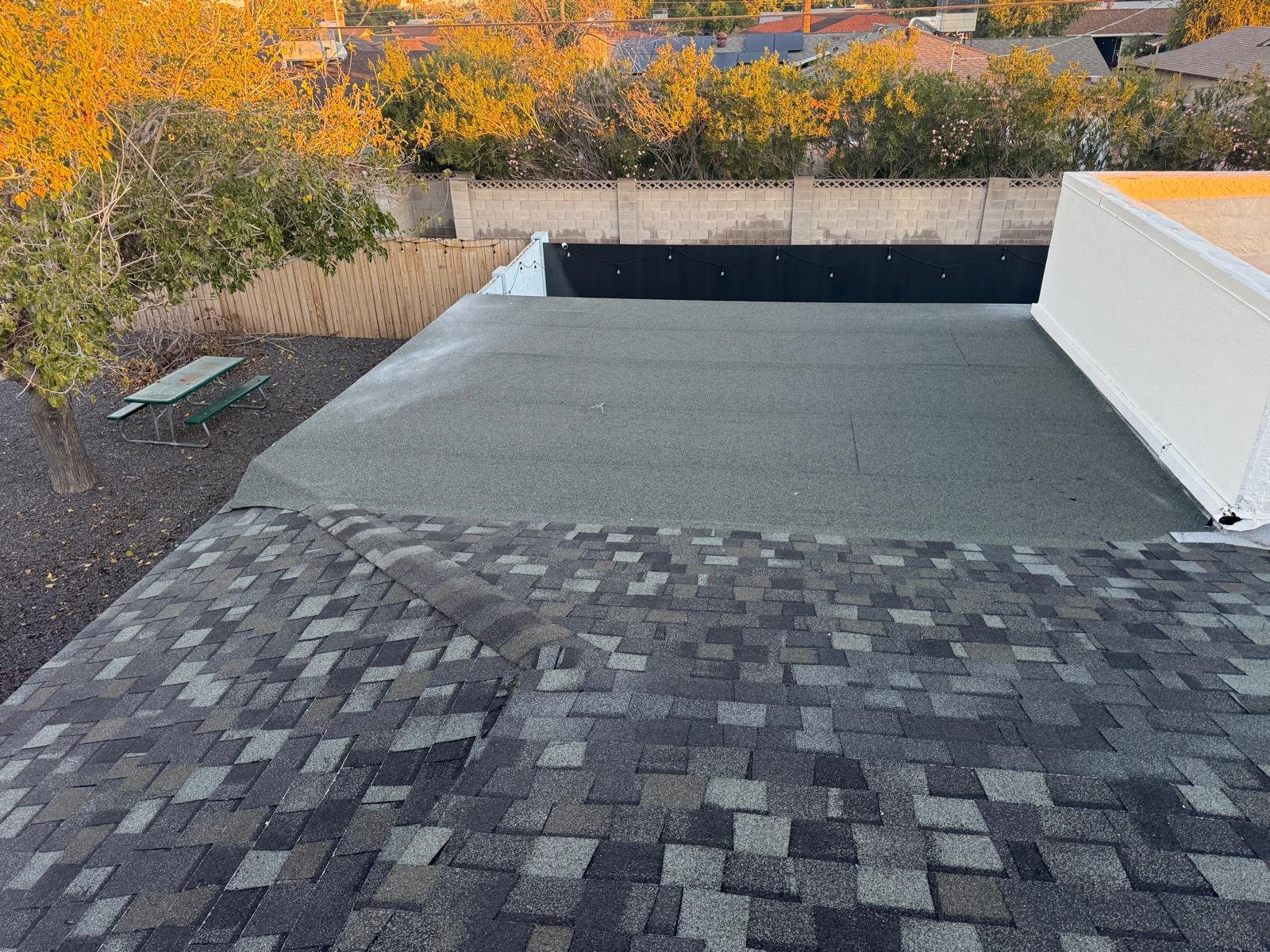
Flat Roofs and the Phoenix Heat Trap
Flat and low-slope roofs are especially vulnerable in desert climates.
Phoenix heat causes:
- Membrane shrinkage
- Seam separation
- UV cracking
- Ponding water due to slope changes
Heat weakens the membrane first. Monsoon storms then exploit those weaknesses.
This combination is one of the most common causes of emergency flat roof repair in Phoenix.
Real Phoenix Homeowner Examples
Case 1: “The Roof Was Only 9 Years Old”
A homeowner in Laveen expected at least 15 years from her shingle roof.
What inspectors found:
- Severe granule loss
- Heat-baked underlayment
- Exposed decking in valleys
Repair cost: $5,800
Preventive inspection cost years earlier: $300
Case 2: Tile Roof Failure Without a Single Broken Tile
A home in Ahwatukee showed no visible damage.
Inspection revealed:
- Underlayment split across multiple slopes
- Heat fatigue around flashing
- Water intrusion during monsoon storms
Result: Partial underlayment replacement costing $7,200.
Case 3: Flat Roof Shrinkage
A Phoenix townhouse experienced repeated leaks.
Cause:
- Heat-induced membrane shrinkage
- Open seams along parapet walls
Final repair: $6,900
Early seam resealing would have cost under $600.
Why Roof Warranties Don’t Always Protect Phoenix Homes
Many homeowners assume their roof warranty guarantees coverage. In reality, heat damage is often considered normal wear in extreme climates.
Warranties may not cover:
- UV degradation
- Heat-related cracking
- Lack of maintenance
- Deferred repairs
Without documented inspections and maintenance, claims are frequently denied.
Signs Your Phoenix Roof Is Failing From Heat (Before Leaks Appear)
Watch for:
- Sudden increases in cooling bills
- Cracked or faded tiles
- Shingles that feel brittle when touched
- Black streaks or discoloration
- Bubbling or peeling interior paint
- Attic temperatures that feel unbearable
These are heat warnings — not cosmetic issues.
How to Protect Your Roof From Phoenix Heat
Schedule Regular Roof Inspections
Annual inspections catch heat damage early — before water intrusion begins.
Repair Small Issues Immediately
Heat damage spreads quickly. Delaying repairs increases cost exponentially.
Improve Attic Ventilation
Better airflow reduces thermal stress on roofing materials.
Apply Protective Coatings (Flat Roofs)
Reflective coatings dramatically extend roof life in Phoenix.
Avoid Summer-Only Repairs
Spring and early summer inspections reduce emergency repair costs during monsoon season.
Why Phoenix Homeowners Trust Reliable Roofing Near Me
Reliable Roofing Near Me understands how extreme heat affects roofs in Phoenix — because we work in it every day.
Homeowners rely on us for:
- Licensed and insured roofing professionals
- Honest roof inspections with photo evidence
- Heat-specific repair strategies
- Tile, shingle, and flat roof expertise
- Emergency monsoon response
- Clear explanations with no pressure
📞 Call Reliable Roofing Near Me
(480) 867-9986
📍 Phoenix, AZ
🌐 https://reliableroofingnearme.com
Final Thought
Phoenix roofs don’t fail suddenly — they fail quietly, slowly, and invisibly under relentless heat. By the time leaks appear, the damage has already been done.
Understanding the heat factor — and acting early — can save you thousands.