A Practical Roof Inspection Checklist for Phoenix Metro Homeowners
A roof inspection is one of the most straightforward and cost-effective things a Phoenix homeowner can do to protect their property. It takes less than an hour when done methodically, costs nothing when conducted from safe vantage points on the ground and inside the attic, and has the potential to catch developing problems before they become expensive repairs or, worse, interior damage during a monsoon storm.
The challenge is knowing what to look for, where to look, and how to interpret what you find. National inspection guides are helpful in general terms, but they were not written for a climate where roof surfaces reach 160°F in July, where a UV index of 10 or 11 accelerates material aging faster than almost anywhere else in the country, and where monsoon season delivers wind-driven rain, microbursts, and occasional hail in concentrated bursts between June and September.
This roof inspection checklist for Phoenix Metro homes is structured around the specific failure patterns most common in this climate. It covers what you can assess safely as a homeowner and identifies clearly when what you are seeing requires a licensed professional rather than a closer personal look.
Before You Begin: Safety Ground Rules
This guide is designed to help Phoenix homeowners conduct meaningful visual inspections from safe positions. It is not a guide to walking your own roof. Getting onto a residential roof without training, proper footwear, and fall protection equipment is dangerous under any conditions. In Phoenix, roof surfaces during warm months reach temperatures that can cause serious burns on contact and create slippery conditions on certain materials. Tile roofs require specific foot placement techniques to avoid cracking tile and losing footing simultaneously.
Conduct your inspection from the ground using binoculars if needed, from accessible second-floor windows, and from inside the attic. Leave any inspection that requires roof access to a licensed professional.
With that established, here is what a thorough homeowner-level inspection covers, followed by a professional inspection section covering what a contractor examines that you cannot.
Part One: Ground-Level Exterior Inspection
This portion of the inspection requires nothing more than a slow walk around the perimeter of your home, ideally with binoculars for closer examination of specific areas. Do this in good morning light when shadows are minimal and the roof surface is clearly visible.
Shingle Condition (Asphalt Roofs)
Look across the entire roof plane for shingles that appear different from their neighbors. Specific things to identify include shingles that are visibly cracked, shingles with edges that are curling upward or tabs that have lifted, shingles that appear darker or shinier than surrounding material, which can indicate granule loss, and any areas where shingles appear to be missing entirely.
Note the overall color uniformity of the roof surface. Patchwork areas of noticeably different color or texture often indicate previous repairs and warrant closer attention to the surrounding material.
In Phoenix’s heat, asphalt shingles age more quickly than national averages suggest. Curling and cracking visible from the ground on a roof under 15 years old is a sign that the material has been stressed beyond its typical aging curve.
Action threshold: Any cracked, missing, or visibly curled shingles warrant a professional inspection. Two or more affected areas across the roof surface suggest a pattern rather than an isolated incident.
Tile Condition (Concrete and Clay Roofs)
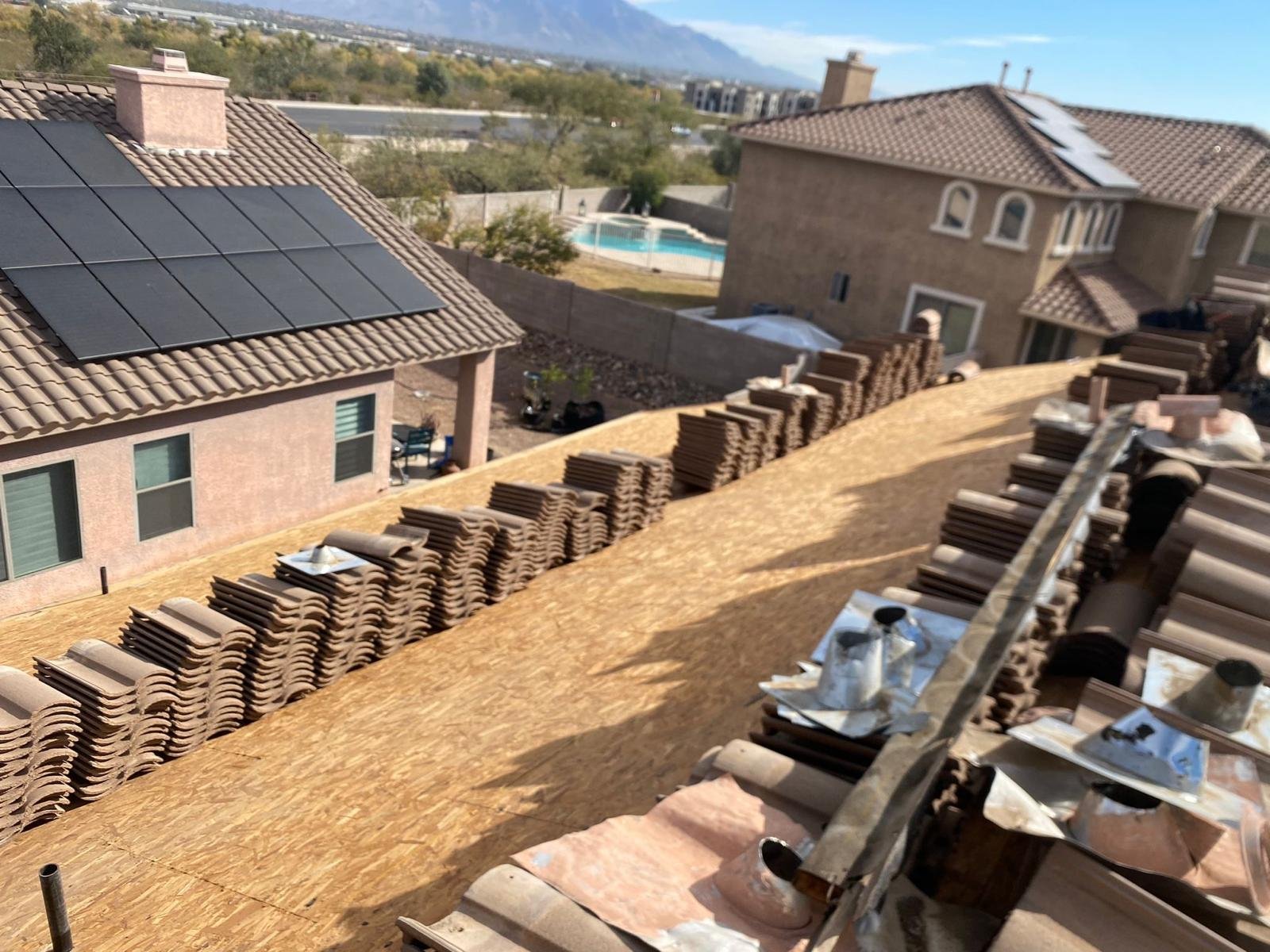
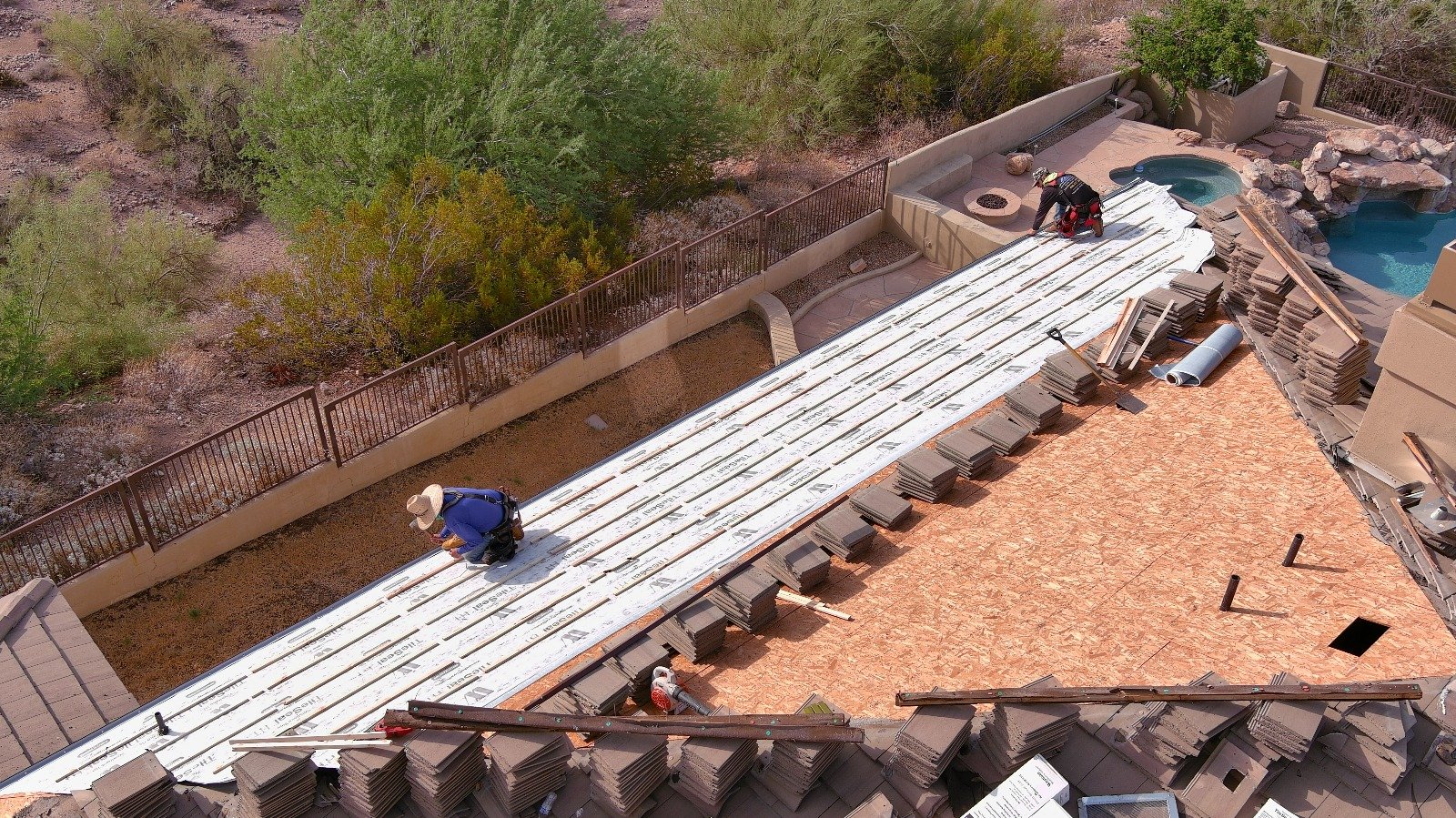
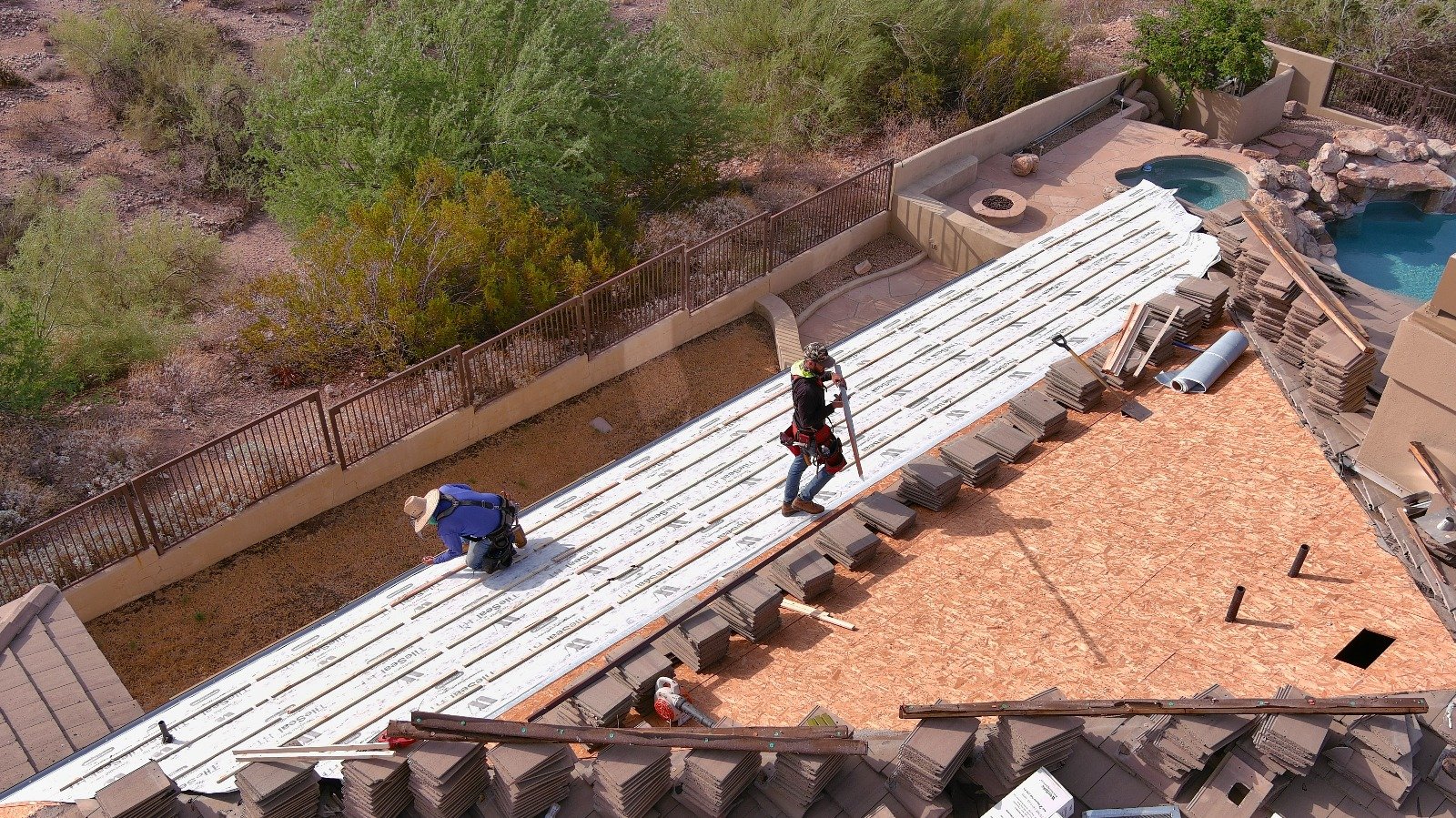
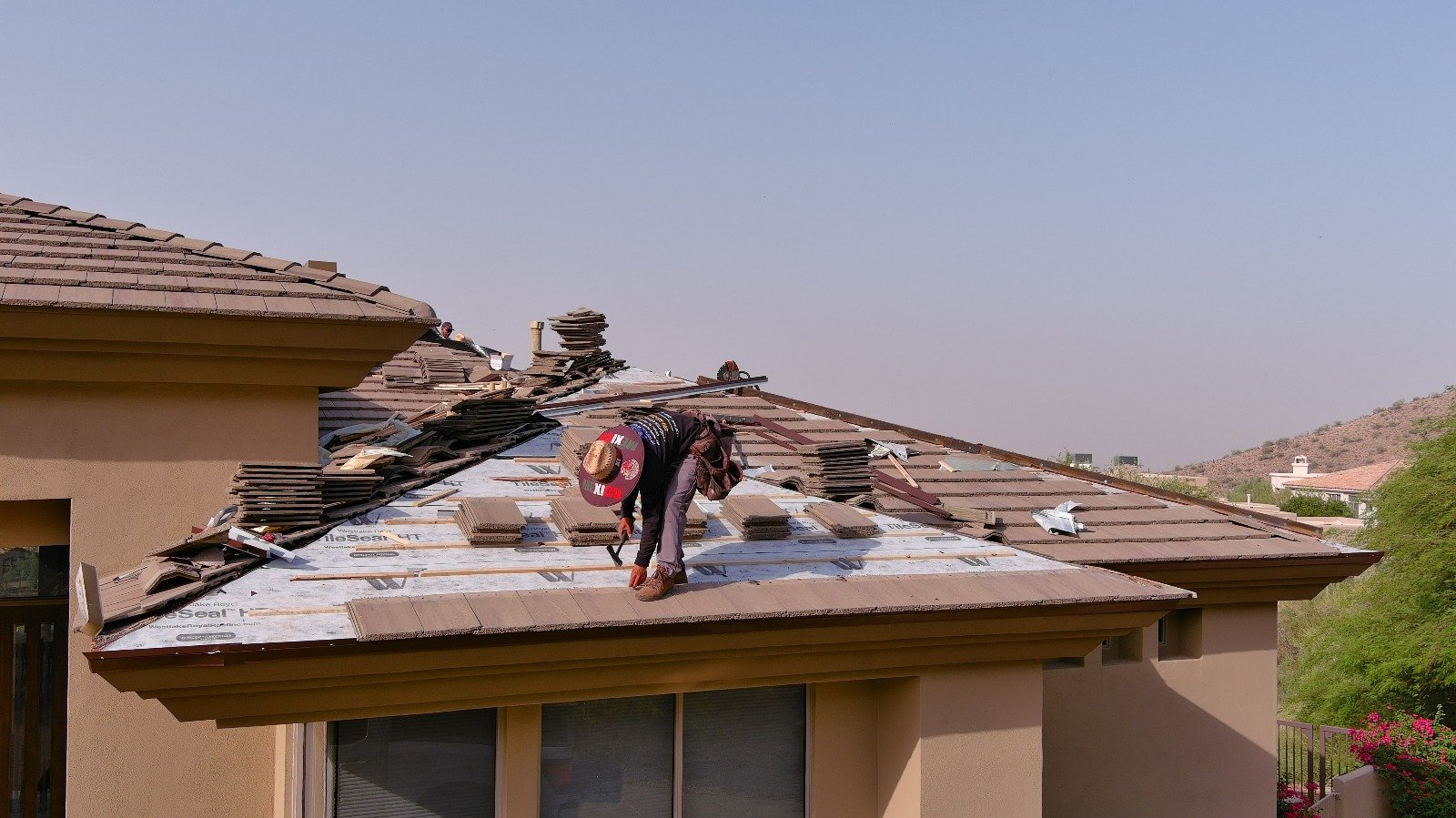
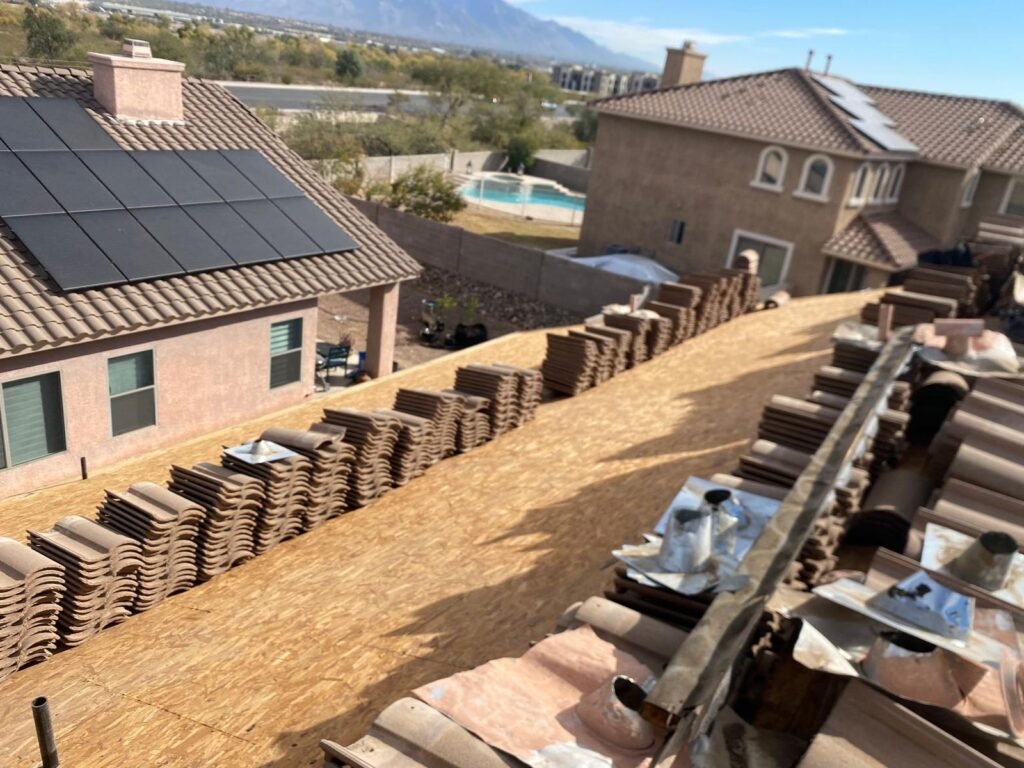
Tile roofs are common across Scottsdale, Chandler, Peoria, and north Phoenix. From the ground, scan systematically across the tile field looking for tiles that are visibly cracked, broken, or chipped. Look for tiles that appear shifted or raised from their neighbors, tiles that have slid out of alignment, and any areas along the ridge or hip where mortar or individual tiles appear to be missing.
Pay particular attention to areas around penetrations, valleys, and the lower edge of the roof where debris accumulation is most common. Also look at ridge caps and hip caps specifically, as these are exposed on all sides to wind and thermal movement and fail more frequently than field tile.
Action threshold: Any cracked or missing tile warrants prompt attention in Phoenix. The tile itself may be the least of the concern, as the underlayment beneath it is the actual waterproof barrier, and any penetration of the tile layer exposes that underlayment to direct weather.
Ridge Line
Stand back far enough to see the entire roof ridge and examine whether it runs in a straight, consistent line from end to end. A ridge line that sags, dips, or shows any irregularity in its horizontal plane is a potential indicator of structural issues in the roof framing below.
Also examine the ridge cap material specifically. On shingle roofs, ridge cap shingles are exposed to more wind stress than field shingles and often show wear earlier. On tile roofs, the mortar bedding at the ridge is subject to cracking from thermal cycling and can fail over time, leaving ridge tiles loose or unstable.
Action threshold: Any visible sag, dip, or irregularity in the ridge line requires professional evaluation. Deteriorated ridge cap material on a shingle roof should be assessed by a contractor.
Valleys
Roof valleys are the V-shaped channels where two roof planes meet, and they carry concentrated water flow during rain events. In Phoenix, monsoon storms can deliver rainfall at extremely high intensity in short periods, placing significant demand on valley drainage.
From the ground, look at each valley and assess whether the valley material is visible and continuous, whether there are any obvious gaps, lifting, or rust staining along the valley line, and whether debris has accumulated in the valley channel.
Action threshold: Any visible damage, gaps, or heavy debris accumulation in roof valleys warrants professional inspection. Valley failures are a common source of significant leaks during monsoon events.
Gutters and Downspouts
Gutters are not technically part of the roofing system, but their condition provides useful information about the roof and affects its performance. During your walk-around, look for gutters that are pulling away from the fascia, gutters with visible rust or holes, and downspouts that are disconnected or not directing water away from the foundation.
Look inside accessible gutter sections for granule accumulation. A significant volume of asphalt shingle granules in your gutters is a meaningful sign of shingle deterioration regardless of how the roof looks from below. Some granule loss is normal and expected over time, but heavy accumulation, particularly from a roof that is less than 10 years old, indicates abnormal degradation.
Action threshold: Heavy granule accumulation in gutters on a roof under 12 years old warrants a professional assessment. Gutters pulling away from the structure or visibly damaged gutters should be addressed promptly as they affect water management at the roof edge.
Flashing Visible From the Ground
Some flashing components are partially or fully visible from the ground, particularly on single-story homes or from second-story windows. Look at any visible flashing around chimneys, skylights, and where the roof meets vertical walls. Look for metal that is visibly lifted, bent, or separated from adjacent surfaces, rust staining running down from metal components, and any white mineral deposits or staining that suggests water has been tracking along a surface.
Action threshold: Any visible flashing irregularity is worth noting for professional follow-up. Flashing failures are among the most common sources of leaks in Phoenix Metro homes and are often repairable at modest cost if caught before they cause deck or interior damage.
Part Two: Attic Inspection
The attic provides a view of the roofing system from beneath that is not available from any exterior vantage point. A basic attic inspection can identify active or recent moisture intrusion, structural concerns, and ventilation issues that affect both roof performance and energy costs. Conduct this inspection on a bright day so that any light penetration through the deck is clearly visible.
Daylight Penetration
With the attic access hatch closed and any artificial lighting off, allow your eyes to adjust to the darkness for a minute before scanning the underside of the roof deck. Any pinpoints or visible gaps of natural light indicate openings in the roofing system above. Even small penetrations that have not yet caused visible leaks are vulnerabilities that will be tested by the next major monsoon storm.
Action threshold: Any visible daylight through the roof deck requires professional inspection and repair. This is not a monitor-and-wait situation.
Water Staining on Roof Deck Sheathing
The underside of the roof deck sheathing is the most reliable record of past and present moisture intrusion. Look for dark staining, discoloration, or tide marks on the plywood or OSB panels that form the deck. Active wet areas are immediately concerning. Older, dried staining may indicate a past leak that has been repaired or that stopped for another reason, but it also indicates that moisture has reached this level at some point and the source deserves investigation.
Action threshold: Any active moisture or recently wet areas in the attic require prompt professional attention. Older staining should be noted and professionally assessed to determine whether the source has been addressed or is still active.
Mold or Mildew on Deck or Framing
Mold on the underside of roof deck sheathing or on attic framing members is direct evidence of sustained moisture presence. In Phoenix’s typically dry interior environment, attic mold is almost always caused by either roof leaks or inadequate attic ventilation. Both conditions require professional assessment and correction. Mold in the attic also has implications for indoor air quality and should be addressed rather than simply noted.
Action threshold: Any visible mold or mildew in the attic warrants professional evaluation of both the source of moisture and the extent of affected material.
Insulation Condition
Scan the attic floor insulation for areas that appear compressed, discolored, or wet. Insulation that has been wetted by roof leaks loses its thermal performance, compresses permanently, and can harbor mold. In Phoenix, where attic thermal performance directly affects cooling costs during a long summer season, degraded insulation has both health and financial consequences.
Action threshold: Wet, compressed, or visibly discolored insulation suggests moisture intrusion from above and warrants professional roof inspection.
Attic Ventilation
Adequate attic ventilation is critically important in Phoenix. An attic that traps heat during summer months reaches temperatures that accelerate the deterioration of roofing materials from beneath, shortening the lifespan of shingles, underlayment, and deck sheathing. Look for ridge vents, soffit vents, gable vents, or powered ventilators. Verify that soffit vents are not blocked by insulation, which is a common condition in homes where attic insulation has been added over the years.
Action threshold: If you cannot identify an active ventilation system in your attic, or if soffit vents appear blocked, this should be discussed with a roofing professional during your next inspection. Ventilation deficiencies in a Phoenix attic have measurable effects on both roof lifespan and energy costs.
Structural Members
While in the attic, look at the visible rafters, trusses, and ridge board. Look for any members that appear cracked, split, sagging, or showing signs of insect damage. Any structural irregularity in the roof framing is a concern that requires professional evaluation.
Action threshold: Any visible cracks, breaks, or sagging in roof framing members requires immediate professional assessment.
Part Three: Flat and Foam Roof Inspection
Flat and low-slope roofs on Phoenix homes and commercial properties require specific inspection points that differ from pitched roof systems.
Membrane Surface Condition
From a safe vantage point such as a second-floor window or from photographs taken during a professional inspection, look at the flat roof membrane for visible blistering, bubbling, or areas where the surface texture has changed noticeably from the surrounding material. Also look for areas of ponding water. Water remaining on a flat roof more than 48 hours after rain indicates a drainage problem that places ongoing stress on the membrane system.
Action threshold: Visible blistering, ponding water, or surface irregularities on a flat roof membrane warrant professional inspection. These conditions typically worsen over time rather than resolving on their own.
Seams and Edges
The edges of a flat roof membrane and the seams where sections of membrane overlap are the most vulnerable points of the system. From accessible ground-level or second-story vantage points, look for any areas where the membrane edge appears lifted, curled, or separated from the parapet or edge detail. Open seams and lifted edges are direct water entry points.
Action threshold: Any visible seam separation or edge lifting on a flat roof requires prompt professional attention, particularly before monsoon season.
Foam Roof Surface
For SPF foam roofs, the primary inspection point from a homeowner’s perspective is the condition of the protective elastomeric coating on the surface. A properly coated foam roof has a smooth, consistent surface texture. A coating that is beginning to fail shows chalking, a powdery white residue that appears when the coating breaks down under UV exposure. More advanced deterioration shows as crazing, which is a network of small surface cracks, and eventually as exposed bare foam.
Action threshold: Any visible chalking on a foam roof coating means recoating is needed. Crazing or exposed foam requires professional assessment to determine whether recoating alone is sufficient or whether foam repair is needed first.
Part Four: Post-Monsoon Storm Inspection Protocol
Phoenix’s monsoon season warrants a specific inspection protocol following any significant storm event. This is not a substitute for annual professional inspection but is a practical immediate assessment.
Within 24 to 48 hours after a major storm, conduct a full ground-level perimeter walk looking specifically for any roofing material on the ground or in the yard, visible damage to ridge caps or tile, changes in the roof’s appearance compared to before the storm, and any debris accumulation in valleys or gutters.
Inspect the attic within 24 to 48 hours of a major rain event. If moisture intrusion has occurred, it may be visible in the attic before it appears on interior ceilings. Active wet areas after a storm require prompt attention.
Check all interior ceilings throughout the home for any new staining, discoloration, or soft spots in the drywall. Also check around the frames of any skylights for signs of moisture.
Photograph anything that appears different from before the storm. Date-stamped photographs taken immediately after a storm event are valuable documentation for insurance purposes if a claim becomes necessary.
Action threshold: Any storm-related roofing material found on the ground, any new interior water staining, or any new visible damage to the roof surface warrants a professional inspection before the next storm event.
Part Five: Seasonal Inspection Schedule for Phoenix Metro
Given the specific demands of Phoenix’s climate, a twice-annual inspection schedule aligned with the local weather calendar makes practical sense.
Spring Inspection (March through May)
The period before monsoon season is the most important inspection window of the year for Phoenix homeowners. Any damage or deterioration identified at this point can be addressed before the concentrated stress of monsoon season begins. A spring inspection also gives you the opportunity to clear gutters and downspouts of debris accumulated over winter, ensure attic ventilation is functioning, and identify any flashing or sealant issues that should be addressed before summer heat and storms arrive.
Fall Inspection (October through November)
A post-monsoon inspection conducted in October or November provides the opportunity to assess and document any damage sustained during storm season before winter sets in. It is also a good time to evaluate cumulative heat damage from the summer, when roof surfaces have experienced months of temperatures exceeding 150°F. Addressing damage identified in a fall inspection typically benefits from better contractor availability and more comfortable working temperatures than a mid-summer repair project.
After Any Significant Storm Event
As described in Part Four, a targeted inspection following any major monsoon storm is a practical supplement to the twice-annual schedule. This does not need to be comprehensive. It is focused specifically on identifying immediate damage from the storm and determining whether emergency intervention is needed before the next weather event.
What a Professional Roof Inspection Covers That You Cannot
A homeowner-level visual inspection is a useful starting point, but it has clear limits. A licensed roofing contractor conducting a professional inspection covers several areas and uses methods that are not accessible to a homeowner conducting a ground-level and attic assessment.
Physical roof surface assessment involves the contractor accessing the actual roof surface and examining materials up close, including assessing the condition of shingle tabs, tile surfaces, and membrane integrity from directly above rather than from below or at a distance.
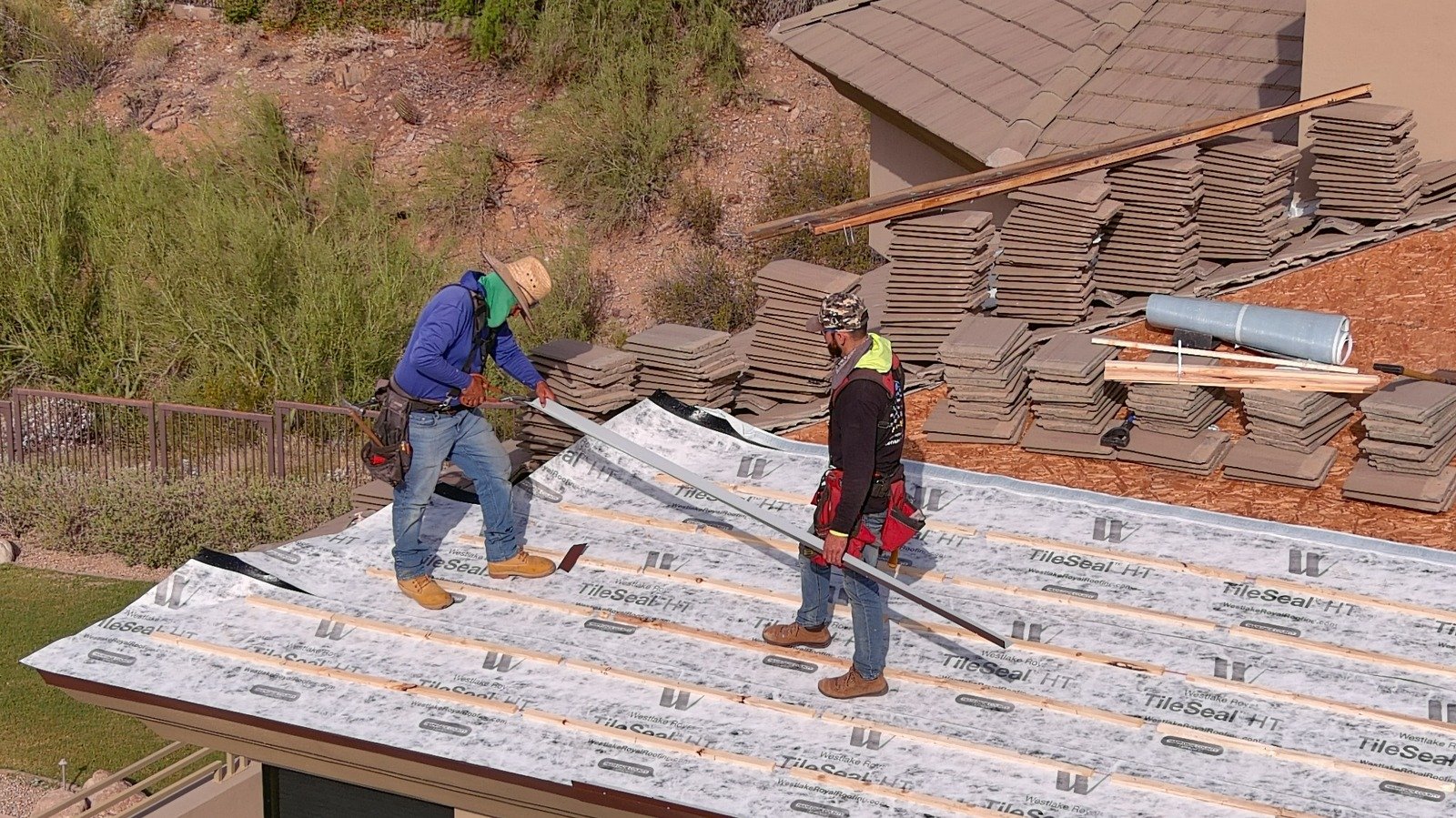
Underlayment condition is one of the most important and least visible elements of a Phoenix roofing system. Tile roofs in particular rely on the underlayment as the primary waterproof barrier, and its condition cannot be assessed without understanding the age of the installation, the product used, and the physical signs of degradation that are only observable during a hands-on inspection.
Flashing integrity requires close examination of every transition point on the roof, including areas that are not clearly visible from the ground. A professional inspector examines each flashing component, tests sealants for adhesion and condition, and identifies specific points where water management has been compromised.
Deck condition assessment involves the contractor looking for soft spots, delamination, and structural irregularities in the roof deck sheathing from above, which provides a different and more complete picture than the attic view alone.
Drainage and slope verification involves confirming that water moves efficiently off every section of the roof and identifying any areas where drainage has been compromised by debris accumulation, settlement, or installation issues.
Ventilation system inspection goes beyond confirming that vents are present to assessing whether the ventilation system is functioning adequately for the size and configuration of the attic space. In Phoenix, this has direct consequences for both roof lifespan and energy performance.
How Much Does a Professional Roof Inspection Cost in Phoenix Metro?
Professional roof inspection pricing in Phoenix Metro varies based on roof size, type, and complexity. A standard inspection on a typical single-family home typically runs between $150 and $400 depending on the contractor and scope of the assessment.
Many roofing contractors in Phoenix offer free inspections as part of their service model, particularly when the homeowner is considering repair or replacement work. A free inspection from a reputable licensed contractor is a legitimate offering and can be a practical way to get a professional assessment at no upfront cost.
When evaluating any inspection offer, confirm that the contractor holds a current Arizona Registrar of Contractors license and that the inspection will be followed by a written report documenting the findings. An inspection that produces only a verbal summary and an immediate sales pitch for replacement work without written documentation is not serving your interests as a homeowner.
The cost of a professional inspection is modest relative to the value of the information it provides. In Phoenix’s climate, an inspection conducted before monsoon season that identifies a repairable flashing issue or deteriorated pipe boot seal can prevent water intrusion that costs significantly more to remediate after the fact.
Red Flags That Mean You Should Call a Professional Immediately
While this guide covers the full range of inspection topics on a scheduled basis, certain observations call for immediate professional contact rather than adding them to a list for the next annual inspection.
Active water intrusion anywhere in the attic or on interior ceilings during or after rain requires immediate attention. Do not wait for the next scheduled inspection window.
Visible sagging in the roof deck or ridge line indicates a structural condition that should be evaluated promptly.
Any daylight visible through the roof deck in the attic is an immediate action item, particularly with monsoon season capable of delivering intense rainfall on short notice.
Missing tiles or shingles discovered after a storm should be addressed before the next rain event. Even a single missing tile or shingle exposes the underlayment or deck beneath it to direct weather.
Mold discovered in the attic indicates a moisture source that needs to be identified and corrected. Mold does not resolve without intervention and typically spreads over time.
Any significant structural damage discovered after a monsoon microburst, including displaced roof sections, fallen components, or major debris impact damage, requires professional evaluation before the home is occupied.
Conclusion: A Consistent Inspection Routine Protects Your Phoenix Home
A roof inspection checklist is only useful if it is actually used. For Phoenix Metro homeowners, the most practical approach is to build the twice-annual inspection into a consistent routine, supplement it with post-storm checks after significant monsoon events, and establish a relationship with a licensed local contractor who can conduct professional inspections and address findings promptly.
The roof inspection checklist in this guide gives you a structured starting point for understanding your roof’s condition between professional evaluations. What it cannot replace is the trained eye of an experienced contractor who knows the specific failure patterns of Phoenix roofs, understands the underlayment and material conditions that are common in this market, and can access and assess the parts of the system that are not visible from the ground or attic.
Consistent inspection is the most cost-effective roof maintenance strategy available to a Phoenix homeowner. Identifying a $400 flashing repair before monsoon season is always preferable to addressing the interior damage that results from a season of undetected water intrusion.
Schedule Your Professional Roof Inspection in Phoenix Metro
Reliable Roofing Near Me Phone: (480) 867-9986 Email: reliableroofingnearme@gmail.com Address: 12428 N 28th Dr Suite 12430, Phoenix, AZ 85029 Website: https://reliableroofingnearme.com License: ROC 355096
Serving Phoenix, Glendale, Scottsdale, Tempe, Mesa, Chandler, Peoria, and the surrounding Phoenix Metro area.
Contact Reliable Roofing Near Me to schedule a professional roof inspection. Whether you are preparing for monsoon season, following up on storm damage, or simply want a current assessment of your roof’s condition, a licensed evaluation from a qualified Arizona roofing contractor gives you accurate information and a clear path forward.