Phoenix is one of the most demanding environments for residential roofing in the entire United States. The combination of extreme UV radiation, triple-digit summer temperatures, intense thermal cycling, and annual monsoon storms subjects Phoenix roofs to stresses that simply do not exist in most other American cities.
For Phoenix homeowners, this means that roofing decisions — what material to choose, when to repair versus replace, how to select a contractor, what to expect from a professional installation — carry more consequence than they would in a moderate climate. Getting them right protects the most significant investment most people will ever make. Getting them wrong leads to premature failures, water damage, and avoidable expense.
This guide covers everything Phoenix homeowners need to know about residential roofing in 2026.
Why Residential Roofing in Phoenix Is Unique
The Heat Factor
Phoenix experiences more days above 100°F than any other major American city. Rooftop surface temperatures on summer afternoons regularly exceed 160 to 180°F — far beyond what roofing materials experience in moderate climates. This heat does several things to residential roofing systems:
It accelerates the UV degradation of asphalt-based products. Shingles that might last 25 to 30 years in the Northeast last 15 to 20 years in Phoenix because the UV and heat combination degrades the asphalt binder and granule adhesion far faster.
It drives extreme thermal cycling. The 60 to 80°F daily temperature swings in Phoenix — from cool nights to scorching days — cause repeated expansion and contraction of every roofing component. Over years, this stresses fasteners, flashing joints, and any sealants in the system, creating failure points at every connection.
It creates extraordinary cooling demand inside the home. A roof that absorbs rather than reflects solar heat contributes directly to the cooling load on the HVAC system — and with Phoenix homeowners running air conditioning 9 to 10 months per year, the cumulative energy cost difference between a heat-absorbing and a heat-reflective roof is significant.
The Monsoon Factor
Arizona’s monsoon season — June through September — brings the Phoenix Valley’s most severe weather. Monsoon storms are characterized by extremely high winds (regularly exceeding 50 mph in gusts), driving rain, dust storms, and occasional hail. The combination of high wind and driving rain tests every flashing detail, every penetration seal, and every tile fastener in the roofing system.
A roof that performs adequately in calm conditions may fail catastrophically during a monsoon event if its flashing or fastening details are inadequate. Phoenix homeowners should treat pre-monsoon inspection as an annual practice — not an optional one.
The Architecture Factor
Phoenix’s residential housing stock is highly diverse in age and style. Mid-century ranch homes from the 1950s and 1960s, the suburban buildout of the 1980s and 1990s, and the master-planned communities of the 2000s all have different roofing systems, different maintenance histories, and different vulnerabilities. A roofing strategy appropriate for a 2005 concrete tile roof in North Phoenix is not necessarily appropriate for a 1968 flat-roof ranch in Arcadia.
Understanding the specific characteristics of your home’s construction era and roofing system is important context for every roofing decision you make.
Residential Roofing Materials in Phoenix: Your Options in 2026
Asphalt Shingles
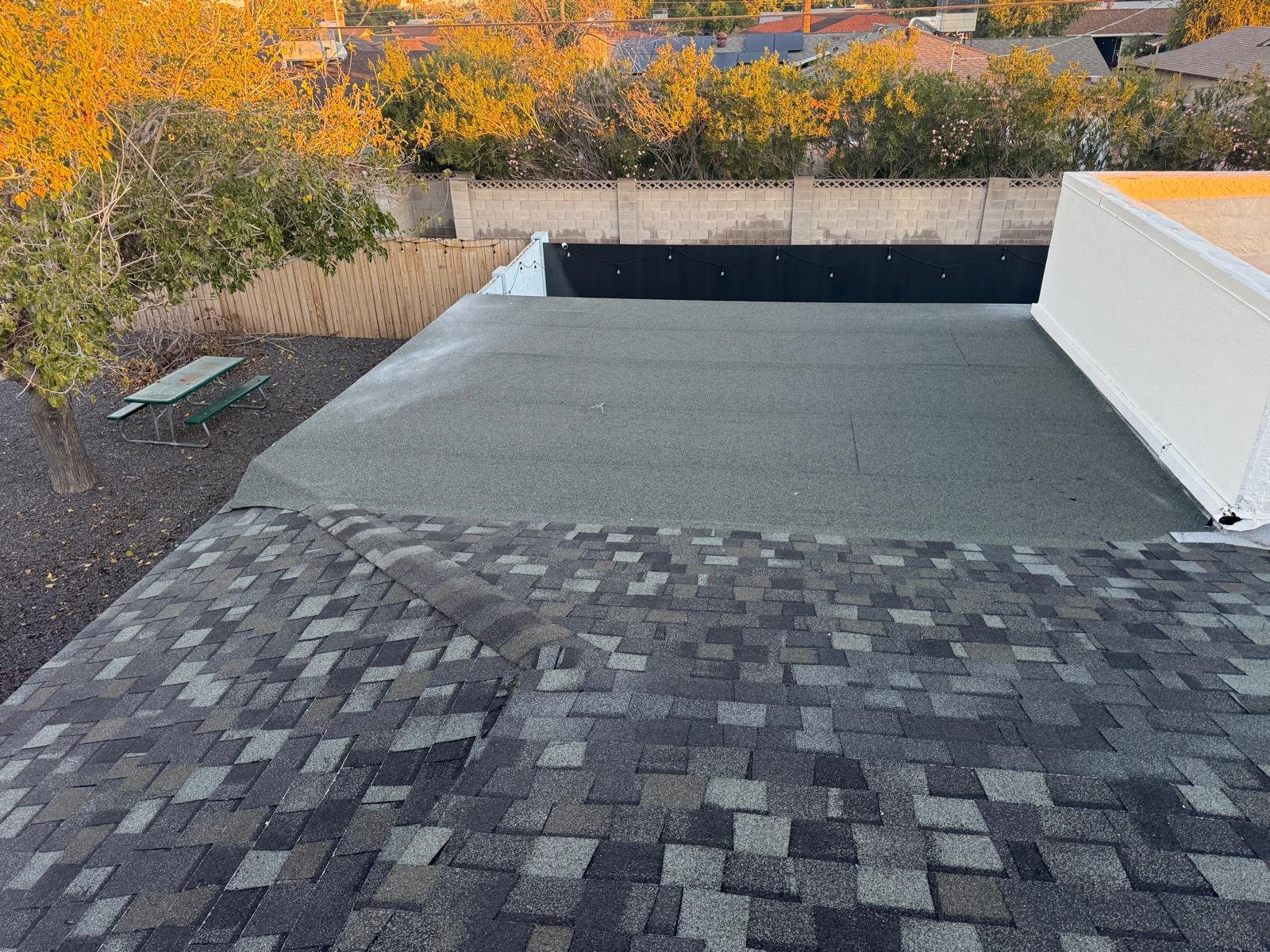
Asphalt shingles remain the most widely used residential roofing material in the United States, including Phoenix. They offer the lowest upfront cost, relatively quick installation, and straightforward repair. In Phoenix’s climate, however, their performance relative to other markets is reduced.
3-tab shingles — the thinnest, least expensive option — have largely fallen out of favor in Phoenix for residential installation because their lifespan (15 to 18 years in Phoenix) is short relative to the alternatives. They are susceptible to wind damage in monsoon conditions and are rarely the best long-term value.
Architectural (dimensional) shingles — multi-layer shingles with a heavier, more textured profile — perform better than 3-tab in Phoenix and are the appropriate choice when shingles are the selected material. Look for products with high wind ratings and algae resistance. Some manufacturer-specific shingle products are specifically engineered for hot-climate performance and are worth specifying if shingles are your material of choice.
Best for: Budget-conscious homeowners, properties intended for resale within 10 years, and homes where HOA or structural constraints limit material options.
Concrete Tile
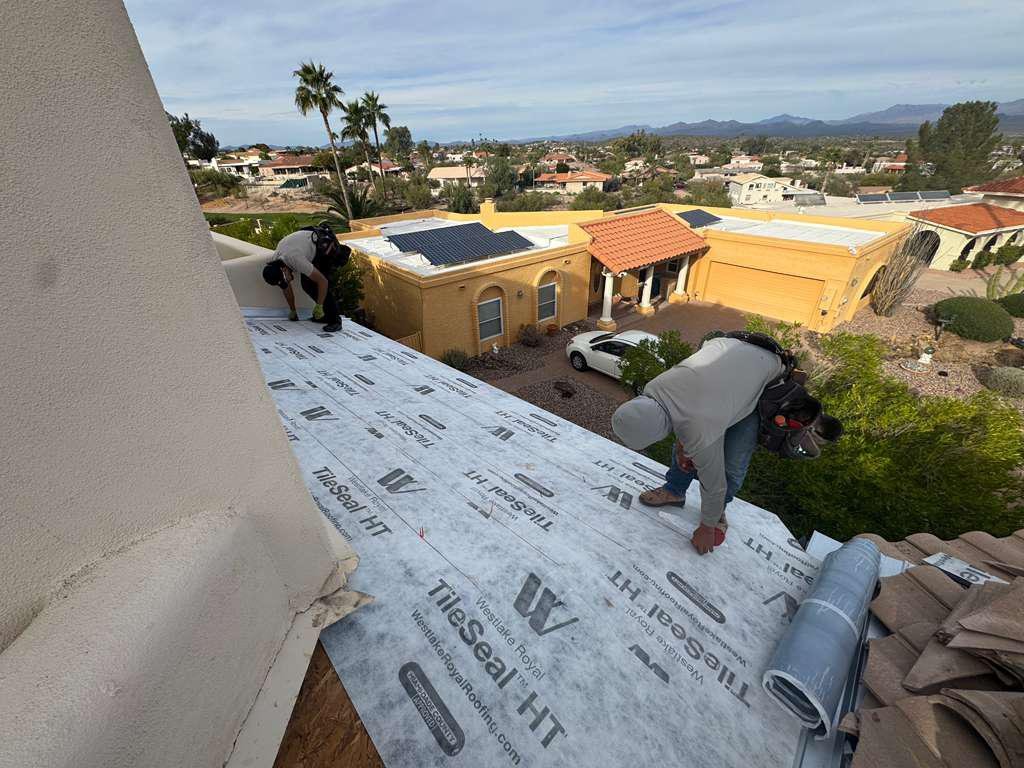
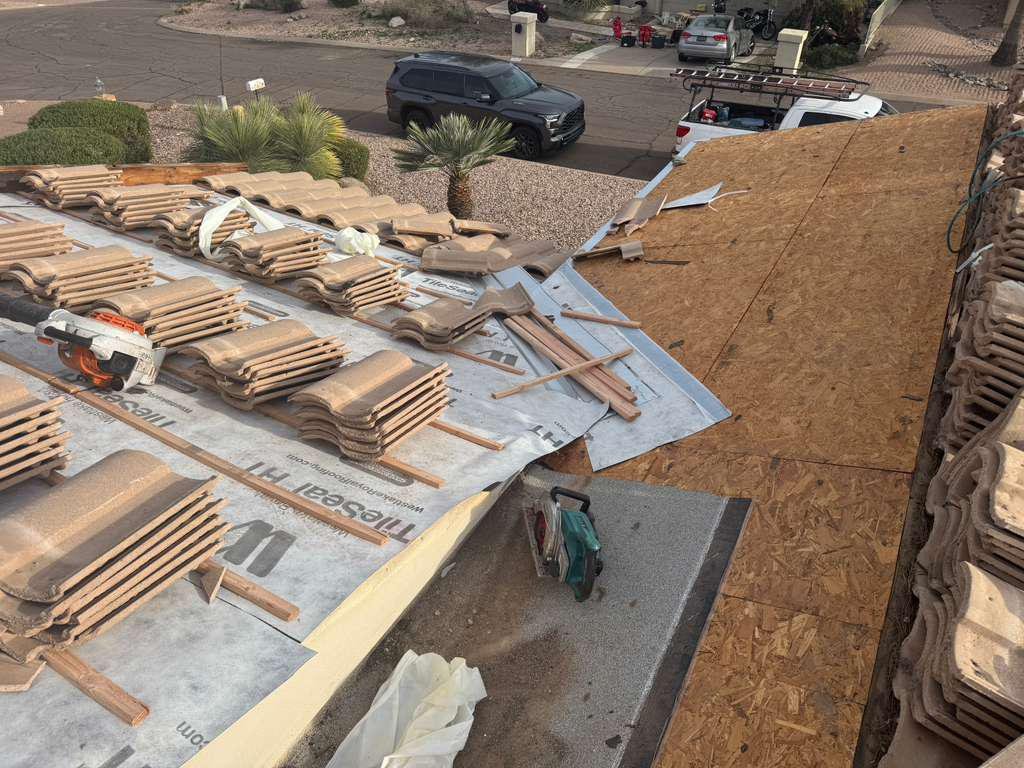
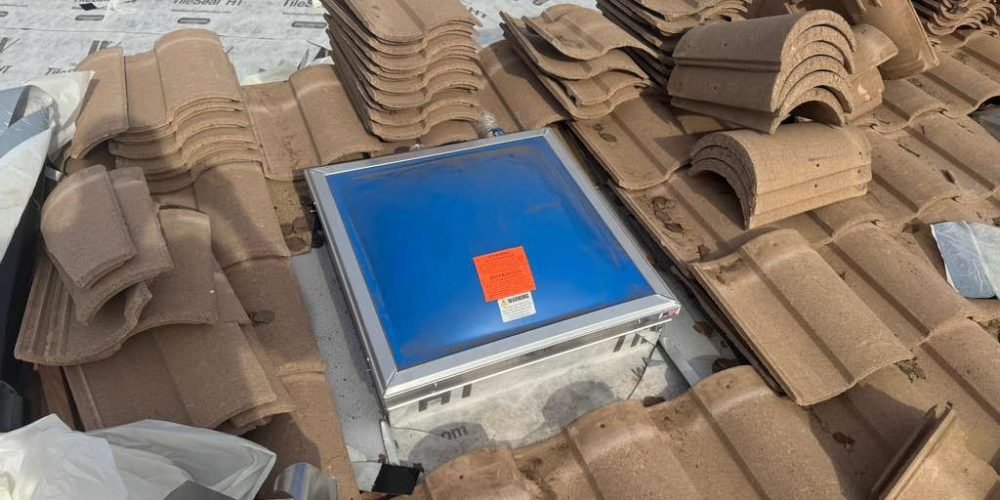
Concrete tile is the most widely installed roofing material in Phoenix’s suburban residential market, particularly in homes built from the 1980s through 2000s. Its prevalence reflects its genuine performance advantages in Arizona’s climate: high UV resistance, excellent thermal mass that moderates heat transfer into the living space, long lifespan (30 to 45 years in Phoenix), and strong aesthetic consistency with the community character of most Phoenix-area HOA neighborhoods.
Concrete tile is heavier than shingles — typically 700 to 1,000 pounds per roofing square — and homes must have adequate structural support to carry the load. A qualified contractor will assess this during inspection.
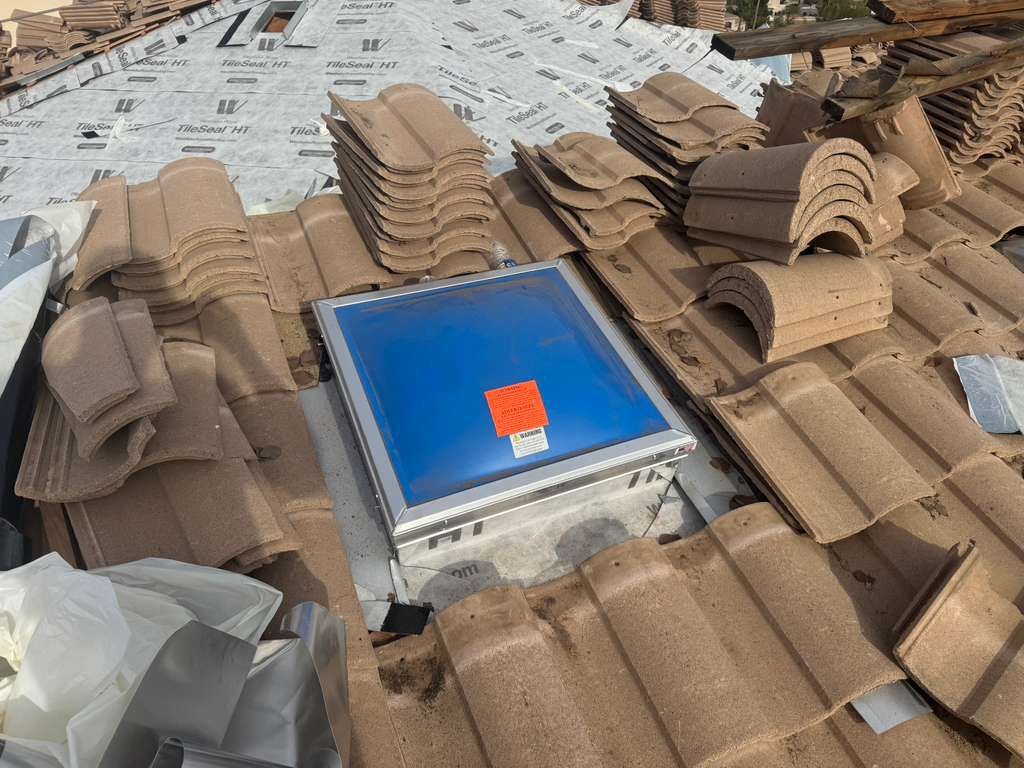
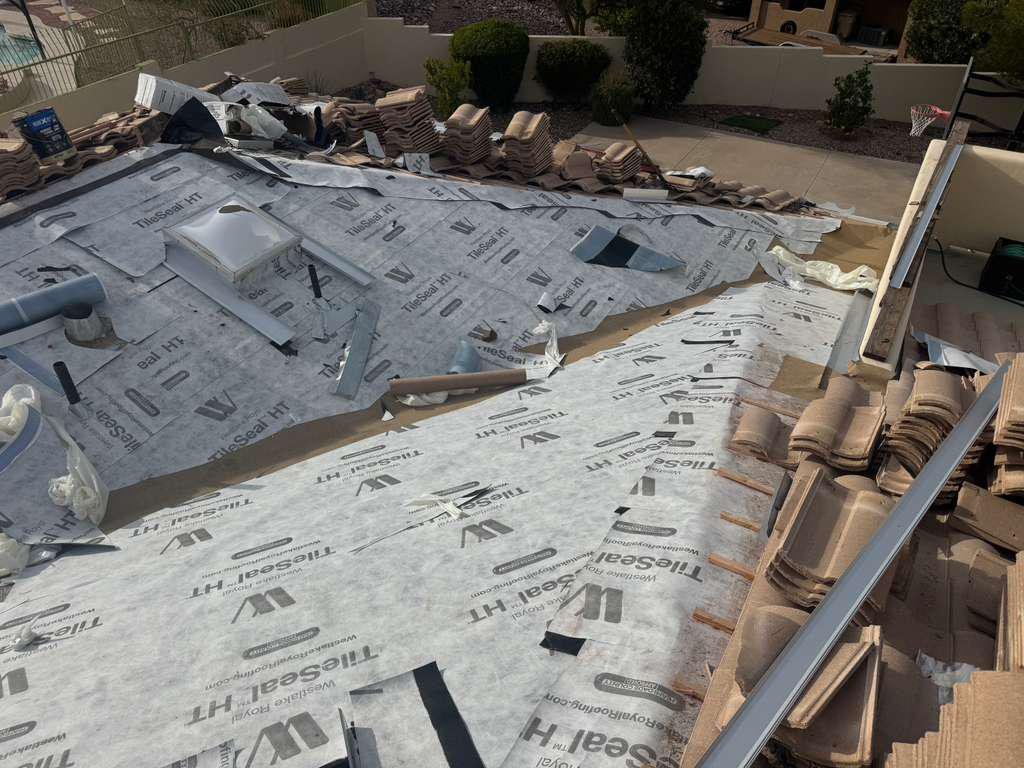
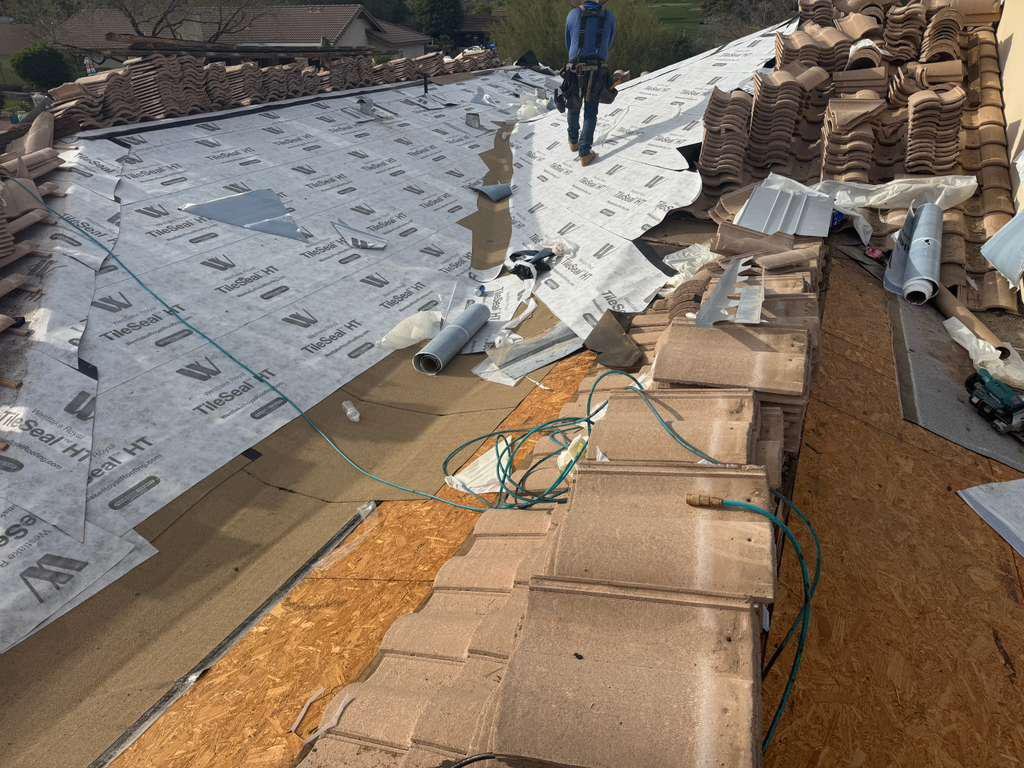
The tile itself is highly durable, but the underlayment beneath — the actual waterproofing layer — degrades over time. Many Phoenix homes with visually intact concrete tile from the 1990s have significantly deteriorated underlayment. Regular inspection is important to catch this before active leaks develop.
Best for: Long-term Phoenix homeowners seeking the best balance of performance, aesthetics, and lifespan per dollar invested.
Clay Tile
Clay tile is the premium tile option, offering a lifespan of 40 to 55 years in Phoenix and an unmistakably distinctive aesthetic. It is the dominant material in Paradise Valley, premium Scottsdale communities, and other high-value Phoenix-area neighborhoods.
Clay tile is more expensive than concrete — both in material cost and installation — and heavier, requiring structural assessment prior to installation. It is also more fragile to direct impact than concrete tile.
For homeowners in premium properties or those seeking the longest possible roof lifespan, clay tile is a legitimate and well-justified investment.
Best for: Premium Phoenix properties, long-term homeowners where the 40+ year lifespan justifies the investment.
Metal Roofing
Metal roofing — including standing seam, stone-coated steel, and corrugated metal — has grown significantly in Phoenix’s residential market over the past decade, and for good reason. Metal roofing reflects solar radiation rather than absorbing it, which delivers real cooling cost savings in Phoenix’s climate. Its lifespan of 40 to 60+ years rivals the best tile options at a competitive long-term cost.
Standing seam metal uses concealed fasteners and floating panel attachment that accommodates thermal expansion — an important design feature given Phoenix’s extreme temperature swings. Stone-coated steel combines metal’s performance with a visual profile that mimics tile or shingles, making it a popular choice in HOA communities that restrict metal roofing by profile.
Best for: Energy-conscious homeowners, contemporary architectural styles, and long-term value seekers who prioritize energy efficiency.
Residential Roofing Services in Phoenix: What’s Available
A full-service residential roofing contractor in Phoenix provides the following services:
Roof inspection: Professional assessment of all roofing components — surface material, underlayment, flashing, penetrations, ridge, gutters, and attic ventilation. A thorough inspection identifies current issues and emerging vulnerabilities before they become active problems.
Roof repair: Addressing specific, localized damage — cracked or missing tiles, failed flashing, damaged shingles, leak-point repairs. Repair is appropriate when the damage is limited and the overall system has substantial remaining life.
Full roof replacement: Complete removal of the existing roofing system down to the deck, inspection and repair of the deck, installation of new underlayment, and installation of new roofing material. The comprehensive solution when the roof has reached end of life.
Tile-off re-roofing: For homes with intact tile but deteriorated underlayment, a cost-effective option that preserves the existing tile while replacing the waterproofing system beneath.
Emergency roof repair: Immediate response to storm damage, active leaks, or sudden failures that require same-day or next-day attention.
Roof maintenance: Preventive care including debris removal, minor repair of emerging issues, flashing inspection and re-sealing, and ventilation assessment. Annual maintenance extends roof life and reduces the likelihood of emergency repairs.
What to Expect From a Professional Residential Roofing Contractor in Phoenix
When you engage a professional residential roofing contractor in Phoenix, the process should follow a clear sequence with transparent communication at every stage.
Free inspection and estimate: A qualified contractor provides a free, on-roof inspection before quoting. Ground-level or satellite-based estimates are not adequate for assessing underlayment condition, deck integrity, or the full scope of work required.
Written, itemized proposal: The estimate you receive should specify the material, brand, and product line being installed; the scope of work including tear-off and disposal; the underlayment specification; warranty terms for both material and labor; the project timeline; and the payment schedule. Never accept a verbal quote only.
Permits where required: In Phoenix, building permits are required for full roof replacements. A legitimate contractor handles permit acquisition as part of the project — it is not your responsibility to obtain permits, and any contractor who asks you to do so or skips permitting is operating improperly.
Proactive communication during the project: You should receive updates at key stages — material delivery, crew arrival, completion of tear-off and deck inspection, and final walkthrough. Before-and-after documentation with photographs is standard practice for a professional contractor.
Clean job site: All debris, fasteners, and materials removed from the property. A magnetic sweep of the yard, driveway, and landscaping for nails and metal fasteners is standard professional practice.
How to Select a Residential Roofing Contractor in Phoenix
Verify the Arizona ROC license. Every residential roofing contractor in Arizona must hold a current license from the Arizona Registrar of Contractors. Verify online before signing anything. Reliable Roofing Near Me holds ROC License #355096.
Confirm insurance. Request certificates of both general liability and workers’ compensation insurance. If a worker is injured on your property and the contractor lacks workers’ comp, you carry the liability.
Check local reviews. Google, Yelp, and the Better Business Bureau all provide useful signals. Look at the volume and recency of reviews, and pay attention to how the company responds to any negative feedback.
Get multiple quotes. Three quotes from licensed contractors gives you a meaningful comparison. Evaluate scope, materials, and warranty terms — not just the bottom-line number.
Be cautious after storms. Phoenix attracts storm-chasing contractors following monsoon events. Out-of-state contractors with no local accountability and no Arizona ROC license are a significant source of poor installations and abandoned warranty claims.
Schedule Your Free Residential Roofing Inspection in Phoenix
Reliable Roofing Near Me is a Phoenix-based, fully licensed residential roofing contractor serving homeowners across the Valley. We provide free inspections, detailed written estimates, and complete transparency from first contact through final walkthrough.
Call (480) 867-9986 or visit reliableroofingnearme.com to schedule today.
Reliable Roofing Near Me
ROC License #355096 | Licensed & Insured
12428 N 28th Dr Suite 12430, Phoenix, AZ 85029
(480) 867-9986 | reliableroofingnearme.com