When a Phoenix homeowner discovers a roof problem — a leak, missing tiles, visible deterioration — the first question is almost always the same: do I repair this, or does the whole roof need to go?
It is one of the most consequential decisions a homeowner can make, with significant financial implications either way. Choosing repair when replacement is warranted means paying for repeated short-term fixes on a failing system. Choosing replacement when repair would have sufficed means spending tens of thousands of dollars unnecessarily.
This guide gives you a clear, practical framework for making the right call — based on the factors that actually matter in Phoenix’s extreme climate.
The Core Question: Is This a Localized Problem or a System-Wide Problem?
Every roof replacement versus repair decision comes down to one fundamental question: is the damage or deterioration localized to a specific area, or is it a symptom of the overall roofing system reaching the end of its service life?
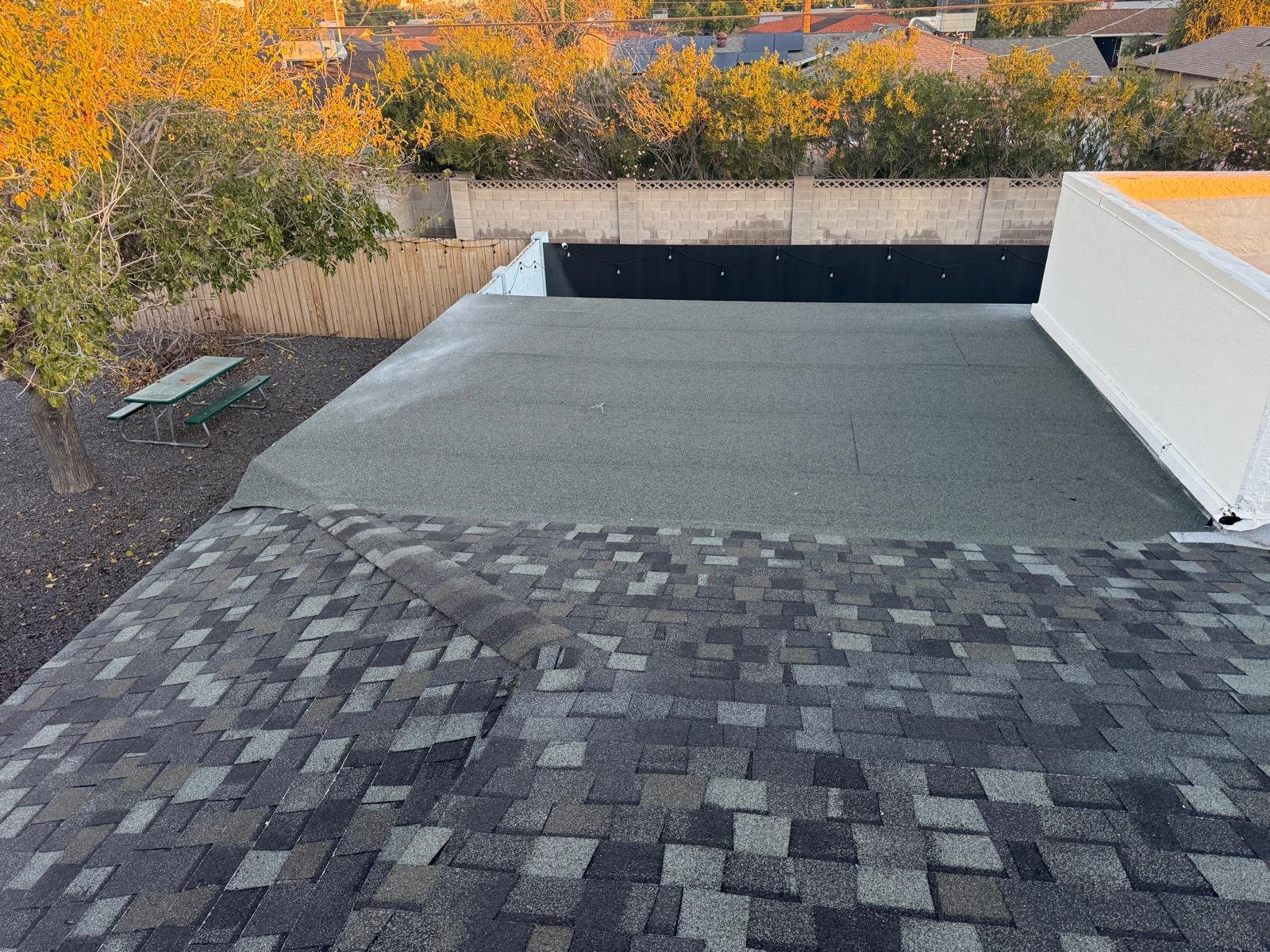
Localized problems — a single cracked tile, a failed flashing detail around a vent pipe, a small section of deteriorated shingles around a chimney — are candidates for repair. The roofing system as a whole is performing, and addressing the specific failure point is both practical and cost-effective.
System-wide deterioration — widespread granule loss across the entire shingle field, underlayment that has failed beneath visually intact tile, pervasive cracking throughout a flat roof membrane, or active leaks in multiple locations — indicates that the roof has reached or exceeded the end of its functional life. In these cases, repair addresses symptoms while the underlying problem continues to progress.
A professional inspection by a licensed roofing contractor is the most reliable way to determine which category your situation falls into. Visual assessment from inside the home or from ground level does not tell the whole story — a qualified contractor on the roof can assess underlayment condition, decking integrity, and the overall state of the system in ways that a homeowner cannot.
Factor 1: Roof Age
Age is the single most reliable predictor of whether repair or replacement is the appropriate response to a Phoenix roofing problem. In Phoenix’s extreme climate, roofing materials have shorter effective lifespans than national averages:
| Material | National Average Lifespan | Realistic Phoenix Lifespan |
|---|---|---|
| Asphalt Shingles (3-tab) | 20–25 years | 15–18 years |
| Architectural Shingles | 25–30 years | 18–22 years |
| Concrete Tile | 40–50 years | 30–45 years |
| Clay Tile | 50–60 years | 40–55 years |
| Metal Roofing | 40–70 years | 40–60+ years |
| TPO Flat | 20–25 years | 15–20 years |
The 80% rule: As a general guideline, if your repair cost would exceed 80% of the cost of a new roof — or if your roof has reached 80% of its expected lifespan — replacement is typically the more financially rational decision. Spending $4,000 on repairs on a 17-year-old shingle roof that is nearing the end of its viable life does not deliver four thousand dollars of value — it buys a short extension before the underlying deterioration forces a replacement anyway.
Factor 2: Extent of Damage
The geographic extent of the damage on your roof is a critical indicator.
Damage affecting less than 30% of the roof: In most cases, repair is viable and cost-effective. A contractor can address the damaged section without disturbing the balance of the functional roofing system.
Damage affecting 30–50% of the roof: This range requires careful evaluation. If the undamaged sections of the roof are in excellent condition with substantial remaining life, repair may still be appropriate. If the undamaged sections show signs of age or general wear, replacement starts to become the better long-term decision.
Damage affecting more than 50% of the roof: Replacement is almost always the more rational choice. The cost of repairing more than half the roof approaches or exceeds replacement cost, and a partial repair leaves an aging undamaged section that will require replacement within a few years anyway.
Factor 3: Underlayment Condition
This factor is specific to Phoenix and is one that many homeowners are unaware of: in Arizona, underlayment deteriorates faster than the roofing material it sits beneath.
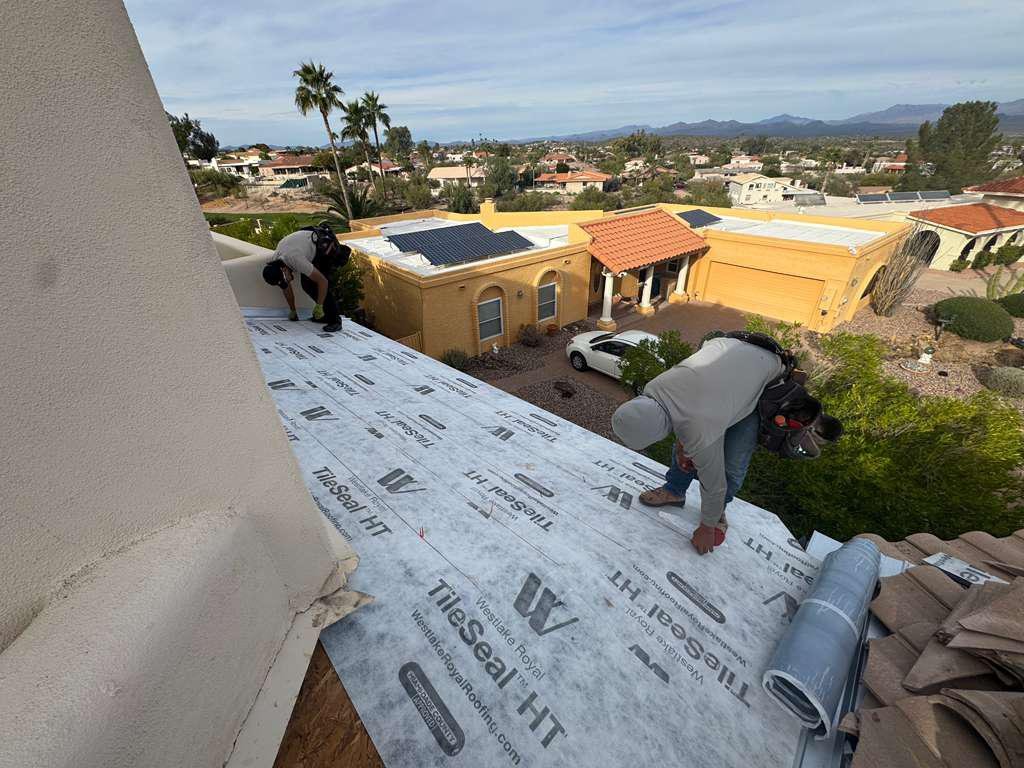
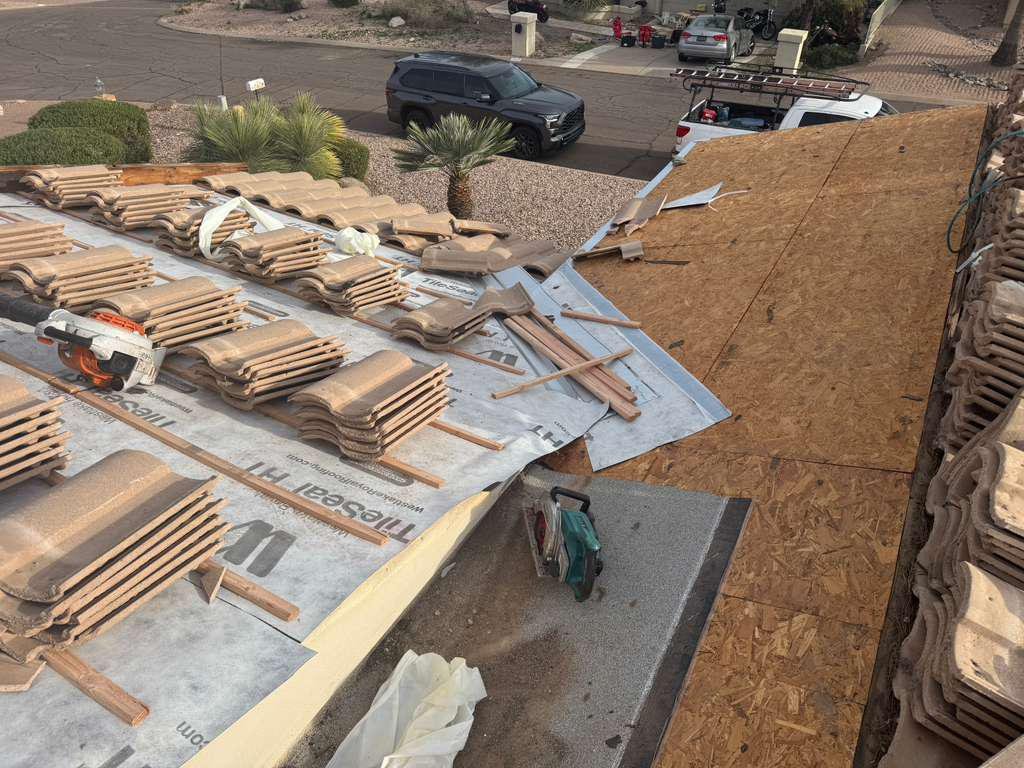
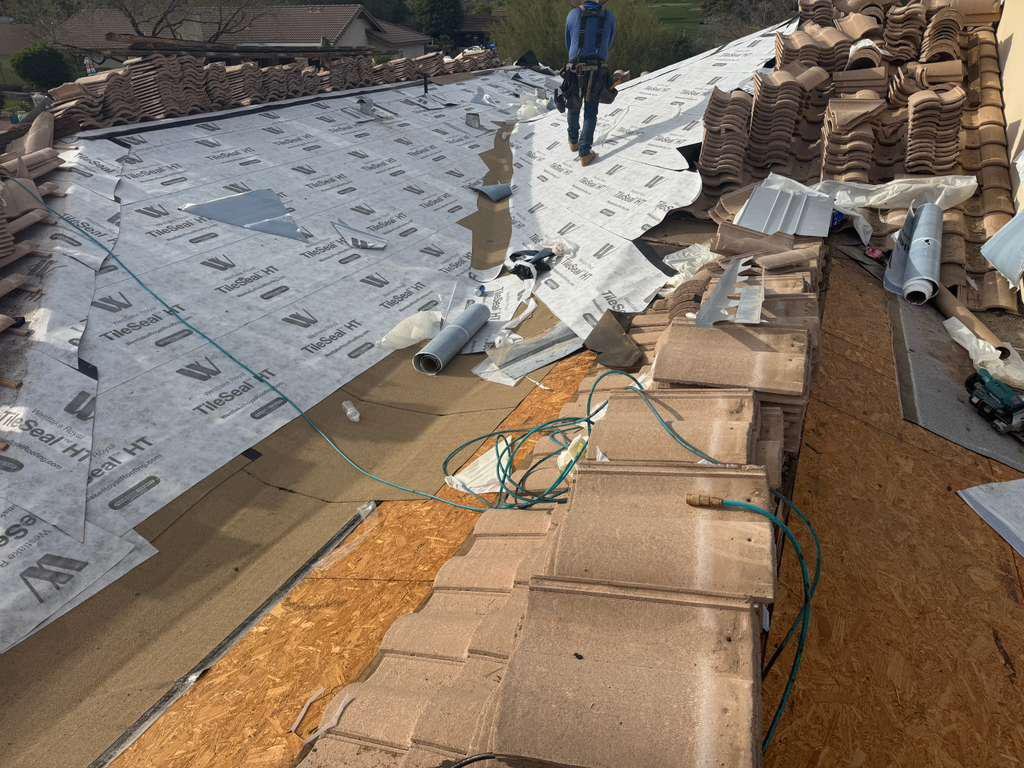
A tile roof in Phoenix can have perfectly intact clay or concrete tiles while the underlayment beneath has deteriorated to the point where it provides little to no waterproofing protection. In this scenario, the roof looks fine from the outside but has essentially lost its primary leak-prevention function.
If a contractor’s inspection reveals compromised underlayment beneath otherwise-intact tile, the decision framework shifts. There are two options:
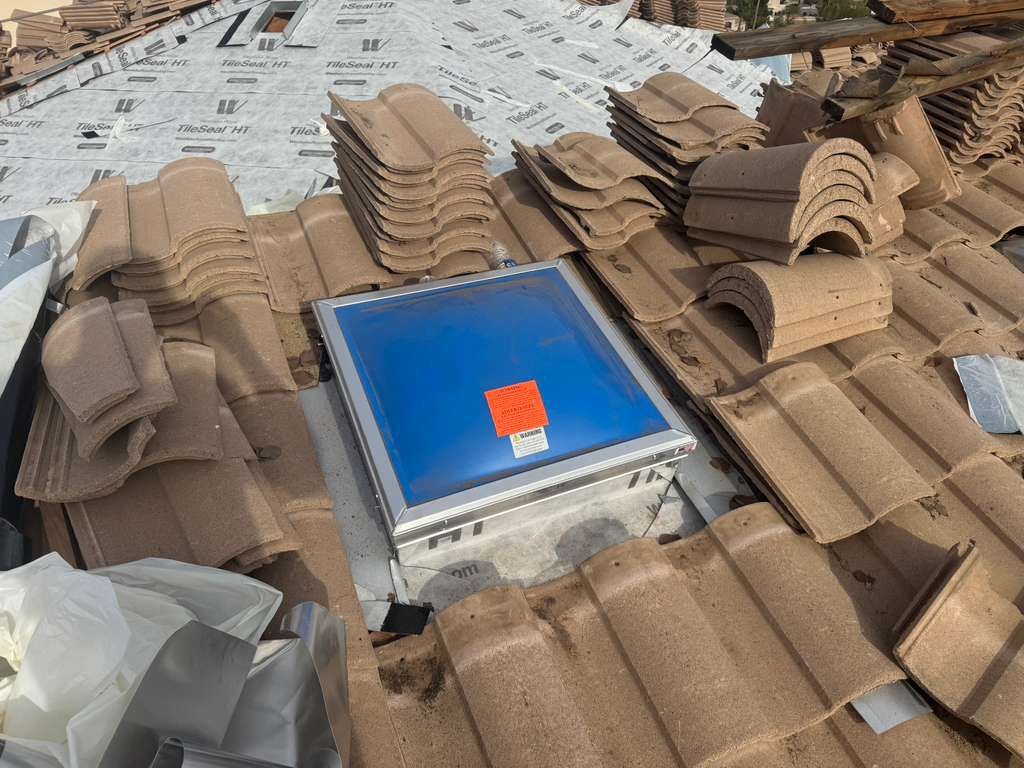
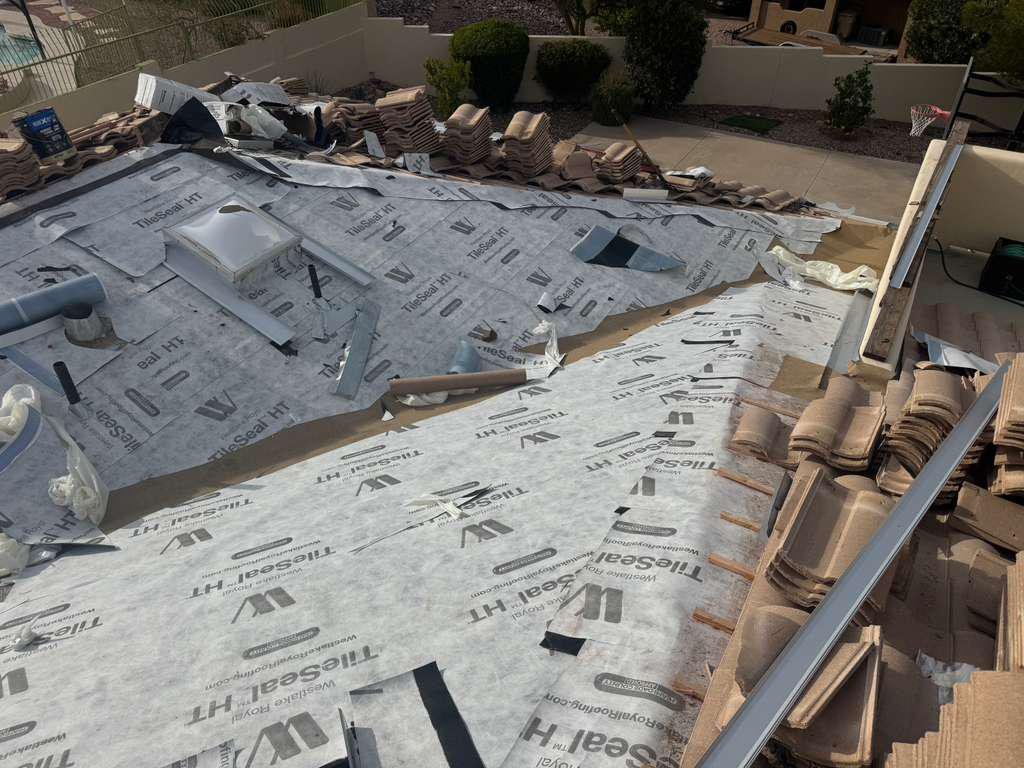
Tile-off re-roofing: Carefully removing the existing tile, replacing the underlayment, and reinstating the original tile. This preserves the tile investment while restoring the waterproofing system. It is less expensive than full replacement if the tile is in sound condition.
Full replacement: Installing new tile over new underlayment. Appropriate when the tile itself is also aged or damaged.
Do not proceed with simple surface repairs on a roof with failed underlayment — you will be repairing symptoms while the real problem continues unaddressed.
Factor 4: Type and Cause of Damage
Not all damage is equal in what it indicates about the overall system.
Storm damage (hail, wind, debris impact): Typically localized and event-specific. If your roof is within its expected service life and the damage is clearly attributable to a storm event, repair is usually appropriate — and may be covered by your homeowners insurance.
Granule loss on shingles: Granule loss is a measure of shingle age and UV degradation. Localized granule loss (around an impact point) is different from widespread granule loss across the full shingle field. The latter indicates that the shingles have reached end of life and replacement is warranted.
Active leaks in multiple locations: Multiple active leaks indicate system-wide failure, not isolated incidents. Patching individual leak points on a roof that is failing throughout is not a solution — it is a temporary stay of the inevitable.
Sagging or structural deformation: Any visible sagging, deflection, or structural irregularity in the roof deck is a serious indicator that requires immediate professional assessment. This typically signals damage to structural elements beyond the roofing surface itself and almost always warrants replacement combined with structural repair.
Factor 5: Your Plans for the Home
How long you intend to remain in the Phoenix home matters significantly in this decision.
Planning to sell within 3–5 years: If your roof has moderate remaining life and the repairs needed are manageable, repair may be the more economical choice. However, be aware that a roof in questionable condition will be flagged in buyer inspections and may result in price negotiations or sale conditions. A fresh roof is a legitimate selling point in Phoenix’s market.
Planning to stay 10+ years: Long-term homeowners should lean toward replacement when the roof is aged or when cumulative repair costs are beginning to approach replacement territory. The energy efficiency gains of a new metal or tile roof also deliver real savings over a long ownership horizon in Phoenix’s cooling-intensive climate.
Recently purchased the home: If you purchased the home recently and the roof condition was not fully disclosed, document any issues immediately and review your purchase inspection report. Depending on the circumstances, you may have recourse under the sale terms.
The Cost Comparison: Repair vs. Replacement in Phoenix
| Scenario | Repair Cost | Replacement Cost | Recommended Action |
|---|---|---|---|
| Single cracked tile, 5-year-old roof | $150–$400 | $12,000–$18,000 | Repair |
| Failed valley flashing, 10-year-old shingle roof | $400–$900 | $9,000–$13,000 | Repair |
| 40% shingle damage, 20-year-old roof | $2,500–$4,500 | $9,000–$13,000 | Evaluate; lean replacement |
| Widespread granule loss, 18-year-old shingle roof | $3,000–$6,000 | $9,000–$13,000 | Replace |
| Failed underlayment beneath intact tile, 30-year-old roof | $6,000–$10,000 (tile-off re-roof) | $14,000–$20,000 | Tile-off re-roof or replace |
| Multiple active leaks, 22-year-old shingle roof | $2,000–$5,000 | $9,000–$13,000 | Replace |
What the Contractor’s Inspection Should Tell You
When you have a roofing contractor inspect your Phoenix roof, ask them specifically for:
- The estimated remaining service life of the current roof, in years
- A condition assessment of the underlayment (not just the surface material)
- An identification of all areas showing deterioration — not just the problem area you called about
- An honest recommendation on repair vs. replacement based on their findings
- If repair is recommended, what is the expected effective life of the repair — and when will the roof need to be reassessed?
A contractor who recommends replacement on every inspection without providing a detailed rationale should be questioned. Equally, a contractor who recommends repair without assessing the underlayment and overall system condition is giving you an incomplete picture.
When Insurance Covers the Decision
If the damage triggering your repair-vs-replace evaluation was caused by a covered event — storm, hail, wind — your homeowners insurance policy may significantly change the financial equation. In many Phoenix cases, insurance-covered replacements make replacement the clear choice because the out-of-pocket cost is limited to your deductible.
If storm damage is involved, have the roof inspected by a licensed contractor before contacting your insurer. A professional inspection with documented photographic evidence gives you the strongest foundation for a complete insurance claim.
Get a Free Professional Assessment in Phoenix
Reliable Roofing Near Me provides free, honest roof assessments for Phoenix homeowners facing repair or replacement decisions. We do not have a financial interest in recommending replacement when repair is genuinely the right answer — and we will tell you clearly either way.
Call (480) 867-9986 or visit reliableroofingnearme.com to schedule your free inspection.
Reliable Roofing Near Me
ROC License #355096 | Licensed & Insured
12428 N 28th Dr Suite 12430, Phoenix, AZ 85029
(480) 867-9986 | reliableroofingnearme.com